With the right training, practical experience, and commitment to person-centred care, you can build a fulfilling career that makes a real difference every day.
Read on to discover how to become a successful healthcare assistant and how to take your next steps towards a rewarding career in healthcare.
Why Healthcare Assistants Are in Growing Demand
Healthcare assistants are in growing demand because the UK needs more skilled people to meet rising healthcare needs. Skills for Care’s State of the Adult Social Care Sector and Workforce in England 2025 report found that the sector supported around 1.71 million posts, yet still reported 111,000 vacant posts. So, what is the most rewarding part of being a healthcare assistant? Many healthcare assistants say it is the opportunity to improve people’s lives. From supporting patients to helping them feel safe, the role offers personal satisfaction and long-term career opportunities.
Some of the main reasons healthcare assistants are in such demand include the following.
- Growing healthcare needs. More people need long-term care and daily support as the UK’s population continues to age.
- High demand across healthcare settings. Healthcare assistants work in hospitals, care homes, GP surgeries, and community healthcare services.
- Workforce shortages. Many employers are still recruiting healthcare assistants to help meet rising patient demand.
- Career prospects. The healthcare assistant has the chance to move on to advanced jobs within the field.
- Making a difference. Healthcare assistants make a positive impact in people’s lives by making their experience better.
Understanding Healthcare Assistant Roles and Responsibilities
Healthcare assistants assist patients in their day-to-day activities along with other health professionals to provide safe and quality care to the patients. They play a true part in making patients comfortable, happy and independent.
Some of the main roles and responsibilities of a healthcare assistant include the following.
- Providing personal care. Help patients with washing, dressing, eating, toileting, and moving around safely.
- Monitoring patients. Check vital signs, watch for changes in a patient’s condition, and report concerns to the nursing team.
- Supporting person-centred care. Respect each patient’s dignity, preferences, culture, and individual care needs.
- Following infection control procedures. Keep the environment clean and follow hygiene practices that reduce the risk of infection.
- Maintaining patient safety. Assist with safe moving and handling, spot potential risks, and help prevent accidents.
- Protecting confidentiality. Handle patient information responsibly and follow data protection policies.
- Supporting safeguarding. Recognise the signs of abuse and report concerns through the correct procedure.
- Keeping accurate records. Update care notes and use digital healthcare systems to record important information.
How to Become a Healthcare Assistant in the UK
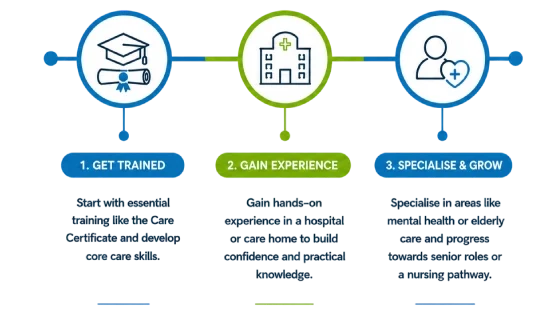
To be a healthcare assistant, you must possess the necessary knowledge, experience, and skills that potential employers require. Prior experience in the healthcare sector is not mandatory, but recognised training and experience will definitely make things easier for you.
Step 1. Complete a healthcare qualification.
Begin your career path with a recognised healthcare assistant qualification, which will give you basic knowledge of patient care. Throughout your course, you will find infection control, safeguarding, health and safety, communication, and person-centred care covered in the material. Additionally, these form the foundation for everything you will apply in real care settings. As a result, completing a qualification early on sets you up for a smoother transition into practical, hands-on healthcare work.
Step 2. Gain practical experience.
The second step involves gaining practical experience in a care setting. You can achieve this through volunteering or entry-level positions. As you interact with clients, you will start applying the knowledge you have gained so far. Furthermore, these interactions will help you build confidence in your own abilities. Over time, this hands-on experience will prepare you for the responsibilities that come with a full-time role in healthcare.
Step 3. Develop essential skills.
This step focuses on building the skills the role demands, including good communication, teamwork, observation, professionalism, and attention to detail. Alongside these, you should also get comfortable keeping accurate records and delivering safe, person-centred care. Consequently, mastering these skills early on will make the transition into a healthcare assistant role much smoother.
Step 4. Apply for healthcare assistant jobs.
Once you have gained the right skills and experience, you can start applying for roles. To begin with, update your CV for each position and highlight your qualifications, practical experience, and transferable skills. Moreover, tailoring your application to each job description shows employers that you understand what the role requires. As a result, a well-prepared application gives you a much better chance of landing an interview.
Step 5. Keep learning and grow your career.
Learning does not end after securing your first job. Rather, you are supposed to earn the Care Certificate, do CPD, and engage in other forms of training in order to continue growing professionally. Ultimately, this can enable you to move up into senior positions of healthcare assistant, specialist care, and even nursing.
Essential Skills for a Successful Healthcare Assistant Career
So, what skills do you need to become a successful healthcare assistant? To succeed in this role, you need a combination of practical and personal skills. These skills help you provide safe, high-quality care, work effectively with healthcare teams, and manage your daily responsibilities. As you develop them, you improve patient care and build a strong foundation for career growth.
Some of the key skills for a care assistant include:
- Communication. Listen carefully, explain things clearly, and communicate effectively with patients, families, and other healthcare professionals.
- Empathy and compassion. Treat every patient with kindness and respect while supporting their individual needs.
- Observation skills. Notice changes in a patient’s condition and report concerns quickly to the right healthcare professional.
- Resilience. Stay calm under pressure and keep providing high-quality care even in difficult or fast-moving situations.
- Adaptability. Adapt to different patients, care environments, and priorities that may change in the process of work.
- Professionalism. Respect workplace policies, maintain confidentiality and act professionally.
- Teamwork. Work closely with nurses, doctors, and other healthcare professionals to deliver safe, coordinated care.
- Digital documentation. Record patient information accurately using electronic care records and healthcare systems.
- Time management. Organise your daily tasks efficiently so every patient gets the care they need.
- Person-centred care. Respect each patient’s preferences, dignity, culture, and independence in everything you do.
Building these skills takes time and practice. But they will help you grow in confidence, deliver better patient care, and succeed in your healthcare career.
A Day in the Life of a Healthcare Assistant
Each day is different for a healthcare assistant. You could assist with the care of a patient, monitor their vital signs, keep care records updated, and assist the nursing staff with daily chores during the same shift. Through the day, you will keep an eye on your patient, attend to their needs and help provide them with safe and person-centred care.
For instance, you can assist an older patient who has just undergone a surgical procedure by moving them around safely, assuring them, and alerting the nursing staff about any change in their condition.
Career Growth Opportunities and Specialist Career Paths
A healthcare assistant role can open the door to many different career paths. As you gain experience, complete further training, and build new skills, you can progress into more specialised or senior healthcare roles.
| Career Path |
What You’ll Do |
How to Progress |
| Senior Healthcare Assistant |
Take on extra responsibilities, support junior staff, and provide more advanced patient care. |
Gain experience, complete CPD, and take on specialist training. |
| Nursing Associate |
Deliver more advanced clinical care while working closely with registered nurses. |
Complete a Nursing Associate apprenticeship or approved qualification. |
| Registered Nurse |
Assess, plan, and deliver patient care in hospitals and community settings. |
Complete a nursing degree or progress through the Nursing Associate route. |
| Mental Health Support |
Support people with mental health conditions in hospitals or community services. |
Complete mental health training and gain relevant experience. |
| Dementia or Elderly Care Specialist |
Provide specialist care for older adults and people living with dementia. |
Develop specialist skills through CPD and dementia care training. |
| Community Healthcare Assistant |
Support patients in their own homes and in community healthcare settings. |
Gain community care experience and complete additional training. |
Continuous Professional Development (CPD) and the Care Certificate
Learning does not stop once you become a healthcare assistant. Regular training helps you improve your skills, provide better patient care, and prepare for future career opportunities.
Care Certificate
The Care Certificate is one of the first training programmes many healthcare assistants complete. It introduces the knowledge and skills needed to work safely in health and social care. Key topics include:
- Person-centred care
- Communication
- Safeguarding
- Infection prevention and control
- Health and safety
- Duty of care
Continuous Professional Development (CPD)
CPD helps you continue learning throughout your career. You can build your knowledge through:
Specialised training in topics such as dementia care or mental health.
Courses in first aid and clinical skills.
Workshops and refresher courses.
E-learning and qualifications.
Regular CPD will keep your knowledge current, improve patient care and help you move forward to become a senior or specialised healthcare professional.
Healthcare Assistant Salary Expectations in the UK
Salaries for healthcare assistants will differ based on your experience level, employer, location, and duties. The more experience and skills you gain, the better-paid jobs in healthcare you can pursue.
The table below shows typical salary expectations and career progression for healthcare assistants in the UK.
Tips to Thrive as a Healthcare Assistant
Succeeding as a healthcare assistant takes more than technical skill. A positive attitude and a genuinely professional approach all help you build a successful and rewarding career.
Here are some practical tips to help you grow.
- Keep learning. Complete CPD courses and attend training so your knowledge stays current.
- Ask for feedback. Learn from experienced colleagues and use their advice to sharpen your skills.
- Build strong communication skills. Listen carefully, speak clearly, and treat every patient with respect.
- Stay organised. Keep accurate records and manage your daily tasks effectively.
- Look after your wellbeing. Take care of your mental health so you can keep providing high-quality care.
- Show professionalism. Be reliable, follow workplace policies, and always put patient safety first.
Start Your Healthcare Career with Healthcare Academy London
The right training can help you build the confidence needed for a successful healthcare career. At Healthcare Academy London(HCA London), our online Healthcare Assistant courses are designed to help beginners and aspiring care professionals develop practical knowledge that meets UK care standards.
Through short, engaging modules, you can build knowledge in key areas, including:
- Person-centred care
- Infection prevention and control
- Safeguarding
- Communication in healthcare
- Health and safety
- Patient care and support
- Professional practice
Whether you’re starting your healthcare journey or looking to develop new skills, Healthcare Academy London(HCA London) can help you take the next step towards a rewarding career in care.
Final Thoughts
Learning how to start a career as a healthcare assistant begins with the right training, practical experience, and a commitment to continuous learning. Building essential skills, delivering person-centred care, and completing CPD can help you progress with confidence. Whether you are starting your first healthcare role or planning your next career step, investing in your skills today can open the door to rewarding opportunities in healthcare.
Frequently Asked Questions