


All courses for
£149.99
· Save 87% in just one click
Instant Access
Free Certificate
CQC-Aligned
Venepuncture is an essential clinical procedure that enables healthcare professionals to collect blood samples for diagnostic testing, medical investigations and patient monitoring. Accurate blood collection plays a vital role in supporting clinical decisions, identifying health conditions and guiding appropriate treatment. This venepuncture course introduces the importance of venepuncture in everyday healthcare practice, highlighting the need for patient consent, procedural accuracy and safe clinical practice. It explores the knowledge and responsibilities involved in carrying out this important procedure while maintaining patient comfort and dignity.
Developing venepuncture skills can strengthen your clinical capabilities and prepare you to take on greater responsibilities in patient-facing healthcare settings. This course provides valuable insight into the principles behind effective blood collection, helping you approach the procedure with greater precision, care and professionalism. Whether you are entering healthcare or expanding your existing clinical skill set, the training offers practical knowledge that can support your professional development and contribute to safer, more effective patient care.
In this venepuncture course London, you will explore the essential principles of venepuncture and develop knowledge of the techniques, procedures and safety practices involved in effective blood collection.
The detailed curriculum outline of this course is provided below, covering all the modules and key topics included in the course.
£49.00 Original price was: £49.00.£13.99Current price is: £13.99.
£49.00 Original price was: £49.00.£13.99Current price is: £13.99.Add to basket
This course includes
E-Learning Course
Included
Lifetime Access
Course detail
By completing this course, you will develop essential skills for safe and effective venepuncture in healthcare settings.
This Venepuncture course is suitable for individuals who want to develop their clinical knowledge and gain essential skills in blood collection. It supports those starting a healthcare career as well as existing healthcare workers looking to expand their practical skills and professional capabilities.
This Venepuncture training course is ideal for:
The venepuncture course assessment is fully online and easy to complete. You’ll complete ongoing (formative) assessments and a final (summative) assessment to test your understanding of the course content. To pass, you must achieve an 80% score on the multiple-choice questions and successfully complete all required assessments. You’ll receive your results instantly, with unlimited attempts to help you succeed. If you don’t pass on your first attempt, you can retake the exam at no extra cost with lifetime access to the course. Once you’ve successfully completed all assessments, you’ll receive your certificate.
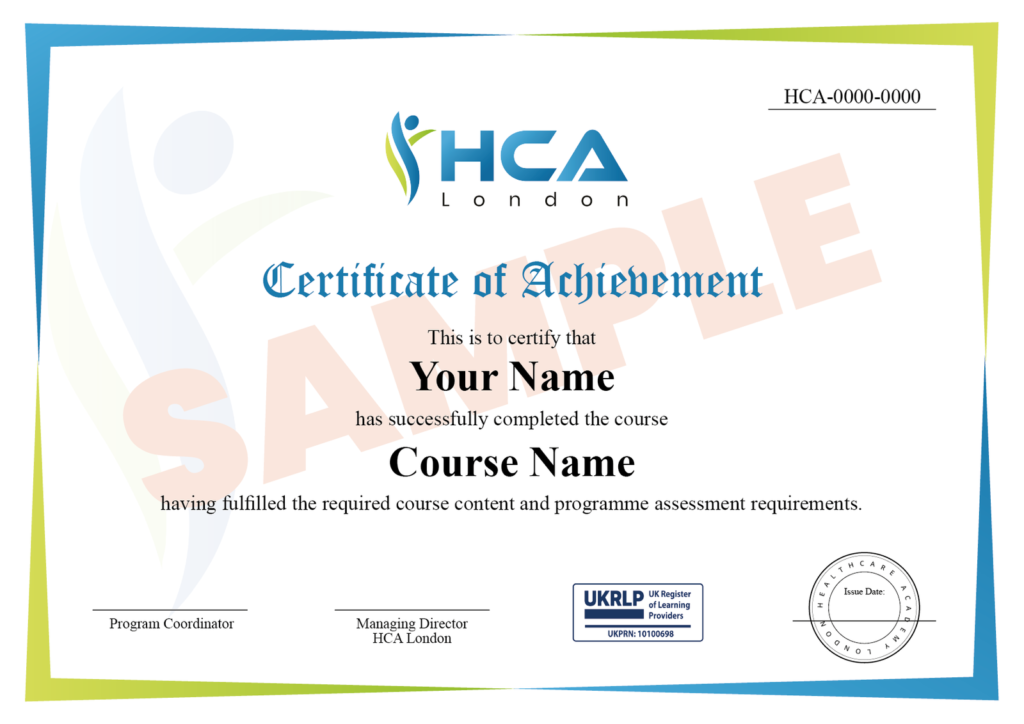
Upon successful completion of the assessment, you’ll receive a free CPD Certificate of Completion as a record of your learning and achievement. Use your certificate to strengthen your professional portfolio, demonstrate your commitment to continuous professional development and showcase the knowledge and skills gained through the course. It also provides a valuable way to evidence your dedication to improving your professional practice and progressing your career in health and social care.
Certificate
Start learning today and get your certificate instantly.
Check any real certificate ID on our verification page.
Good to know
Venepuncture is a medical procedure that involves inserting a needle into a vein to collect a blood sample. Healthcare professionals use it for diagnostic testing, medical investigations and monitoring a patient’s health.
Phlebotomy refers to the overall practice of collecting blood from patients, while venepuncture specifically involves accessing a vein with a needle to draw blood. Both terms are closely related and often used in clinical settings.
Venepuncture usually causes mild, short-lived discomfort, often described as a small pinch or sting when the needle enters the skin. The level of discomfort varies between individuals and depends on factors such as vein accessibility and individual sensitivity.
Healthcare professionals generally avoid areas with infection, swelling, burns, bruising or visible injury. They also avoid sites with certain medical complications, such as an existing fistula or an intravenous infusion, unless appropriate clinical guidance permits otherwise.
Venepuncture commonly involves three main blood collection methods: the evacuated tube system, the syringe method and the winged infusion (butterfly) method. Healthcare professionals select the appropriate method according to the patient and clinical requirements.
Minor puncture sites usually heal within a few days. Any slight tenderness or bruising generally improves over several days, although larger bruises may take longer to disappear. Persistent pain, redness or swelling should receive medical attention.
The median cubital vein, located in the inner elbow area, is generally the preferred choice for venepuncture. Its accessibility and relatively stable position make it suitable for routine blood collection. The healthcare professional must assess each patient’s veins before selecting a site.
Bruising (haematoma) is one of the most common complications of venepuncture. It occurs when blood leaks into the surrounding tissue, causing discolouration and sometimes mild swelling or tenderness around the puncture site.
Related training
Recognise the signs of a stroke, understand its causes, and identify the importance of quick action. Explore common symptoms, risk factors, and the steps to take when someone has a stroke. Enrol today to improve your stroke awareness.
Understand diabetes, recognise its warning signs and discover how to manage its impact on health. This Diabetes Awareness Course helps you gain essential knowledge of diabetes, its symptoms and management so you can raise awareness and support better health outcomes.

Understand Attention Deficit Hyperactivity Disorder and recognise how it affects behaviour, learning, and everyday life. Our CPD-accredited ADHD Awareness Course offers flexible, self-paced online learning to help you recognise common signs and better support people with ADHD.

Build your understanding of dementia and develop the confidence to support those living with the condition. Learn to recognise symptoms, understand changing needs and provide compassionate care that makes a difference.