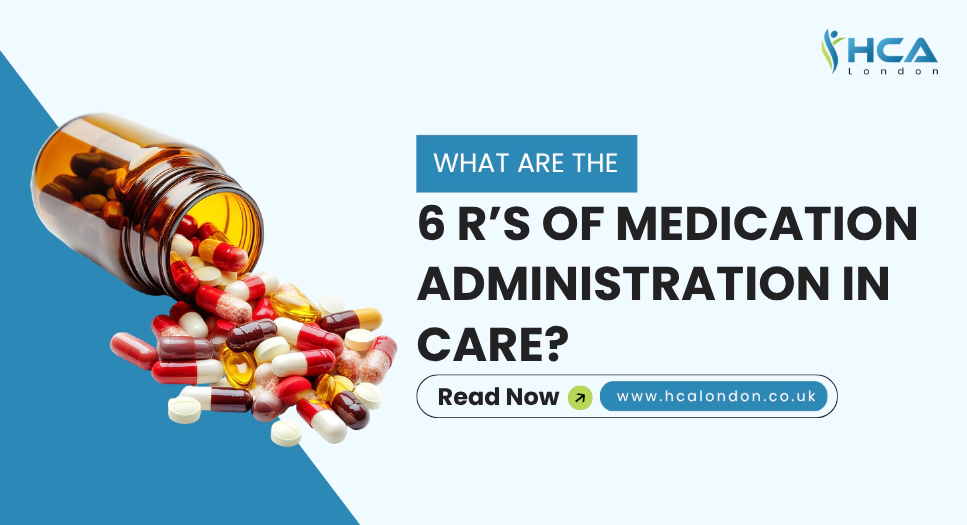
Medication safety is extremely important in health and social care. An error can be detrimental and even delay recovery. Therefore, care providers should take specific steps when dispensing medications to patients. The six R’s provide an easy guideline for safe medication practice. Nevertheless, these guidelines must be applied alongside training, medication records, and policies.
Read on to explore the 6 R’s of medication administration and how each one supports safe care. You will also learn how to apply these principles, prevent medication errors and protect the people in your care.
What Are the 6 R’s of Medication Administration?
The 6 R’s are six key safety checks that guide care workers when giving medicines. They help staff follow prescriptions, prevent errors and protect people from harm. The National Institute for Health and Care Excellence (NICE) recommends these principles for safe medication practice in care settings. The 6 rights of medication in the UK are:
|
The 6 R’s
|
Meaning
|
|
01
Right person
|
Give the medicine to the correct individual.
|
|
02
Right medicine
|
Check that the medicine matches the prescription.
|
|
03
Right route
|
Use the prescribed method to give the medicine.
|
|
04
Right dose
|
Give the correct amount of medicine.
|
|
05
Right time
|
Follow the prescribed time and intervals.
|
|
06
Right to refuse
|
Respect the person’s choice to decline medication.
|
Each right helps keep medication safe and reduces the risk of errors. Care workers should check all six before giving any medicine. They must also follow workplace rules and work within their training.
CPD-ACCREDITED ONLINE COURSE
Learn the Essentials of Safe Medication Administration
Want to develop your knowledge of safe medication practices? Learn about different types of medicines, correct administration techniques, dosage calculations and ways to prevent medication errors.
Understand your legal and professional responsibilities while building knowledge to support safer, person-centred care. Study online at your own pace with HCA London.
Explore the Course →
1-hour course | Flexible online learning | CPD-accredited
The 6 R’s of Medication Administration Explained
Each of the six rights helps staff avoid medication errors. Understanding them makes it easier to give medicines safely during daily care.
1. Right Person: Verification of Personal Identity
The right person is the person the drug should be given to, as listed on the prescription. Giving it to someone else could cause harm or adverse effects. Therefore, verify the person’s identity before administering any medication. You can do this by verifying the person’s name against the medication administration record (MAR).
For instance, two people may have the same name in the same nursing facility. Therefore, you must confirm that you are referring to the right person. Never assume you can distinguish them by room number or physical appearance.
2. Right Medicine: Ensuring the Prescribed Treatment
Taking the correct drug entails verifying the drug to ensure that it is the same drug indicated on the prescription. Always verify the drug’s name, dosage, and form before giving it. Also verify the drug’s expiry date to confirm it’s still usable.
In practice, a resident may take two medicines with similar names. Check each one against the medication administration record (MAR) before giving it. If the label does not match the record, stop and seek advice. Never guess or give unclear medicines. Instead, ask a senior, pharmacist or prescriber for guidance.
3. Right Route: Using the Prescribed Method
The right route is taking the drug through the route prescribed on the prescription. Each drug has a specific route for effective, safe administration. Therefore, examine the prescription and the drug label before administering it. The common routes of drug administration are:
- Oral: The person swallows tablets, capsules or liquid medicine.
- Topical: The person applies medicine to the skin.
- Inhalation: The person breathes in medicine through an inhaler.
- Ophthalmic: The person uses medicine as eye drops or ointment.
- Injection: A trained and authorised person gives medicine by injection.
For example, do not swallow skin cream. Similarly, do not use eye drops in the ears unless prescribed for that purpose. Using the wrong route may cause harm or reduce the medicine’s effect. Only give medicines through routes covered by your training and authorisation. If the instructions are unclear, seek advice before giving the medicine.
4. Right Dose: Giving the Prescribed Amount
Right dosage means administering the right amount of medicine as prescribed. The right dose varies by medication and patient. Excessive administration or under-administration could be risky and have adverse consequences on the therapy. Always verify the dose against the prescription, then cross-check it with the label and MAR chart. Also consider the drug’s strength and form before administering it. For any liquid medications, always use the correct measuring device to administer the right dose.
Practical Scenario
If the prescription is 5ml of a liquid medication, administer it using an oral syringe. Never use a household spoon to measure liquid medication doses. If a prescription is confusing, you should seek clarification from a competent health practitioner. Never alter doses without authorisation.
5. Right Time: Following the Prescribed Schedule
The right time means giving medicine at the time stated on the prescription. Some medicines need regular timing to work well. Others must be taken with food or at a set time of day. Always check the MAR chart and follow the prescribed schedule. Also, read any instructions about meals, sleep or time-sensitive medicines. These checks help ensure that each dose is given at the correct time.
Example
A person may need to take medicine before breakfast. Giving it after a meal may affect how it works. Therefore, follow the instructions on the prescription and medicine label. Always check the records to avoid missed or repeated doses. If a dose is late or missed, follow workplace procedures and seek advice. Never give an extra dose unless an authorised professional advises you to.
6. Right to Refuse: Respecting Personal Choice
The right to refuse means a person can choose not to take medication. Always respect their choice and explain the medicine clearly. Listen to their concerns and answer any questions without pressure. A person may refuse medicine because they feel unwell, have trouble swallowing or worry about side effects.
Practical Example
The resident may refuse to take the tablet because they feel nauseated. In this case, you must respect their concern and follow their care plan. Record the refusal and report it to the relevant health care provider. One must not force someone to take any medication. If you have any concerns about their capacity to make decisions, follow the legal requirements.
How Do the 6 R’s Work Together?
The 6 R’s work together to support safe medication practice. Each check helps prevent errors and protect people’s health. Therefore, you must follow all six rights when administering medication. For instance, before giving medicine, check the person’s identity, the medicine, the dose, the route and the time. The person must also understand the medicine and agree to take it. If they refuse, respect their choice and follow the correct procedure.
Real-life Example
The patient must take medicine at a certain time but refuses. First, confirm the patient’s identity and the drug he is supposed to take. Also, listen to his concerns and respect his choice. This example shows why all six rights matter equally. Not following any of them might lead to a mistake while using the drug.
Importance of 6 Rights of Medication Administration
The 6 R’s help caregivers administer medication properly. In addition to reducing errors and preventing harm, these guidelines help caregivers identify issues and ask for help. This will help ensure individuals receive safe care.
These principles also protect a person’s dignity, rights and choices. They encourage clear communication, accurate records and respect for consent. Moreover, they help care workers take responsibility for their actions. When combined with proper training and workplace procedures, the 6 R’s support high standards of care.
What Should Care Workers Consider Beyond the 6 R’s?
The 6 R’s cover key safety checks, but medication safety involves more than these principles. Each person has different needs, so follow their care plan and workplace rules. What are the three checks in medication administration? These checks may also support safe practice at key stages. Important considerations include:
- Allergies: Identify any medicine allergies before administering any medicine.
- Consent: Explain the medicine clearly and respect the individual’s decision.
- Care plans: Administer care according to the individual’s needs and care plan.
- Medicine storage: Store medicines as the label states.
- Special instructions: Check guidance on food, crushing tablets and other specific needs.
- Documentation: Record all doses, refusals and missed medicines accurately.
- Getting help: Ask for assistance if the directions are unclear.
The above will help safeguard patients’ well-being and enable person-centred care. It will also be easier to identify danger and get help when needed.
Common Misunderstandings About the 6 R’s
Some people may misunderstand the 6 R’s when giving medicines. Knowing these common mistakes helps prevent errors and supports safe care.
|
Misunderstandings
|
Correct Approach
|
|
The 6 R’s replace workplace rules.
|
Follow the 6 R’s, workplace policies and care plans.
|
|
Everyone needs the same dose.
|
Give only the dose prescribed for each person.
|
|
People must take all prescribed medicines.
|
Respect each person’s right to refuse.
|
|
Any suitable route is acceptable.
|
Always use the route stated on the prescription.
|
|
Give every late dose straight away.
|
Follow the guidance and seek advice when needed.
|
|
The 6 R’s prevent all risks.
|
Keep checking, recording and reporting any concerns.
|
Understanding these points helps prevent unsafe decisions. If anything is unclear, seek advice rather than make assumptions.
How Can the 6 R’s Support Person-Centred Care?
Person-centred care is based on an individual’s needs, preferences, and choices. The 6 R’s help ensure medicines are administered safely while respecting people’s rights. Explain medicines and let people ask questions. Respect personal preferences when possible, and when taking medicines according to recommendations. If someone refuses medicine, listen to their objections and consult others if necessary. This approach supports dignity, choice and independence.
Final Thoughts
The 6 R’s of medication administration ensure that care workers provide patients with their medications safely and correctly. This involves ensuring you are dealing with the right patient, the right drug, the right route, the right dose, the right time, and the right to refuse. Following these steps prevents errors and protects individuals’ health and wellbeing. Safe medication practice also involves proper training, documentation, and workplace procedures.
Frequently Asked Questions