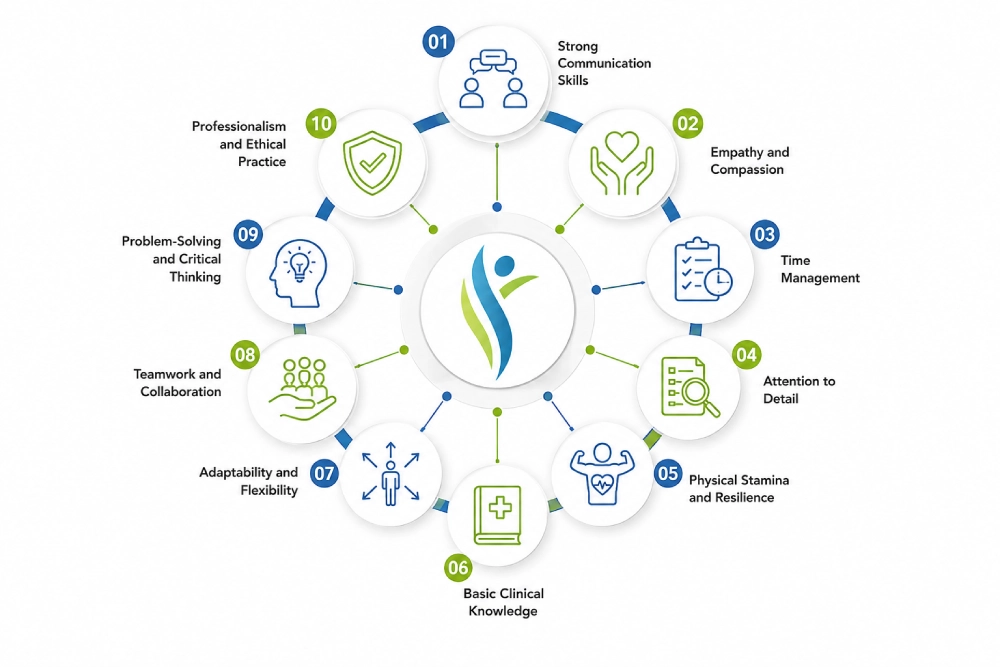
Strong Communication Skills
Clear communication is the foundation of excellent patient care. Healthcare professionals must share information effectively with patients, families, and colleagues. To become good at communication, you can enrol in the Effective Communication course of Healthcare Academy London(HCA London) that ensures safety, reduces errors, and builds trust. Key benefits of this skill include :
- Explain procedures clearly: Educate patients about what will happen during procedures and routine care.
- Report patient conditions accurately: Keep medical staff informed about changes in health or behaviour.
- Practice active listening: Pay full attention to patients’ concerns and respond thoughtfully.
- Use simple language: Avoid medical jargon when speaking with patients and families.
Example
An observation that a geriatric client has trouble breathing when having breakfast is made by a healthcare assistant. This way, nurses can conduct an assessment of the client and commence treatment before the condition deteriorates.
Empathy and Compassion
Empathy is the understanding of how a patient feels both physically and mentally. Expressing compassion makes the patient feel safe, valued, and respected. Trust is gained, and recovery can be hastened. Examples of empathy include:
- Listen carefully: Listen to the worries and emotional state of patients.
- Offer support: Give reassurance and comfort when needed.
- Adjust care: Tailor care to meet the needs of every individual patient.
Example
A patient with dementia becomes distressed during personal care. Speaking calmly, maintaining eye contact, and offering reassurance helps the patient feel safe and cooperate.
Time Management
Effective time management is one of the must-have skills for healthcare assistants. Care assistants often handle multiple responsibilities, so prioritising tasks ensures patient care is timely and safe. In addition, organising your day efficiently reduces stress and improves overall productivity. Key strategies include:
- Plan your tasks: Start each shift with a clear plan of what needs attention.
- Prioritise urgent care: Address critical patient needs first.
- Use tools effectively: Leverage schedules, checklists, or digital reminders to stay organised.
Example
During a morning shift, you assist one patient with breakfast while preparing another for physiotherapy without delaying medication schedules.
Attention to Detail
The healthcare assistant must observe any subtle change in the state of the patient. Precision is essential in activities such as drug administration, documentation, and observation of vital signs. Missing out on anything will cause significant repercussions; therefore, concentration is vital. Some key considerations are:
- Double-check medications: Ensure the right dose reaches the right patient at the right time.
- Keep accurate records: Document patient care clearly and promptly.
- Observe changes closely: Spot early signs of discomfort or health deterioration.
Example
While helping a patient dress, you notice swelling around a surgical wound and report it immediately to the nursing team.
Physical Stamina and Resilience
Caring for patients can be both physically and emotionally demanding. Therefore, healthcare workers need stamina to handle long shifts while still providing high-quality care. In addition, building resilience helps prevent burnout and allows you to perform at your best. By staying strong and balanced, you can support patients more effectively and feel more confident in your work. Key strategies to maintain stamina and resilience:
- Pace yourself: Try to take short breaks when you can in order to refresh yourself and remain focused.
- Maintain fitness: Regular exercise improves strength, energy, and endurance.
- Manage stress: Practice mindfulness or deep breathing exercises to help you relax and concentrate.
Example
After assisting several patients with mobility throughout the day, you remain focused and continue delivering safe care during an evening emergency.
Basic Clinical Knowledge
Having knowledge about clinical procedures and practices plays an integral part in the job description for the healthcare assistant. Also, knowledge about hygiene norms allows one to maintain good health conditions for the patients. This way of working leads to providing quality services without any complications. Ways to apply clinical knowledge:
- Monitor vital signs: Regularly check temperature, pulse, breathing, and blood pressure to detect any changes early.
- Perform basic care tasks: Assist with wound care, personal hygiene, and safe movement.
- Follow infection control rules: Take steps to prevent the spread of germs and keep patients safe.
Example
While checking a patient’s temperature and pulse, you notice abnormal readings and inform the nurse for immediate assessment.
Adaptability and Flexibility
Healthcare settings are dynamic environments. Hence, you should be able to adapt to new environments and deal with emergencies and patient requirements calmly. Moreover, adaptability also contributes to the maintenance of high standards of practice, as well as the safety of patients. Ways to remain adaptable include:
- Stay calm under pressure: React quickly and efficiently when sudden changes occur.
- Adjust routines when needed: Shift priorities if patient conditions or schedules change.
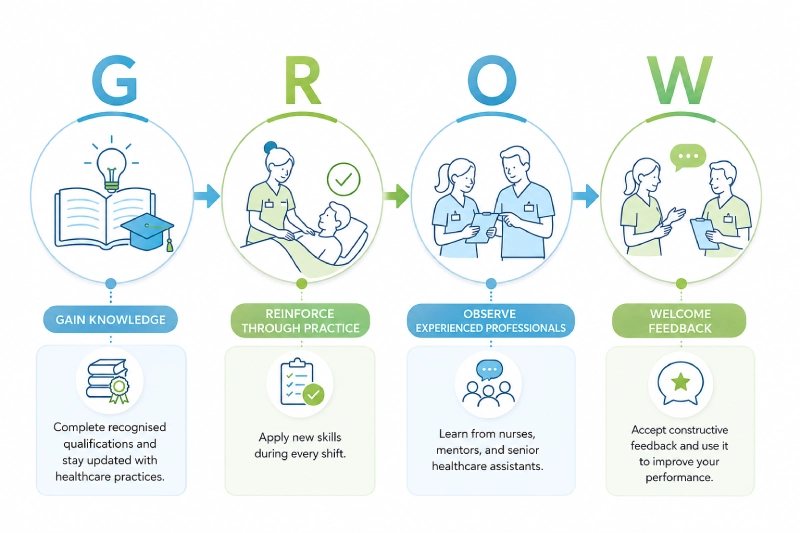
- Keep learning: Embrace new procedures, technologies, and care methods to improve your skills.
Example
Your ward receives several emergency admissions, requiring you to adjust your planned tasks while continuing to support existing patients.
Teamwork and Collaboration
Collaboration is most successful in patient care when everyone works together. It means that working hand in hand with nurses, physicians, and other staff members will lead to better outcomes and fewer errors. Moreover, good collaboration provides a positive atmosphere for patients as well as for peers. Here are some key approaches to teamwork:
- Communicate clearly: Share observations and updates with colleagues promptly so everyone stays informed.
- Support each other: Help team members when needed to ensure care runs smoothly.
- Respect roles: Value the abilities and contributions of all employees for improved patient results.
Example
A nurse asks you to monitor a patient’s fluid intake while responding to another emergency, ensuring care continues without interruption.
Problem-Solving and Critical Thinking
Healthcare workers often face unexpected situations. Therefore, noticing problems quickly and making clear decisions is essential. In fact, strong problem-solving skills are part of what are the most essential skills and qualities of a health care assistant, because they build confidence and reliability. By staying focused, you can handle challenges safely and efficiently. Key ways to improve problem-solving and critical thinking:
- Spot warning signs early: Watch for any changes in a patient’s condition. If something seems unusual, act immediately.
- Think critically: Analyse the situation carefully, then choose the best course of action.
- Handle conflicts calmly: Address disagreements with patients or team members politely and find practical solutions.
Example
You observe that the patient is suddenly confused and excessively tired. Prompt reporting of such symptoms assists the medical team in looking into the problem.
Professionalism and Ethical Practice
Professionalism is essential for providing safe, respectful, and person-centred care. To become a credible healthcare assistant, you need to follow workplace policies, protect patient confidentiality, respect individual choices, and maintain dignity and privacy throughout care. These expectations also reflect the CQC’s fundamental standards, which emphasise safe care, person-centred support, dignity, respect, and protecting people from avoidable harm. Developing these professional behaviours helps healthcare assistants build trust with patients and contribute to a safe and supportive care environment. Some of the key factors in demonstrating professionalism are:
- Maintain confidentiality: Protect patient information and follow data protection and confidentiality requirements.
- Follow professional standards: Adhere to workplace procedures, safety guidelines, and your scope of practice.
- Show respect and integrity: Treat every patient fairly, respectfully, and without discrimination.
- Be accountable: Take responsibility for your actions and report concerns or mistakes promptly.
Example
Family members of a patient request information about their medical confidentiality. You tactfully clarify to them that such issues can be discussed by authorised health care personnel only.
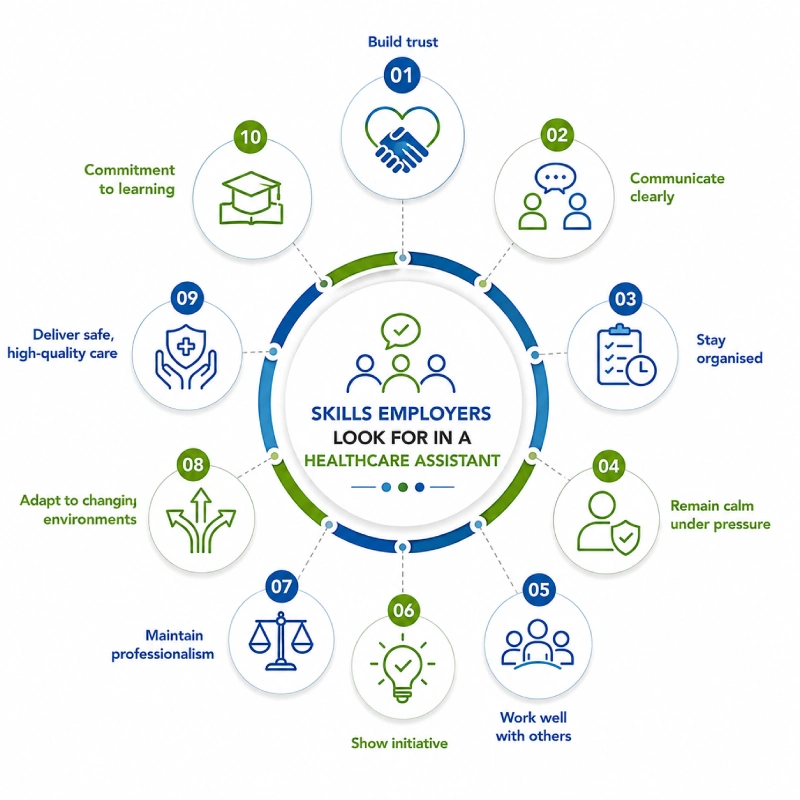
Essential Healthcare Assistant Skills at a Glance