Qualifications Required to Become a Healthcare Assistant
One of the biggest advantages of starting a career as healthcare assistant is that there is no single route into the profession. Many employers provide on-the-job training, while others prefer candidates with relevant qualifications or previous care experience.
Here are the most common qualifications that can help you start your career:
Entry-Level Qualifications
Care Qualifications
Work-Based Learning
Employer Training
Key Skills Every Healthcare Assistant Needs
Healthcare assistants need practical skills to provide safe, effective, and person-centred care. Here are the key skills employers look for:
| Skill |
Why It’s Important |
| Clinical Observation |
Detects changes in a patient’s condition and supports early intervention. |
| Record Keeping |
Ensures accurate patient records and continuity of care. |
| Infection Prevention |
Reduces the spread of infections and protects patients and staff. |
| Manual Handling |
Helps move and support patients safely while preventing injuries. |
| Digital Skills |
Supports the use of electronic patient records and healthcare systems. |
| Medication Awareness |
Promotes safe medication support and timely reporting of concerns. |
| Prioritisation |
Helps manage multiple tasks efficiently during busy shifts. |
| Confidentiality |
Protects patient privacy and complies with healthcare regulations. |
| Adaptability |
Enables you to respond to changing patient needs and care environments. |
| Basic Life Support (BLS) Awareness |
Prepares you to respond appropriately during medical emergencies. |
How to Become a Healthcare Assistant with No Experience?
Many people worry they need previous healthcare experience before applying for healthcare assistant jobs. In reality, many employers welcome applicants with no professional care background, provided they demonstrate compassion, willingness to learn, and a genuine interest in helping others.
If you’re starting from scratch, there are several ways to improve your chances of finding your first role.
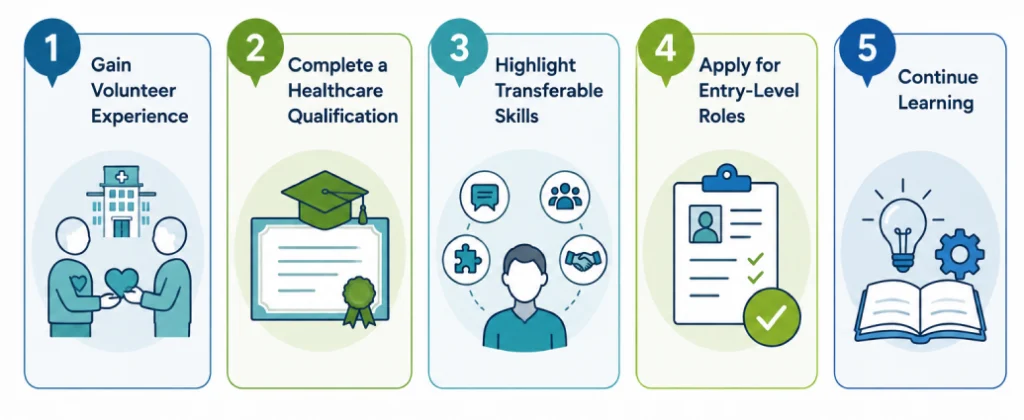
1. Gain Volunteer Experience
Volunteering at hospitals, care homes, charities, or community organisations helps you develop valuable experience while demonstrating your commitment to caring for others.
2. Complete a Healthcare Qualification
Taking a recognised healthcare or care diploma helps you build practical knowledge and shows employers that you are prepared for the role.
3. Highlight Transferable Skills
Experience from customer service, hospitality, childcare, education, or retail can demonstrate valuable skills such as communication, teamwork, patience, and problem-solving.
4. Apply for Entry-Level Roles
Many healthcare providers offer entry-level positions with full training, making them an excellent starting point for people new to healthcare.
5. Continue Learning
Healthcare is constantly evolving, so continuing your professional development through training and workshops helps you build confidence and progress in your career.
7 Steps to Become a Healthcare Assistant
Starting a career as a healthcare assistant may seem overwhelming at first, but breaking the process into simple steps makes it much easier. Following these steps will help you prepare for your first role and build a successful career in healthcare.
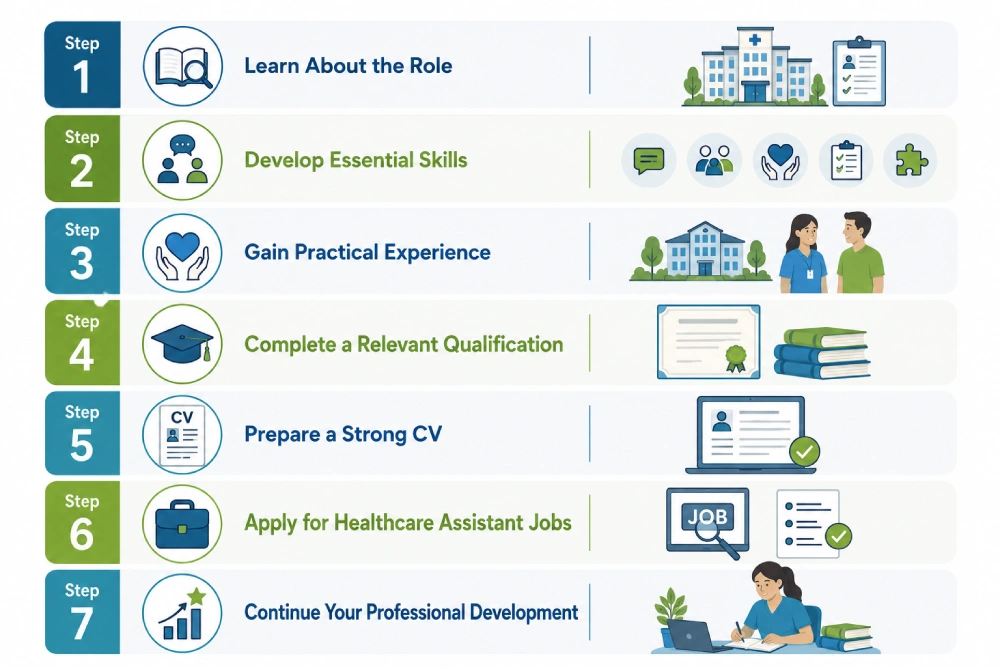
Step 1: Learn About the Role
Find out more about the job duties, working environments, and responsibilities of a healthcare assistant to better understand the position and determine if it is right for you.
Step 2: Develop Essential Skills
Focus on building communication, teamwork, empathy, organisation, and problem-solving skills. These qualities are highly valued by employers and support effective patient care.
Step 3: Gain Practical Experience
Explore volunteer positions, placements, or job shadowing in hospitals, nursing homes, or community healthcare facilities. Practical experience increases your confidence level and adds weight to your resume.
Step 4: Complete a Relevant Qualification
Even if qualifications may not necessarily be required, taking a recognised health-care or care course will enhance your knowledge and make you more employable.
Step 5: Prepare a Strong CV
Emphasise your qualifications, transferable skills, volunteering experience, and any experience that you may have. Customise your CV depending on the healthcare assistant job you are applying for.
Step 6: Apply for Healthcare Assistant Jobs
Look for employment opportunities in hospitals, GP clinics, care homes, private healthcare organisations, and community healthcare providers. Go through each job description carefully and then customise your application.
Step 7: Continue Your Professional Development
After securing a job, ensure that you keep on learning through training within the workplace, professional development courses, and hands-on practice. This continuous learning will lead to higher-level jobs for healthcare assistants in the future.
Salary Expectations for a Healthcare Assistant
Healthcare assistant salaries vary depending on your employer, experience, location, and level of responsibility. If you work for the NHS, your salary is based on the Agenda for Change pay bands.
NHS Band 2 (Entry Level)
NHS Band 3 (Experienced Healthcare Assistant)
What Can Affect Your Salary?
Career Progression for Healthcare Assistants
Being a healthcare assistant is the starting point on the road to a long and fulfilling career in healthcare. The knowledge and skills that you acquire can lead you into all sorts of healthcare-related opportunities.
With experience and additional training, you may progress to roles such as:
A large number of healthcare assistants also opt for further studies and become registered nurses, midwives, or allied health professionals through apprenticeships or universities.
Challenges of Being a Healthcare Assistant
Working as a healthcare assistant is incredibly rewarding, but it can also be physically and emotionally demanding. Understanding these challenges before starting your career helps you prepare for the realities of the role.
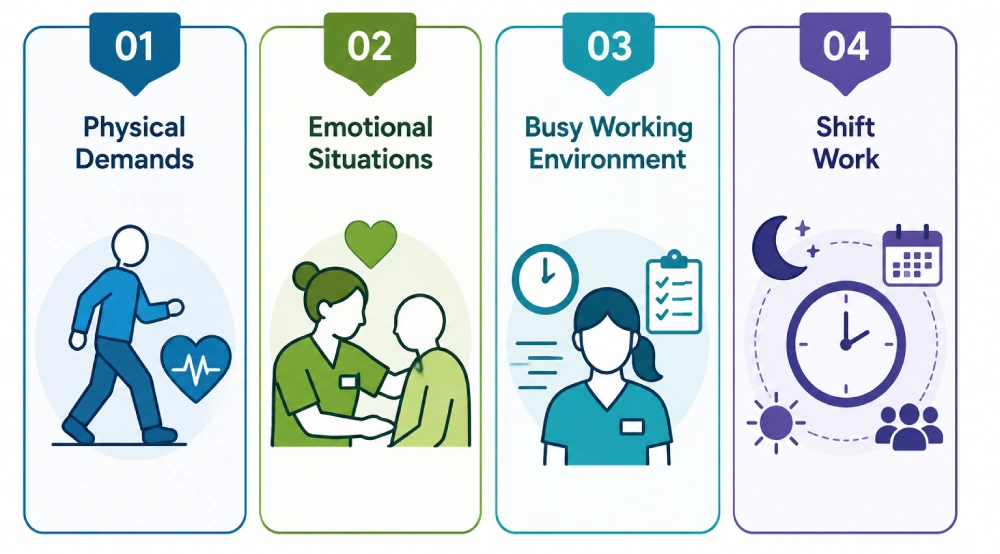
1. Physical Demands
Healthcare assistants spend much of their shift standing, walking, and helping patients move safely. Good physical fitness and safe moving and handling techniques are essential.
2. Emotional Situations
You may care for patients who are seriously ill, recovering from surgery, or receiving end-of-life care. Supporting patients and their families during difficult times requires compassion and emotional resilience.
3. Busy Working Environment
Healthcare settings can be fast-paced, particularly in hospitals. You may need to care for several patients while responding to changing priorities throughout your shift.
4. Shift Work
Many healthcare assistants work evenings, nights, weekends, and public holidays to ensure patients receive care around the clock. Flexibility is often an important part of the role.
Although these challenges can be demanding, they also help you develop confidence, resilience, and valuable healthcare experience. For many healthcare assistants, knowing they have improved someone’s day makes every challenge worthwhile.
Online Resources for Aspiring Healthcare Assistants
Whether you’re exploring the profession or preparing to apply for your first role, using trusted learning resources can help you build your knowledge and confidence. Some useful resources include:
Using reliable resources allows you to stay informed about industry expectations while continuously improving your skills.
How to Craft a Strong Application for a Healthcare Assistant Role?
A well-prepared application can help you stand out from other candidates, even if you have limited healthcare experience. Employers look for applicants who demonstrate compassion, professionalism, and a genuine commitment to caring for others.
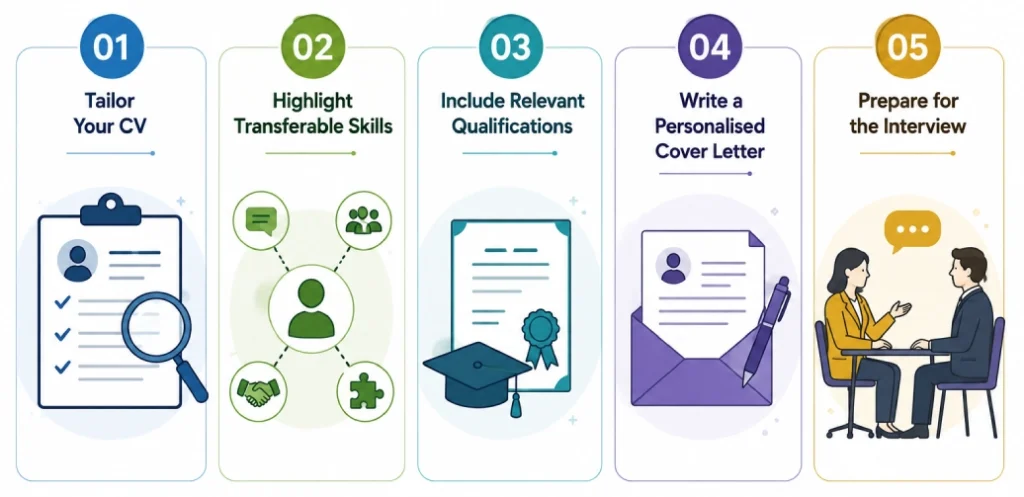
1. Tailor Your CV
Carefully read the job description and highlight the qualifications, experience, and skills that match the employer’s requirements. Tailoring your CV for each application shows attention to detail and genuine interest in the role.
2. Highlight Transferable Skills
Even if you haven’t worked in healthcare before, experience in customer service, hospitality, childcare, education, or volunteering can demonstrate valuable skills such as communication, teamwork, patience, and problem-solving.
3. Include Relevant Qualifications
List any healthcare-related qualifications, training courses, or certifications you have completed. These may include care diplomas, safeguarding training, first aid, or other relevant learning.
3. Write a Personalised Cover Letter
Use your cover letter to explain why you want to become a healthcare assistant and how your skills make you a suitable candidate. Focus on your willingness to learn, your caring nature, and your commitment to providing high-quality patient care.
4. Prepare for the Interview
Before attending an interview, research the organisation and review the job description. Be prepared to discuss situations where you demonstrated teamwork, communication, compassion, and problem-solving skills. Employers often value your attitude and values just as much as your experience.
Enhance your Skills as a Healthcare Assistant
Building the right skills is essential for delivering high-quality patient care and advancing your healthcare assistant career. Whether you’re just starting or looking to improve your knowledge, continuous learning can boost your confidence, strengthen your CV, and open the door to new opportunities.
If you enjoy helping others and want to step into healthcare, becoming a healthcare assistant provides a strong starting point. HCA London offers structured healthcare courses that help learners build the essential skills that boost their CV and give them confidence to understand the role.
FAQs