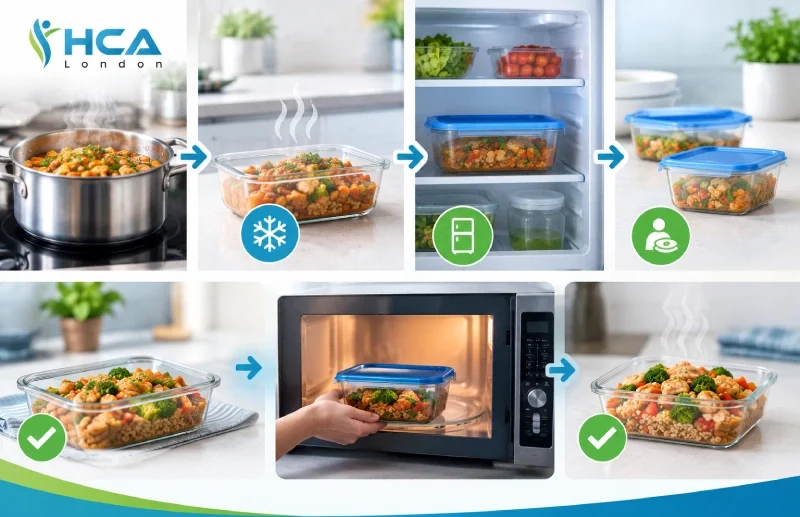
You should reheat cooked food only once to lower the risk of food poisoning. Safe reheating also starts with proper cooling and storage. Poor storage can let harmful bacteria grow and make food unsafe. So, handle cooked food with care from the start. However, safe reheating does not begin when you turn on the microwave or hob. Instead, cool food quickly, store it in the fridge, and reheat only the portion you plan to eat.
This guide explains how to reheat leftovers safely at home. You will also learn how to cool, store, and handle cooked food with care.
TL;DR
Reheat cooked food only once.
Heat food until it is steaming hot throughout.
Reheat only the amount you plan to eat.
Cool cooked food quickly after cooking.
Keep chilled food in the fridge until you need it.
Eat refrigerated cooked food within two days, or freeze it.
Take extra care when storing and reheating cooked rice.
Stir food while microwaving to reduce cold spots.
Follow the cooking or reheating instructions on food packaging.
Never rely on smell or appearance alone to judge food safety.
How Many Times Can You Safely Reheat Food?
You should safely reheat cooked food only once. The FSA advises against reheating food more than once. Repeated heating and cooling can give bacteria more chances to grow. However, reheating alone does not always make food unsafe. Proper cooling and storage also play a key role. Food can become unsafe before you even reheat it. Therefore, handle remaining meals with care from the moment you finish cooking.
For example, you cook a large pot of curry for dinner. You then leave it on the worktop for several hours. Later, you heat it until it feels hot. However, this may still create a food safety risk. Bacteria can grow while food stays warm for too long. Reheating may not remove all the risks from poor storage. Therefore, always follow safe steps when handling previously cooked food. Do not focus only on the final reheating step.
Why “Only Once” Is Recommended
Reheating food multiple times can increase the risk of food poisoning. Multiple reheating gives you multiple chances to do something wrong. Bacteria may even start producing dangerous toxins. Reheating can’t always eliminate these toxins. That is why you should reheat only as much food as you want to consume.
The Science Behind Reheating Food
Cooking kills most bacteria. But sometimes bacteria survive and multiply as the food cools. Bacteria can also transfer to food through contact with food handlers, utensils, or even surfaces. Reheating kills off many bacteria, although it does not eliminate all food hazards.
How Temperature Affects Bacterial Growth
Bacteria thrive in an ideal environment. The FSA defines the danger zone as between 8°C and 63°C. This means that any food left at these temperatures for too long can become dangerous. But the fridge retards the rate at which bacteria grow. Freezing stops bacterial growth as long as the food remains frozen.
Why Cooling and Reheating Can Create Risks
Stored food undergoes numerous temperature changes. Food is cooked and left to cool before it is put away. At other times, people take remaining meals out of the refrigerator and reheat them. This increases food safety risks. For this reason, break large amounts of food into smaller portions before storing.
Why Uneven Heating Matters
Food in a microwave may heat up unevenly, with hot spots and cold spots. While the exterior heats up, the interior may stay cold. As a result, some parts may not reach a high enough temperature. When you heat food in the microwave, stir or rotate it as appropriate. Then make sure the inside is steaming hot.
UK Food Safety Advice on Reheating Leftovers
TheFood Standards Agency (FSA) gives clear advice on reheating cooked food. Reheat them only once, and heat them until steaming hot throughout. However, food safety and hygiene start before you reheat your meal. You should also cool remaining food quickly and store it safely. Always check the storage and heating advice on food packaging, too.
Food Safety Methods for Cooked and Stored Food
Safe food storage starts with a few simple steps. First, cool cooked food quickly after cooking. Then, store it in clean containers and keep it chilled. Finally, check the food before reheating to help reduce the risk of food poisoning.
Cool Foods Rapidly
If you have a large amount of food, it takes longer to cool. Therefore, keep it in small portions before cooling. Also, do not leave food out for long after cooking. Bacteria grow rapidly in warm food.
Store Cooked Food Safely
Use clean, lidded containers when storing food after cooking. Keep the food covered and store it in the refrigerator immediately. The refrigerator’s low temperature inhibits bacterial growth and keeps food fresh longer.
Check Food Before Reheating
Check when you stored the food and how long it has stayed in the fridge. Follow the packet instructions and heat the food until it is steaming hot throughout. Never rely on smell, colour or taste to judge safety. Harmful bacteria may not change how food looks, smells or tastes.
HACCP and Reheating Food
HACCP helps food businesses manage food safety risks clearly. It focuses on preventing problems before they affect food. As a result, businesses can use HACCP to control risks during cooking, cooling, and reheating.
What Is HACCP?
HACCP stands for Hazard Analysis and Critical Control Points. It provides a clear framework for controlling safety risks in the food industry. First, staff identify hazards such as bacteria, chemicals or foreign objects. Then, they find the steps where they can control these risks.
Reheating is dangerous if staff do not use proper temperature controls. This is why businesses need to establish reheating guidelines for their staff. Guidelines help ensure food is heated safely at all times. Consequently, HACCP helps prevent problems before they affect customers.
How HACCP Controls Reheating Risks
The HACCP system helps business organisations effectively control reheating risks by providing safety procedures. Personnel must reheat foods properly and maintain safe temperatures. Proper cooling and storage are other important controls. Hygienic hands and utensils minimise contamination risk.
HACCP in Commercial Food Settings
Restaurants, cafés and caterers can use HACCP to manage food safety at each stage. Good health and safety practices also help protect staff and customers. Staff can check cooking, cooling, storage and reheating to reduce risks. Care homes also need clear controls when storing and reheating meals. Regular checks and records help staff keep food safe for customers and residents.
Straight From the Fridge: Can You Reheat Stored Food?
Yes, you can reheat properly stored food straight from the fridge. Take out the portion you need and place it in a suitable dish. If you use a microwave, spread the food evenly and stir it during heating. This helps remove cold spots. Check thick foods carefully and make sure they are steaming hot throughout. You can then eat them straight away. Keeping previously cooked food cold until you reheat it also limits the time they spend at warmer temperatures.
How Long Can You Keep Leftovers?
The FSA advises eating cooled remaining portions within two days. Keep them in the fridge until you are ready to eat them. If you cannot eat them within two days, freeze them instead. Also, avoid eating stored food that has been out too long. They may not be safe, even if they look or smell fine.
Which Foods Can You Safely Reheat?
Many cooked foods can remain safe when you store them correctly. However, what foods are most risky to reheat? The main concern comes from foods that need careful cooling and storage.
Chicken and Other Meat:
You can reheat cooked chicken and other meats if you store them safely. Is it safe to reheat chicken? Yes, as long as you cool, store, and reheat it correctly. Take out only the portion you need. Then, heat it until it is steaming hot throughout.
Reheating Pasta:
Cooked pasta can make a handy stored meal. Cool it fast, then keep it in the fridge. When reheating, heat only one portion at a time. If you use a microwave, stir the pasta and check the centre before serving.
Soups, Stews and Curries:
Soups, stews and curries usually reheat well. However, thick foods can develop cold spots. Stir them during heating and check that the centre is steaming hot. Also, avoid heating the whole batch more than once.
Home-Cooked Meals:
Many home-cooked meals can be stored safely for later use. These include casseroles, pasta bakes, pies and vegetable dishes. Cool them quickly and divide large amounts into smaller containers. This helps food cool and reheat more evenly.
Cooked Rice:
Cooked rice requires more attention. How many times can you reheat rice? The best way to reheat it is to warm cooked rice only once. According to the FSA, cool rice quickly, ideally within an hour. Then store it in the refrigerator and consume it within 24 hours. So, cool the rice quickly and refrigerate it.
Takeaway Food:
You can also save some takeaway meals for later. Refrigerate remaining food quickly if you don’t plan to eat it soon. Take extra care with takeaway rice. The FSA advises eating rice soon after purchase or delivery.
Best Practices for Reheating Food
A few simple steps can make reheating food safer and easier. So, what is the best way to reheat food? Choose a suitable method and heat the food until it is steaming hot throughout.
Heat Food Until Steaming Hot
Heat food until it is steaming hot throughout. Check the centre, as it can stay cold while the outside gets hot. Stir food when needed to help it heat evenly. This also helps spread heat through the whole portion.
Follow Packaging Instructions
Always check the cooking and reheating instructions on the pack. Follow the recommended heating and standing times. This helps you heat packaged food safely and evenly. It also helps you avoid underheating the food.
Reheating Food in the Oven
You can safely reheat many foods in the oven. Place the food in an oven-safe dish and cover it if needed. Follow the heating time and temperature on the pack. Heat the food until it is steaming hot throughout. Check the centre, as thick foods may stay cold inside. Reheat only the amount you plan to eat.
Common Reheating Mistakes to Avoid
Simple mistakes can make stored food less safe. Avoid these common errors when reheating food.
🦠
Leaving Cooked Food Out Too Long
Do not leave cooked food at room temperature for too long. Warm conditions can help bacteria grow.
Avoid this
🌡️
Heating Only the Surface
Check more than the surface of your food. The centre can stay cold while the outside feels hot.
Check the centre
🍲
Reheating the Whole Batch
Heat only the amount you plan to eat. This helps you avoid heating the rest unnecessarily.
Heat what you need
📅
Keeping Stored Food Too Long
Use remaining food within the recommended storage time. If you cannot eat it in time, freeze it where suitable.
Watch storage time
🍚
Ignoring Rice Safety
Take extra care with cooked rice. Cool it quickly, store it safely and follow the recommended storage time.
Take extra care
Domestic vs Commercial Reheating
Reheating food at home requires simple, safe habits. Commercial kitchens need more controls because they handle more food. The main difference is the scale and level of food handling.
Reheating Food at Home
Cool cooked food quickly after cooking. Store it in clean, covered containers in the fridge. Reheat only the portion you need and reheat it once. These steps help keep food safe at home.
Reheating Food in Commercial Settings
Commercial kitchens need clear food hygiene procedures. Staff must control food temperatures during storage and reheating. They also need proper training and HACCP systems. These controls help staff prepare and serve food safely.
Why Commercial Kitchens Need Extra Controls
Commercial kitchens often handle large amounts of food. More staff and more handling can increase food safety risks. Therefore, businesses need clear checks and good hygiene practices. Strong controls help protect customers and meet food safety duties.
Is Reheating Food Twice Illegal in the UK?
No, reheating food twice is not automatically illegal in the UK. However, the Food Standards Agency (FSA) advises reheating cooked meals only once. This guidance helps reduce the risk of food poisoning from repeated heating and cooling.
The best way to cook at home is simple. Cool unused food quickly and refrigerate it properly. Then reheat the portion you plan to eat. Make sure that the food is steaming hot when reheating.
UK Food Law and Regulations
UK food law does not create a simple rule that says reheating food twice is illegal. Instead, food businesses must follow wider food safety and hygiene rules. For example, the Food Safety Act 1990 provides a key part of the UK’s food safety framework. Food businesses must also meet hygiene requirements under relevant food hygiene regulations. The rules cover how businesses handle, prepare and serve food safely.
The Food Safety and Hygiene (England) Regulations 2013 also set food hygiene duties for businesses in England. These rules include requirements for safe food handling and hygiene systems. Therefore, businesses must manage food safely throughout preparation, storage and service.
So, reheating food twice is not a blanket criminal offence. However, repeatedly reheating remaining portions goes against FSA food safety advice. Following the guidance can help reduce avoidable food safety risks. For most people, the rule is easy to remember: cool unused food quickly, store it safely and reheat it only once.
Reheating Food: Myths vs Facts
Myths
Facts
You can heat the same meal again and again.
Reheat stored meals only once for safety.
Reheating always makes food safe.
Poor storage can make food unsafe before you reheat it.
You can smell harmful bacteria.
Harmful bacteria may not affect smell or appearance.
Microwaves heat food evenly.
Microwaves can leave cold spots.
Rice does not need special care.
Cooked rice needs to cool quickly and be stored carefully.
Reheating twice is always illegal.
Food safety guidance and legal duties are different.
Final Thoughts
Leftovers can save time, money and food. However, safe handling matters from cooking to serving. How many times is it safe to reheat food? The safest general rule is to reheat prepared meals only once. Cool them quickly, store them safely, and heat them until they are steaming hot throughout. Also, reheat only the portion you plan to eat. These simple habits can help you enjoy food while reducing the risk of food poisoning.
Thorough reheating can kill many harmful bacteria. However, some toxins may remain after certain bacteria grow in food. Therefore, safe storage remains essential.
No, UK law does not ban reheating food twice. However, the FSA advises reheating leftovers only once. Food businesses must also follow wider food safety laws.