Our courses are now officially recognised by CPD Certification Service

What Are The 16 Care Certificate Standards?

Most people step into care work because they genuinely want to help, but wanting to help and knowing how to help are two very different things. That’s exactly where the Care Certificate comes in. It gives you the essential skills to deliver safe, compassionate, and high-quality care every single day. Whether you’re just starting out or want to brush up on the basics, understanding these standards could be the thing that takes your career to the next level.

This guide explains “what are the 16 Care Certificate standards?” and how they can help you succeed in your care career.

Table of Contents

What is the Care Certificate?

It’s a set of standards that health and care professionals follow every day on the job, and provide compassionate, safe, and high-quality care. It supports non-regulated workers by giving everyone the same solid foundation from the start. Moreover, how many standards of care are there? There are 16 standards; you must complete all in full before you receive your certificate.

Learn, Grow, and Progress in Your Care Career

The right training helps you build the confidence and skills to provide safe, compassionate care. Our Care Certificate courses give you a strong foundation for a successful career in healthcare, helping you feel prepared for the challenges of everyday care.

Starting from £4.99

Learn, Grow, and Progress in Your Care Career

Why Are the Care Certificate 16 Standards Important?

The Care Certificate standards are important because they give every care worker the same baseline of skills, knowledge, and behaviours,  so no matter where you work, you’re delivering high-quality care. They also help employers stay on top of regulatory and safety compliance, including CQC expectations.

Here’s what the standards help you with:

Safe and effective support

You’ll know exactly how to care for people the right way

Key topics

From communication and safeguarding to health and safety and person-centred care

Confidence and workplace skills

So you feel prepared and capable from day one

Consistency across the sector

Everyone is working to the same standard, every time.

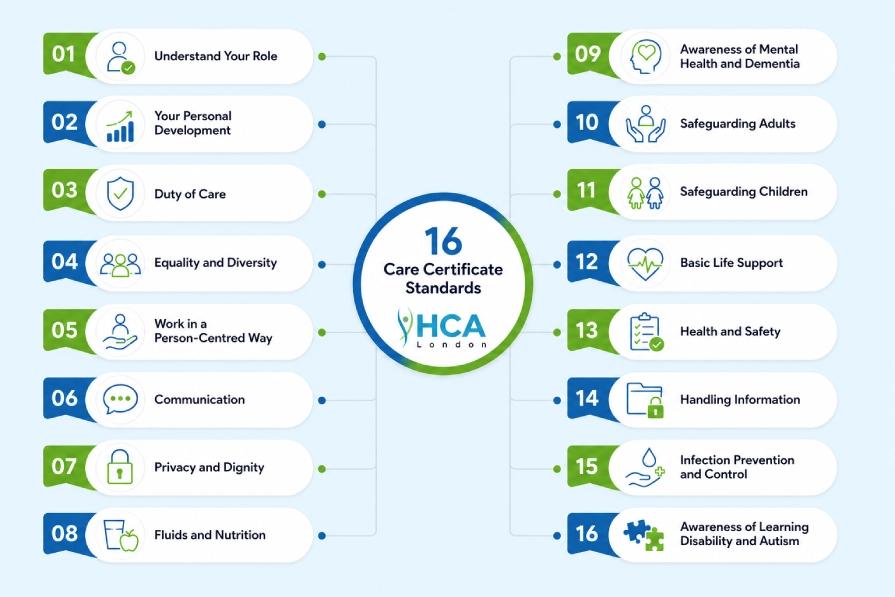
What Are the 16 Care Certificate Standards?

How many standards are included in the certificate? The Care Certificate have 16 standards, each covering everything you need to support people safely and confidently. Here’s a breakdown of each one:

1. Understand Your Role

Know your duties, responsibilities, and professional boundaries so you perform exactly what your role demands. It also helps you understand how to work effectively alongside colleagues and other professionals. In short, when everyone is clear on their role, the whole team works better.

2. Your Personal Development

Care is a career that keeps growing, and this standard makes sure you grow with it. It encourages you to reflect on your practice, spot areas to improve, and set personal goals. As a result, building a development plan early on keeps you always moving forward.

3. Duty of Care

This standard is about your responsibility to keep the people you support safe at all times. This includes how to protect people from harm, raise concerns and deal with complaints or conflicts the right way. In short, it is a legal and ethical obligation, and we must get it right.

4. Equality and Diversity

Treat everyone you care about fairly and with respect, no matter who they are or what they believe. Furthermore, this standard helps you understand equality, diversity, and inclusion in practical, real-world terms. It also provides you with the tools to challenge discrimination and make everyone feel valued.

5. Work in a Person-Centred Way

Person-centred care is about making the person central to what you do. This standard asks that you involve people in decisions about their own care and support their independence as far as possible. As a result, when you deliver genuinely person-centred care, people feel seen, heard, and respected.

6. Communication

Good communication is one of the most powerful tools you have as a care worker. This standard covers verbal, non-verbal, and written communication, as well as active listening skills. Therefore, when you communicate clearly and with empathy, you build trust,  and that trust is the foundation of great care.

7. Privacy and Dignity

Everyone you support has the right to feel respected and in control of their own space and information. This standard describes how to keep information confidential and how to always treat people with the respect they deserve. In short, never let anyone in your care feel left out or ignored.

8. Fluids and Nutrition

Good nutrition and hydration support overall health and wellbeing. This standard explains the importance of balanced diets and adequate fluid intake. In addition, it covers how to support people with specific dietary requirements.

9. Awareness of Mental Health and Dementia

Many people you support will be living with mental health conditions, dementia, or learning disabilities. This standard introduces you to common conditions and how they affect daily life. As a result, the more you understand, the more confident and compassionate your care will be.

10. Safeguarding Adults

Protecting vulnerable adults from abuse, neglect, and exploitation is one of the most important parts of your role. This standard helps you recognise different types of abuse, spot the warning signs, and know the right steps to take. Remember, safeguarding isn’t just someone else’s job; it’s everyone’s responsibility.

11. Safeguarding Children

Although many care roles focus on adults, safeguarding children remains important. This standard helps you recognise signs of abuse and neglect. Moreover, it explains your legal responsibilities and reporting procedures.

12. Basic Life Support

Emergencies can strike at any time, so you must always stay prepared. This standard introduces basic life support principles, including CPR awareness, and teaches you how to respond quickly and calmly. Most importantly, having these skills could genuinely save someone’s life.

13. Health and Safety

A safe working environment protects everyone, both the people receiving care and those delivering it. This standard covers risk assessments, safe working practices, and hazard awareness. Therefore, when health and safety become second nature, everyone feels more secure.

14. Handling Information

As a care worker, you will be dealing with sensitive and confidential information on a daily basis. This standard explains how to keep accurate records, securely store data and responsibly share information in line with GDPR. Ultimately, good information handling is about protecting the trust you have been given.

15. Infection Prevention and Control

Infection spread prevention is of vital importance in care settings. This standard is about hand hygiene, the correct use of PPE and the infection control measures that keep everyone safe. In fact, small habits done consistently can make a big difference.

16. Awareness of Learning Disability and Autism

This is the newest addition to the Care Certificate standards 2025 , introduced in 2025 to reflect the growing need for more inclusive care. It helps you understand the experiences of autistic people and those with learning disabilities, and how to support them effectively. Above all, from reasonable adjustments to person-centred communication, this standard ensures no one is left behind.

What Skills Can You Gain From the Care Certificate?

The Care Certificate for care workers helps you build practical skills for everyday care. These skills also support career growth within the sector.


Communication Skills

You will learn to communicate clearly, listen actively, and build stronger relationships with the people you support.

Safeguarding Awareness

Spot signs of abuse or neglect and know exactly how and where to report concerns.

Person-Centred Care Skills

Respect individual choices and deliver support that’s tailored to each person’s needs.

Health and Safety Knowledge

Understand workplace safety, manage risks, and prevent accidents before they happen.

Professional Confidence

Build the knowledge and practical skills to feel fully prepared and confident in your role.

Final Thoughts

The Care Certificate builds the foundation for safe and effective care in the UK through 16 essential standards that guide everyday practice. Knowing “what are the 16 Care Certificate standards?” helps you understand the core skills and values needed in health and social care. These standards ensure consistent, person-centred support. In short, care standards help you feel confident and prepared in your care role.

Frequently Asked Questions

The 16 Care Certificate standards help new care workers develop the essential skills and knowledge needed to provide safe, compassionate, and high-quality care.

You can start by taking an online Care Certificate course to learn the essential knowledge. To achieve the full Care Certificate, you’ll also need to complete practical workplace assessments with your employer.

Most people complete the Care Certificate within 12 weeks, although the timeframe may vary depending on the employer and the learner’s progress.

The Care Certificate can help you start roles such as Healthcare Assistant, Care Assistant, Support Worker, or Home Care Worker. It is widely recognised by health and social care employers.

No, the Care Certificate is not a legal requirement, but many health and social care employers expect new staff to complete it.

Not always, however many employers require healthcare assistants to complete the Care Certificate during their induction.

If you do not complete the Care Certificate, your employer may extend your training or delay you from working independently.

The 6 Cs of care are Care, Compassion, Competence, Communication, Courage, and Commitment. These values guide healthcare professionals in delivering high-quality care.

The five CQC standards are Safe, Effective, Caring, Responsive, and Well-led. The Care Quality Commission uses these standards to inspect and rate care services.

The Care Quality Commission (CQC) is the independent regulator of health and adult social care services in England, responsible for inspecting and rating care providers.

0
0
Your Cart
Your cart is emptyReturn to Courses

Confused About Enrolment? Let’s Clear It Up!

Learner Feedback Form

Note: Please rate each statement using the scale below. Your responses are confidential and will be used solely to improve the quality of our programmes.
1 = Strongly Disagree 2 = Disagree 3 = Neutral 4 = Agree 5 = Strongly Agree

Section A: Course Content

Section B: Delivery & Design

Section C: Learning Outcomes

Section D: Open Comments