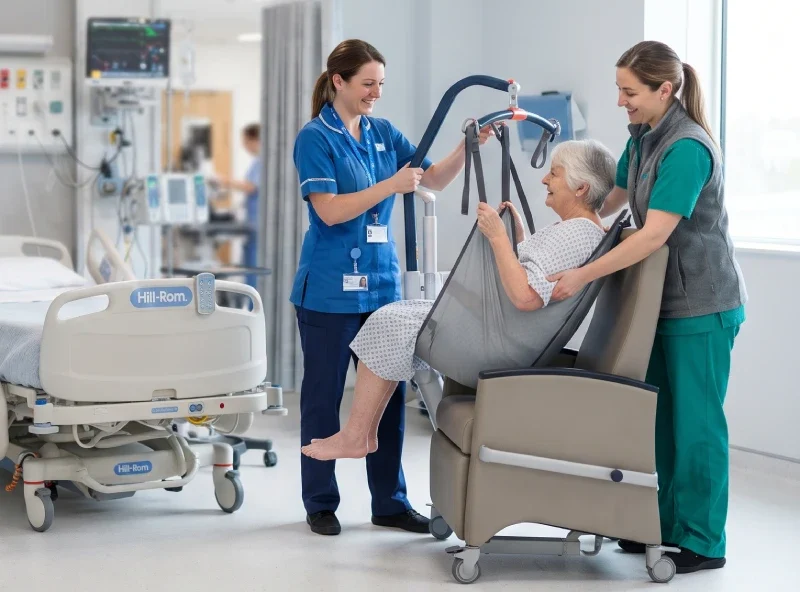
Moving and handling training for care staff teaches carers safe techniques to assist individuals with mobility. It covers safe techniques for helping someone get out of bed, transfer to a wheelchair, or change position. The training also teaches staff how to assess risks, use moving and handling equipment correctly, and reduce the risk of injury for the carer and the person receiving care.
These daily tasks may seem simple, but carrying them out incorrectly can cause serious injuries. That is why moving and handling training is an essential part of safe and effective care.
This guide to moving and handling training for care staff will walk you through what it involves, why it matters, and how to choose the right training for your team.
Table of Contents
Why Moving and Handling Training Matters?
Poor moving and handling practices can put both care staff and the people they support at risk. In fact, manual handling injuries remain one of the major causes of workplace injuries in the health and social care sector.
Without proper training, carers can develop back or joint injuries from using poor lifting techniques. As a result, they may need time off work, and some injuries can have long-term effects. This raises a simple but important question: what is moving and handling in care, if not the foundation for staying safe and injury-free on the job?
The training also helps protect people receiving care. Using the right techniques and equipment reduces the risk of falls, bruises, skin tears, and discomfort. It also helps carers move people with respect and maintain their dignity.
Build the Confidence to Move People Safely
Every safe move begins with the right training. Build the skills and confidence to move and support patients safely, reduce the risk of injury, and provide the high standard of care every person deserves.
In addition, well-trained staff feel more confident in their roles. They can make better decisions, follow safe practices, and provide high-quality, person-centred care every day.
Legal and Regulatory Requirements
Moving and handling training isn’t just good practice in the UK. It is a legal requirement, supported by the following UK laws and regulatory standards:
Although course content may vary, most moving and handling training covers the key skills care staff need to work safely. These usually include:
Risk assessment
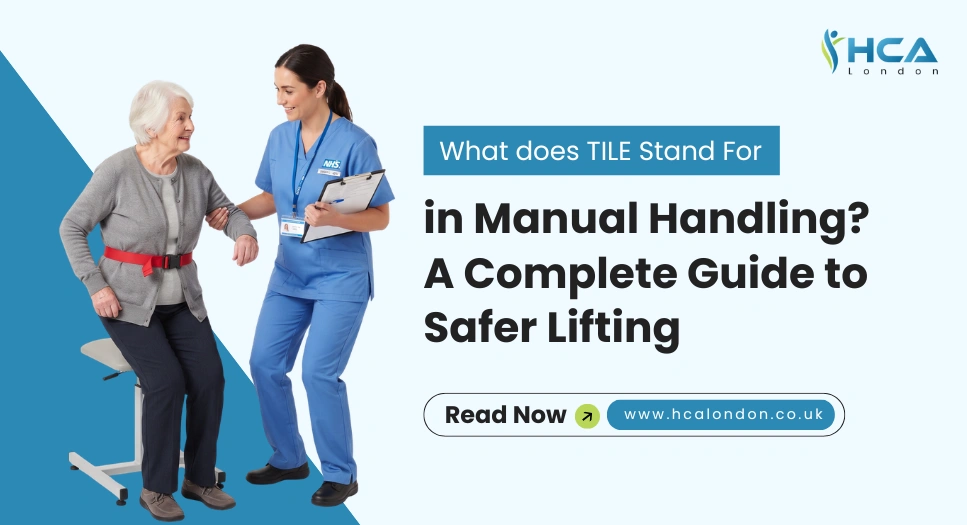
Learn how to assess each situation before moving someone using frameworks such as TILE/TILEO (Task, Individual, Load, Environment, and Equipment).
Safe moving techniques
Learn how to help people stand, sit, reposition in bed, and transfer safely between beds, chairs, wheelchairs, and toilets.
Using moving and handling equipment
Understand how to safely use hoists, slide sheets, transfer boards, standing aids, and other mobility equipment.
Knowing when not to move someone
Learn to recognise when you should wait for extra assistance, use specialist equipment, or follow an alternative approach instead of moving someone yourself.
Communication and consent
Learn how to explain the process, gain consent where possible, and reassure the person throughout the move.
Safe working practices
Follow care plans, report risks, and use safe techniques to protect both yourself and the person receiving care.
Key Principles of Safe Moving and Handling
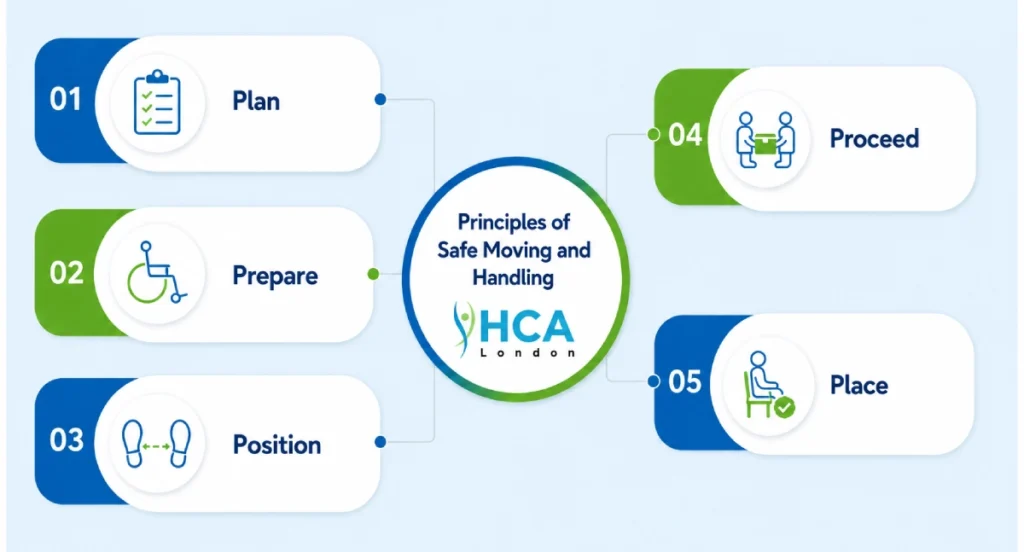
When learning about safe moving and handling, many people ask, What are the 5 key principles of moving and handling? These principles provide a simple framework that helps care staff carry out each task safely and effectively.
Let’s take a closer look at these principles and how they support safer care.
1. Plan
Take a few seconds before making any movement to plan what you will do. Ensure that you understand the needs of the individual, their mobility and the associated risks. Also consider the equipment needed and how best to approach the situation.
2. Prepare
Prepare the environment before you begin by clearing obstacles, setting up equipment such as hoists or slide sheets, and creating enough space to move safely. Also brief the individual on what’s about to happen. This is part of the list of 5 principles for safe moving and handling, where good preparation sets up everything that follows.
3. Position
Get into position before you make any movement. You should stand in a proper and balanced position with your feet spread out shoulder-width apart. Using the correct position helps protect your back throughout the process.
4. Proceed
Make the movement slow and steady, without hurrying or jolting yourself. Flex your knees and do not bend at the waist; keep from twisting your body. Doing things slowly and carefully prevents stress for both you and the other person.
5. Place
Finish the move by settling the person or load safely into position. Ensure they are comfortable, stable, and properly supported before you step away. This step is just as important as the rest, since a rushed finish can undo a safe move.
Who Needs Moving and Handling Training?
Anyone who directly supports people with reduced mobility needs this training. This training supports professionals across a wide range of health and social care roles who help people move, stand, or transfer safely as part of their job.
Here’s who typically needs it:
Care assistants and support workers in care homes, supported living, and domiciliary care
Healthcare assistants working in hospitals or clinical settings
Nurses who assist with moving and handling patients as part of their role.
Agency and temporary staff on care shifts.
Key Benefits of Effective Moving and Handling Training
Good moving and handling training brings real benefits for everyone involved, from the carer to the person receiving care.
This is what they include:
Fewer injuries
Staff learn safe moving and handling techniques and correct body mechanics, which lowers the risk of back strain, shoulder problems, and other long-term physical issues
Reduced sick days and staff turnover
Healthier staff are less likely to take extended leave or leave the role altogether, which helps providers keep experienced people on the team
Safer, more comfortable care
The person being moved is less likely to experience bruising, falls, or general discomfort during a transfer
Greater confidence
Staff feel sure of what they’re doing instead of guessing or rushing through a move, which makes the whole process smoother for everyone.
Better teamwork
Staff learn when a move needs two people, and how to coordinate safely, which builds stronger communication across the team.
Stronger CQC compliance
Well-trained staff help providers meet Regulation 12 and avoid enforcement issues, protecting the organisation’s reputation and rating
Choose the Right Moving and Handling Training
Choosing the right training provider makes a real difference to the safety and confidence of your team. As you continue understanding moving and handling training for care staff, look for a course that offers up-to-date content, practical guidance, and training that reflects current UK legislation and best practices.
Healthcare Academy (HCA London) Moving and Handling course is designed for care assistants, support workers, healthcare assistants, nurses, and anyone working in health and social care. Whether you’re starting a career in care or refreshing your existing knowledge, this course equips you with the practical skills and knowledge to support people safely and confidently.
Moving and handling is governed by the Health and Safety at Work Act 1974, Manual Handling Operations Regulations 1992, and Health and Social Care Act 2008.
Yes, many accredited providers offer online moving and handling training that teaches safe techniques, legal responsibilities, risk assessment, and equipment awareness through flexible learning.
Manual handling involves lifting or moving objects, while moving and handling focuses on safely assisting people using proper techniques, communication, and specialist equipment.
Poor moving and handling can cause back injuries, muscle strains, joint problems, falls, bruises, and skin tears for both care staff and the people they support.
You learn safe moving techniques, risk assessment, correct use of equipment, legal responsibilities, communication skills, and how to protect yourself and those in your care.
Yes, UK employers must provide suitable moving and handling training when staff carry out manual handling tasks involving people to reduce injury risks.
TILE stands for Task, Individual, Load, and Environment. It helps care staff assess risks and choose the safest moving and handling approach before any task.