Who Needs to Understand the 5 R’s of Safeguarding?
The 5 R’s of safeguarding are important for anyone involved in supporting or caring for people who may be at risk of harm, abuse, or neglect. These principles help healthcare staff recognise concerns, take the right Action, and protect individuals.
The 5 R’s are especially important for:
- Healthcare assistants (HCAs): They spend regular time with patients and may notice early signs of safeguarding concerns.
- Nurses and healthcare professionals: They assess concerns and provide appropriate support and protection.
- Care workers and support staff: They help maintain safe and respectful care for vulnerable individuals.
- Safeguarding leads and managers: They guide staff and ensure concerns follow the correct procedures.
Everyone involved in care has a role in safeguarding and should understand how to respond when concerns arise.
The 5 R’s of Safeguarding Explained
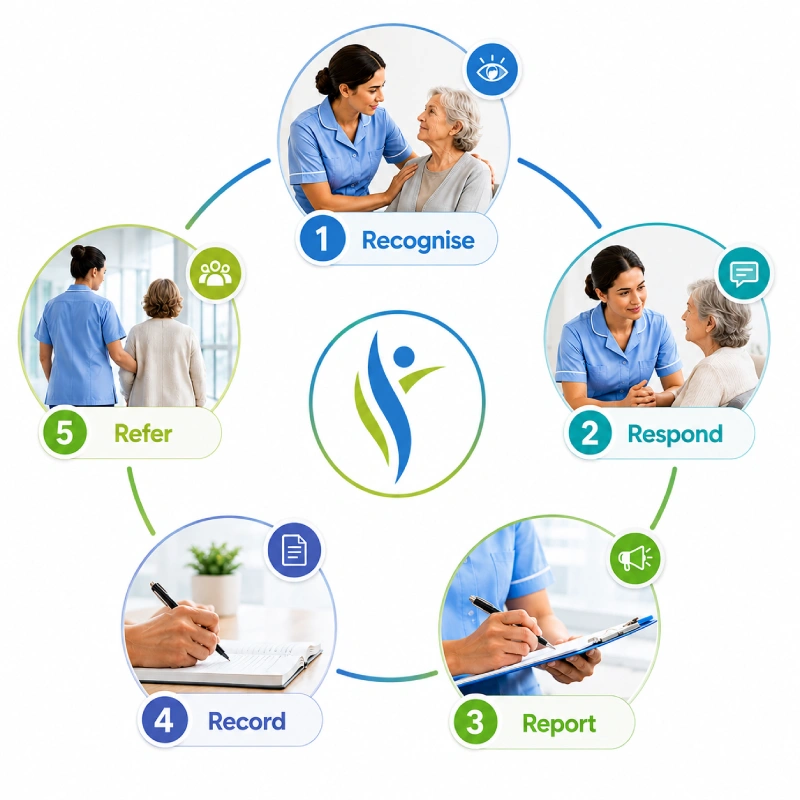
The 5 R’s of safeguarding provide a simple framework to help healthcare assistants respond appropriately when they identify a concern. If you are wondering what the 5 main areas of safeguarding are, they are Recognise, Respond, Report, Record, and Refer.
Follow these steps to handle concerns safely and quickly. Always use the correct reporting channels.
Recognise: Spotting the Signs Early
Recognise is about detecting indicators of abuse, neglect, or harm. These may include changes in behaviour, physical injury, poor personal hygiene, fear, or withdrawal. There may be an unexpected deterioration in someone’s health or well-being. Be vigilant and take all concerns seriously, even if the indicators are not obvious.
Respond: Taking the Right Action
Respond refers to handling a safeguarding concern in a calm and safe manner. If an individual raises a safeguarding issue, you need to listen to them attentively. Let them explain their worries without leading them. Do not make false promises. HCAs should not investigate the situation themselves. Instead, they should seek guidance from the appropriate person.
Report: Sharing Concerns Quickly
Reporting means informing the correct person about a safeguarding concern. This is usually a line manager, safeguarding lead, or responsible professional within the organisation. Furthermore, report concerns as soon as possible. Ultimately, this helps the person get the right support and protection.
Record: Writing Accurate Information
To record an event, we need to document the event in an accurate manner. It should be written as to what you saw, heard or were told. Always use simple and factual language rather than using your own opinion. The date and time should also be mentioned when possible.
Refer: Escalating to the Right Team
Referring means passing a safeguarding concern to the right authority or safeguarding team. Do this when the concern needs further Action. This may involve senior staff, social services, or other relevant agencies. Healthcare assistants should follow their workplace procedures and ensure concerns reach the people responsible for managing safeguarding issues.
Why Are These Principles Sometimes Called the 4 R’s of Safeguarding?
You may see safeguarding principles described as the 4 R’s or the 5 R’s in different healthcare resources. This difference happens because some organisations combine Report and Refer into one step.
The 5 R’s of safeguarding include:
- Recognise: Identify signs of abuse, neglect, or harm.
- Respond: Take appropriate Action when you notice a concern.
- Report: Share concerns with the correct person or team.
- Record: Document information clearly and accurately.
- Refer: Ensure concerns reach the appropriate safeguarding professionals.
In the 4 R’s approach, reporting and referring are often grouped because both steps involve passing safeguarding concerns to the right people.
Although the number of steps may differ, the purpose remains the same. Healthcare assistants should recognise concerns, take Action, follow safeguarding procedures, and help protect people from harm.
Always follow your organisation’s safeguarding policy and use the framework followed in your workplace.
The 5 R’s of Safeguarding: A Practical Scenario
A healthcare assistant supports an older patient during their daily care routine. Over several days, the HCA notices that the patient has become unusually quiet, appears anxious, and has an unexplained bruise on their arm.
The HCA follows the 5 R’s of safeguarding:
The HCA notices changes in the patient’s behaviour and physical condition. These signs may indicate a safeguarding concern and need further attention.
The patient shares that they feel unsafe at home. The HCA listens calmly, takes the concern seriously, and allows the patient to speak without asking leading questions or making promises.
The HCA reports the concern to the appropriate person, such as the nurse in charge, manager, or safeguarding lead, according to workplace procedures.
The HCA documents what they observed and what the patient said. The record includes clear facts, dates, and relevant details without personal opinions.
The concern is passed to the appropriate safeguarding professionals who can assess the situation and decide the next steps.
This scenario shows that healthcare assistants do not investigate safeguarding concerns themselves. Their role is to recognise possible risks, respond appropriately, and ensure concerns reach the right people.
Why the 5 R’s Matter for Healthcare Assistants
HCAs have a crucial responsibility in safeguarding. They frequently come across individuals who may require some form of safeguarding. The 5 R’s assist HCAs in identifying concerns and taking appropriate Action. In addition, the 5 R’s help HCAs implement workplace safeguarding policies confidently.
The 5 R’s support healthcare assistants by helping them:
- Provide person-centred care: Recognise changes in a person’s needs, behaviour, or wellbeing.
- Maintain dignity and safety: Take concerns seriously and handle them appropriately.
- Follow professional responsibilities: Support safe practice and meet safeguarding expectations.
- Protect confidentiality: Share information only with the appropriate people involved in safeguarding.
Safeguarding is not only about responding to serious incidents. It is also about noticing concerns early and taking the right Action to prevent harm.
Benefits of Applying the 5 R’s Properly
Applying the 5 R’s of safeguarding helps healthcare assistants respond to concerns in a safe, consistent, and professional way. These principles support early Action and help protect individuals from abuse, neglect, or harm.
The benefits of the 5 R’s include:
- Early identification of concerns: Recognising warning signs quickly helps staff take Action before situations become more serious.
- Better protection for individuals: Reporting and referring concerns through the correct channels helps people receive the right support.
- Clear communication: Accurate records help healthcare professionals understand concerns and respond effectively.
- Safer care practices: Following safeguarding procedures helps HCAs provide respectful and person-centred care.
- Improved trust and confidence: Taking concerns seriously helps individuals feel safe, valued, and supported.
Common Mistakes to Avoid
Healthcare assistants may make minor mistakes in handling safeguarding matters. Such mistakes can result in delays or put the individual at greater risk. Consider the following:
- Delaying a report: Report the problem at once. Delaying increases the risk of injury for the individual.
- Making assumptions: Put down only facts and do not make any interpretations.
- Investigating yourself: Make the report and leave the investigation to the relevant personnel.
- Poor record-keeping: Make clear notes with all necessary details, dates, and times included.
- Not escalating concerns: Follow the proper procedures if the issue needs escalation.
Final Thoughts
The 5 R’s of safeguarding- Recognise, Respond, Report, Record, and Refer- are the five R’s used in safeguarding to provide healthcare assistants with a clear framework for identifying concerns and protecting people from harm. Understanding these steps helps HCAs respond appropriately, follow safeguarding procedures, and contribute to safer, respectful, and person-centred care.
Frequently Asked Questions