Child safeguarding means recognising the signs of abuse early and knowing exactly what to do if you suspect a child is at risk. Healthcare assistants play a vital role because they often spend more time with children than many other professionals. Signs of abuse in children safeguarding often show up as unexplained injuries, behavioural changes, or fear around certain people. If you notice any of these, do not confront anyone. Stay calm, record exactly what you saw or heard, and report your concerns to your safeguarding lead immediately, following your organisation’s safeguarding procedures.
This guide walks you through the signs to watch for, the core principles behind safeguarding, and exactly what to do if you suspect a child is at risk.
Table of Contents
What Is Child Safeguarding and Why Does It Matter?
Child safeguarding is the ongoing responsibility of protecting children from abuse, neglect, exploitation, and any situation that could put their health, safety, or well-being at risk. It covers everything adults and organisations do to keep a child safe, healthy, and supported. In a healthcare setting, it goes further than just reacting once something has already gone wrong. Moreover, it means spotting the signs early, taking every concern seriously, and acting without delay, not waiting for certainty first. For a healthcare assistant, this is not an extra task bolted onto the job. It sits at the core of your duty of care, every shift, with every child you come into contact with.
Protect Children with the Right Safeguarding Training
Knowing the signs of abuse can change a child’s future. Our Safeguarding and Child Protection course gives healthcare assistants the confidence to recognise concerns, respond correctly, and fulfil their safeguarding responsibilities with confidence.
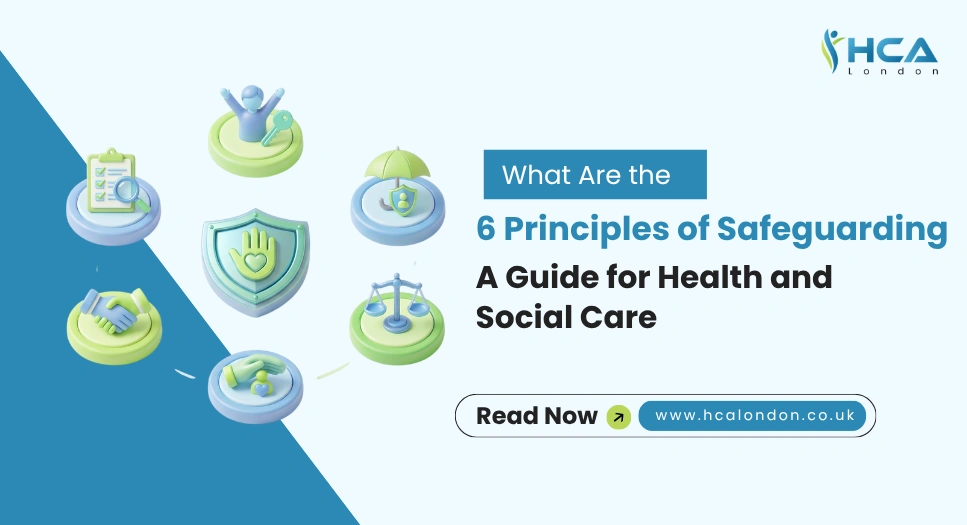
Good safeguarding practice does not happen by chance. It follows a clear set of principles that guide every decision a care professional makes. So, what are the 6 principles of safeguarding in care? These six principles are embedded within the Care Act 2014 and form the foundation of safeguarding practice across all care settings in the UK, as outlined by the Social Care Institute for Excellence.
1. Empowerment:
Children and their families have the right to understand what is happening and to make real choices about their own safety.
2. Prevention:
Taking Action early, before harm occurs, is always better than responding after the damage is done.
3. Proportionality:
Every response must match the level of risk. Moreover, the least intrusive Action that keeps a child safe is always the right starting point.
4. Protection:
Children who are at risk of harm need immediate and appropriate support. Furthermore, their safety always comes first.
5. Partnership:
Keeping children safe requires different agencies, families and communities to work together and share information effectively.
6. Accountability:
Every professional involved in safeguarding must be clear about their role, their decisions and how they communicate those decisions to others.
The Different Types of Child Abuse
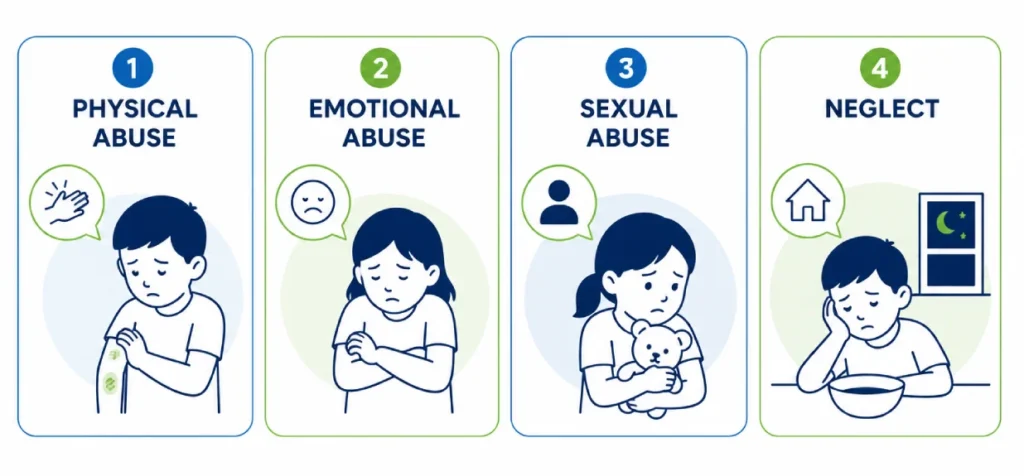
Child abuse does not always look the same. It takes different forms, and in many cases, more than one type happens at the same time. If you have ever wondered what are the 4 types of childhood trauma are, this is where the answer starts. Healthcare assistants need to understand each one clearly so they can spot the signs early and respond in the right way.
Read on to know exactly what to look for in each one.
1. Physical Abuse
Someone commits physical abuse when they deliberately hurt a child’s body; hitting, shaking, burning and biting all fall under this category. Moreover, not every injury points to abuse, but unexplained marks, bruises in unusual places or injuries that do not match the explanation given should always raise concern.
2. Emotional Abuse
Emotional abuse leaves no visible marks, which makes it one of the hardest types to identify. Furthermore, it happens when someone constantly criticises, humiliates, threatens or makes a child feel worthless. Over time, this kind of treatment causes serious damage to a child’s mental health and development.
3. Sexual Abuse
Sexual abuse occurs when an adult or older young person draws a child into sexual activity. Also, the child may not fully understand what is happening or realise that it is wrong. Abusers often keep this hidden, which is why shifts in a child’s behaviour frequently serve as the clearest warning sign.
4. Neglect
Neglect is the most common form of child abuse in the UK. It happens when a caregiver fails to meet a child’s basic needs. Food, warmth, clothing, medical care and emotional support all fall under this. A child who regularly appears hungry, poorly dressed for the weather or frequently misses care appointments may be experiencing neglect.
Signs of Abuse Healthcare Assistants Should Never Ignore
Abuse rarely announces itself. Most of the time, it shows up in small, easy-to-miss details. So, here are the key signs to watch for.
Physical Signs
Emotional Signs
Unexplained bruises, burns or cuts, especially in unusual places
Low self-esteem or constant self-criticism
Injuries that do not match the explanation given
Extreme anxiety or fear around certain people
Frequent injuries or a pattern of recurring marks
Difficulty trusting adults or forming relationships
Poor hygiene, unwashed clothing or visible signs of malnourishment
Signs of depression or emotional distress without a clear reason
Behavioural Signs
Neglect Signs
Sudden changes in behaviour or mood
Consistently hungry, or seen taking or hoarding food
Becoming withdrawn, fearful or unusually quiet.
Poor personal hygiene or the same unwashed clothing worn repeatedly
Flinching when an adult gets too close
Missed medical appointments or vaccinations without explanation
Showing sexual knowledge or behaviour that is not age-appropriate
Being left alone or unsupervised for long periods, given the child’s age
What Should Healthcare Assistants Do If They Suspect Child Abuse?
Suspecting abuse is not easy to sit with, but staying silent is never the answer. Every healthcare assistant needs a clear answer to one question: what should a healthcare worker do if they suspect abuse? Here is what to do, one step at a time.
1. Stay Calm and Do Not Confront
If you suspect abuse, do not confront the child or the person you suspect. Stay calm, act normally and avoid showing alarm. Moreover, confronting someone at this stage can put the child at greater risk and compromise any future investigation.
2. Listen and Observe
If a child begins to open up, let them. Many people wonder what is an appropriate question to ask a child you suspect is being abused. The answer is simple. Keep it open and neutral. Something like “Can you tell me more about that?” gives the child space to share without feeling pressured. Listen carefully and take note of their exact words. What a child shares in that moment can be crucial.
3. Document Everything
Write down what you saw and heard as soon as you can. Moreover, use the child’s own words where possible. Note the time, the date and any specific details that stood out. Furthermore, keep it factual. Ultimately, personal opinions have no place in safeguarding records.
4. Report Through the Right Channels
Do not sit on your concerns. Take them straight to your designated safeguarding lead. Moreover, every care setting has a process for this. Furthermore, follow it without delay. If a child is in danger, contact the police or children’s social care directly.
5. Maintain Confidentiality
Only share safeguarding information with the people who need it: your safeguarding lead and relevant authorities. In addition, do not discuss the case with uninvolved colleagues, and never share details with the family of the person you suspect.
Your Next Step in Child Safeguarding
Child safeguarding: signs of abuse and what healthcare assistants must do is not a topic you read once and move past. It follows you into every shift and every moment you spend with a child in your care, whether that means knowing if a child tells you about abuse, or simply noticing what others might miss. Understanding the pillars of safeguarding is the first step. Putting them into practice, every single day, is what actually makes the difference. Healthcare Academy London’sSafeguarding and Child Protection course gives you everything you need to feel confident in this role, fully online and built around your schedule. Because when a child needs someone to step up, that someone should be you.
FAQs
1. What are the common signs that a child may be experiencing abuse?
Signs may include unexplained injuries, poor hygiene, behavioural changes, fear of certain adults, withdrawal, or neglect. Patterns of concern should always be reported.
2. What should a healthcare assistant do if they suspect child abuse?
Record factual observations, follow your organisation’s safeguarding procedures, and report concerns to the appropriate safeguarding lead immediately.
3. What should I do if a child tells me they are being abused?
Stay calm, listen without leading questions, reassure the child, avoid promising confidentiality, and report the disclosure promptly.
4. Do I need proof before reporting a safeguarding concern?
No. You only need a reasonable concern. It is the responsibility of safeguarding professionals to investigate.
5. Why is safeguarding training important for healthcare assistants?
It helps healthcare assistants recognise abuse, respond appropriately, and fulfil their safeguarding responsibilities with confidence.