Why Is Safe Medication Administration Important?
Medicines can improve health when people use them correctly. However, mistakes can cause serious harm. A person may get the wrong medicine, dose, or time. Some medicines also need careful timing. The Care Quality Commission(CQC) lists insulin and Parkinson’s medicines as time-sensitive medicines. Safe practice helps lower these risks and supports better care. It also helps staff spot problems early.
So, what is the purpose of medication administration? The main purpose is to give medicines safely and correctly. It also supports accurate records, clear communication, and ongoing care. For example, a patient may have an unexpected reaction after taking medicine. Good communication helps staff respond quickly. Clear records also show what medicine the patient received. This matters when several people provide care.
Who Can Administer Medication?
Not everyone who works in healthcare can give medicines. Staff need the right training and skills for their role. They must also follow relevant laws, policies, and workplace rules. Registered healthcare professionals can give medicines within their professional role. This may include nurses and other registered professionals. Trained non-registered staff may also give some medicines. However, they must have the right training and demonstrate competence.
The organisation must also have clear systems to support safe practice. A job title alone does not mean someone can give medicines. You must consider their training, skills, role, and local rules. In social care, staff may support people with medicines when their care plan requires it. CQC guidance also highlights the need for suitable training and competency checks for staff who administer medicines. Some people may also manage their own medicines.
For example, a care home resident may self-administer medicines after a suitable risk assessment. This helps staff decide whether the person can manage their medicines safely. Overall, the right person should give or support medicines in the right setting.
What Are the Five Rights of Medication Administration?
The rights provide a simple guide for safe medication practice. Different organisations may use slightly different versions. Some may also include extra checks. A common five-right framework includes:
1. Right Person
First, verify that you have the right person. Use the proper ID techniques for the situation. Don’t use your memory or physical characteristics alone. This helps you avoid giving the wrong medication to the wrong patient.
2. Right Medicine
Next, check the medicine against the prescription or approved directions. Check the medicine name, strength, form, and label. Also check the expiry date and packaging before giving it.
3. Right Dose
Ensure the prescribed dosage matches the drug you intend to administer. Extra caution should be taken if you are required to determine the appropriate dose. Never take chances if the directions are unclear.
4. Right Route
Check how to give the medicine. You may take it by mouth, apply it to the skin, inhale it, or inject it. Using the wrong route can cause serious harm. Always follow the prescribed route and instructions.
5. Right Time
Determine when to give the drug. The timing for some drugs is very strict, whereas some have a relatively flexible window of administration. Follow the prescription and policy for proper drug administration.
These rights of medication administration UK provide a useful safety framework. However, they should not be your only checks. You should also check allergies, consent, clinical details, medicine storage, and any specific instructions.
What Are the Different Routes of Medication Administration?
Medicines can enter the body in different ways. The correct route depends on the medicine and the person’s needs.
Oral Medication
Oral medicines are taken by mouth. They include tablets, capsules, and liquid medicines. Usually, this route is common and often easy to use. However, some people may have trouble swallowing.
Sublingual and Buccal Medication
Sublingual medicines sit under the tongue. Buccal medicines sit inside the cheek. As a result, these routes allow some medicines to enter the bloodstream through the mouth.
Topical Medication
Topical medicines are applied to the skin. They include creams, ointments, gels, and lotions. Therefore, follow the instructions for where and how to apply them.
Transdermal Medication
Transdermal medicines usually come as patches. The medicine passes through the skin over time. In addition, follow the instructions for placing and removing the patch.
Inhaled Medication
Inhaled medicines enter the body through the lungs. People often use inhalers to manage breathing problems. For this reason, good technique helps the medicine reach the lungs properly.
Eye and Ear Medication
Eye medicines include drops and ointments. Ear medicines may include drops and other preparations. Always use the correct medicine for the correct body area.
Nasal Medication
Nasal medicines enter the body through the nose. They may come as sprays, drops, or other forms. Follow the instructions for using each medicine correctly.
Rectal Medication
Rectal medicines enter the body through the rectum. They may include suppositories and some liquid medicines. Follow the prescribed instructions to use them safely.
What Is the Medication Administration Process?
Medication administration follows a clear process. However, the exact steps may vary by setting and medicine. This medication administration procedure should always follow local policies and your level of competence.
Step 1: Check the Prescription
First, read the prescription or the instructions given. Make sure you know the medicine name, dosage, and how often to take it. Do not give the medicine if the instructions are unclear.
Step 2: Identify the Person
Next, confirm the person’s identity using the approved procedure. Also check any relevant information before giving the medicine.
Step 3: Check Allergies
Check the person’s known allergies and any relevant warnings. If you find a concern, get advice before giving the medicine.
Step 4: Prepare the Medicine
Prepare the medicine as instructed. Follow good hygiene and infection control practices. Also check the label and expiry date before use.
Step 5: Explain the Medicine
Explain the medicine where necessary. Allow the individual enough time to raise any queries. Throughout this, maintain their dignity, confidentiality, and autonomy.
Step 6: Administer the Medicine
Give the medicine using the correct route. Follow your training and local procedures. Never use a method outside your level of competence.
Step 7: Monitor the Person
Observe the individual when it is part of their care needs. Observe for any reactions or changes in the individual’s condition. Obtain the required assistance when needed.
Step 8: Record the Administration
Record the medicine promptly and accurately. Use the required MAR chart or electronic system. If the person refuses the medicine, follow the correct procedure and record the refusal.
What Is a Medication Administration Record?
A Medication Administration Record is usually called a MAR chart. It records when a person receives their medicine. MAR charts are an important part of medication records in social care. They show which medicines a person has received and when. A MAR chart may include details such as:
- Person’s name.
- Medicine name.
- Administration times.
- Name or signature of the person giving the medicine.
- Relevant codes or notes.
The person giving the medicine must complete the MAR chart correctly. For example, they should never sign for a dose before giving it. They should also follow the organisation’s process for missed or refused doses. In some settings, digital systems now replace paper MAR charts. These systems can make recording medicines faster, clearer, and easier to track.
What Safety Checks Should You Make Before Giving Medication?
The five rights provide a useful starting point. However, safe medicine practice needs a few more checks. These safe medication administration guidelines can help support a thorough approach. Before giving medicine, check the following:
- Is this the correct person?
- Is this the correct medicine?
- Does the person have any known allergies?
- Is the medicine suitable for the person?
- Is the dose correct?
- Has the person given consent where required?
- Is the route correct?
- Is the timing correct?
- Are the instructions clear?
- Is the medicine in date?
- Does the person need extra support?
- Do you need to record anything specific?
Some medicines need extra care. For example, a person may need help with a liquid medicine or inhaler. Time-sensitive medicines also need close attention. Delayed or missed doses may cause harm in some cases.
If something does not look right, stop before giving the medicine. Seek advice from the right person. Never guess when you are unsure about a medicine.
Common Medication Administration Errors
Medication errors can happen for many reasons. They may occur when a medicine is prepared, given, or recorded incorrectly. Common examples include:
- Giving the wrong medicine.
- Giving the wrong dose.
- Using the wrong route.
- Giving medicine to the wrong person.
- Giving medicine at the wrong time.
- Missing a dose.
- Giving a dose twice.
- Failing to record a dose.
- Recording a dose that was not given.
- Failing to report a concern.
Clear communication also plays an important role in safe medicine use. For example, unclear instructions may cause people to follow different steps. Poor records can create similar risks. If an error happens, the person’s safety should come first. Stop and seek the right clinical advice when needed. Follow the organisation’s process for reporting and managing the error. Record what happened clearly and accurately.
The aim is not only to deal with the immediate risk. It is also to learn from the incident and reduce the chance of it happening again. CQC warns that poor medicines management can lead to serious harm, including fatal harm.
Medication Administration in Different Care Settings
Medication administration can vary between care settings. The level of support also depends on the person’s needs, medicine, and care plan.
Hospitals
Hospitals often give medicines as part of a wider care plan. Healthcare professionals may use electronic prescriptions and digital medicine records. After some medicines, they may also monitor patients closely.
Care Homes
Trained staff may administer medications to residents as needed. MAR forms help them record every dose. They should follow the care plan, medication policy, and procedures. They should also have the appropriate training and qualifications.
Home Care
In-home care workers may support people with medicines in their own homes. This may include reminding someone to take a medicine, opening packaging, or administering it. The care plan should clearly state what support the person needs.
Community Care
Community health care providers can administer drugs during home visits. They must administer the drug according to the prescription and care plan. They should also record each dose correctly after administration.
Self-Administration
Sometimes patients can administer their own drugs. Before this happens, the care provider should assess the patient’s needs and the possible risks involved. Where it is safe, supporting self-administration can help a person maintain their independence.
Therefore, medication administration should match the person’s needs and the care setting. Each setting may have different procedures, but safety should always remain the main focus.
How Does Technology Support Medication Administration?
Today, technology is integral to medication safety. Organisations can use electronic prescriptions, eMARs, barcode scanning, and digital documentation. It can reduce time spent and improve documentation accuracy. For instance, barcode scanning may help verify that the right medicine is administered to the right person. Alerts can warn of problems before administration occurs. But this does not mean technology replaces any control, and trained staff must follow proper guidelines.
What Training Is Needed for Medication Administration?
Medication administration needs the right knowledge and practical skills. The training should match the person’s role and duties. It should also cover safe medicine use and common risks. Key areas may include:
- Medication safety.
- The Five Rights of medication administration.
- Different routes of administration.
- Dose checks.
- Safe medicine handling.
- Storage and disposal.
- Medication records.
- Recognising adverse reactions.
- Reporting medication errors.
- Legal and regulatory rules.
- Safe working procedures.
- PPE for hazardous medicines.
A competency check may also form part of safe practice. For example, a person may complete an observed assessment before giving medicines alone. Refresher training can also keep knowledge and skills up to date.
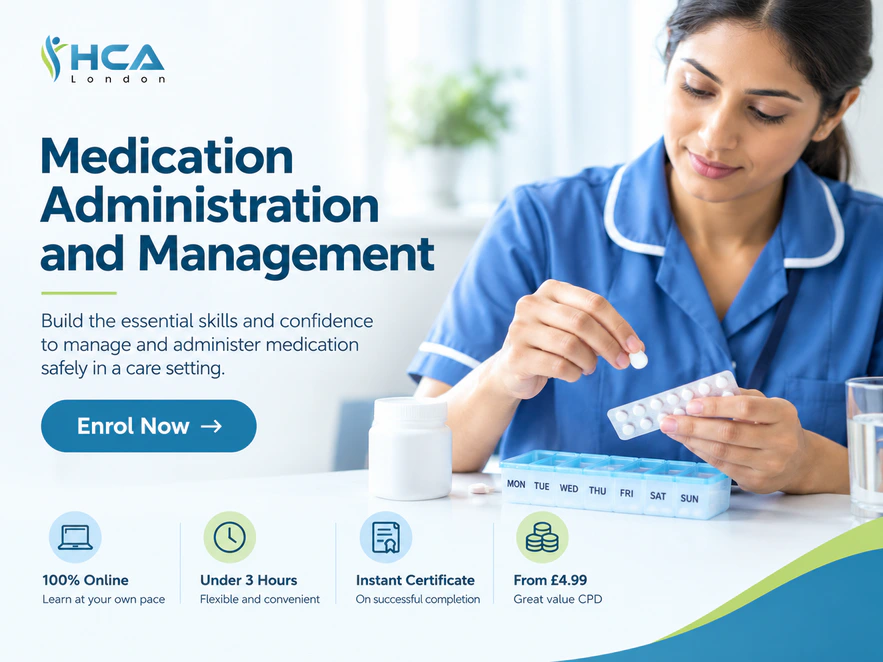
If you want to develop your medication practice skills, Healthcare Academy London offers a Medication Administration and Management course. The course covers medicine groups, safe handling, legal requirements, SOPs, the Five Rights, and PPE for hazardous drugs. It gives learners a clear introduction to safe medicine management in care settings.
Final Thoughts
Medication administration is central to safe, effective care. What is medication administration? It covers the full process of checking, giving, monitoring, and recording medicines. Each step matters, from checking the right person and dose to keeping clear records. Good practice also needs the right skills, clear communication, and sound judgement. With proper preparation and ongoing learning, healthcare professionals can give medicines safely and support better care.
Frequently Asked Questions