Healthcare Assistants (HCAs) play an important role in patient care. They support people with daily tasks, personal care and other activities within their role. They also work closely with nurses and other healthcare professionals.
Because HCAs work so closely with patients, they must follow important legal and ethical responsibilities. These responsibilities help protect patients, support safe care and build trust. But what is the difference between legal and ethical responsibilities? Legal responsibilities are duties HCAs must follow under UK law, regulations and workplace policies. Ethical responsibilities focus on doing what is right, fair and respectful for each patient.
This guide explains the main responsibilities of an HCA, with simple examples to show how they apply in everyday care.
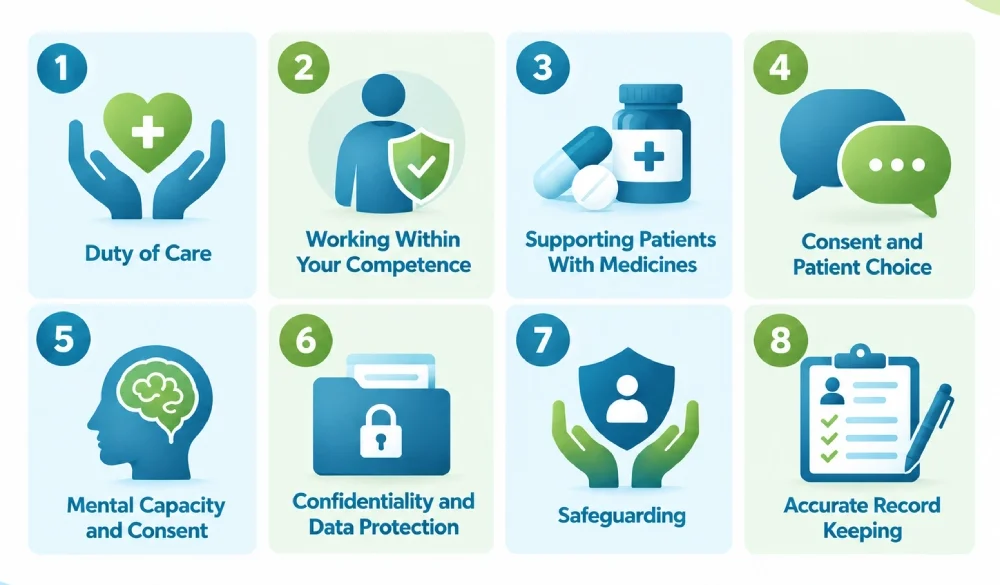
1. Duty of Care
HCAs have a duty to provide safe care and take reasonable steps to prevent avoidable harm.
For example, an HCA notices that a patient suddenly becomes confused and unsteady. They should not ignore the change. Instead, they should make the patient safe and report the change to the appropriate healthcare professional. The Care Certificate includes duty of care as an important standard for health and care workers.
2. Working Within Your Competence
HCAs must understand their limits.
Being asked to perform a task does not mean they are automatically competent to do it. They should only perform tasks for which they have received the necessary courses and assessment. If they are unsure, they should ask for guidance or supervision. This is especially important when supporting delegated healthcare activities.
3. Supporting Patients With Medicines
Medication is an area where HCAs must understand their role.
In some settings, trained and competent HCAs may support or administer medicines. However, this depends on your role, competence and workplace procedures. An HCA should never carry out a medicines task simply because someone asks them to.
4. Consent and Patient Choice
HCAs should respect a patient’s right to make choices about their care. Before providing routine care within their role, they should explain what they are going to do and check that the patient agrees.
However, HCAs should not assume they can obtain consent for every clinical procedure. The person obtaining consent must have the right knowledge and understanding of the care involved.
5. Mental Capacity and Consent
The Mental Capacity Act 2005 protects people who may have difficulty making a specific decision.
An HCA should never assume that someone lacks capacity because they have dementia, a learning disability or another condition. Instead, they should support the person to communicate and make their own decision where possible. If there is a concern about capacity, the HCA should follow workplace procedures and seek appropriate professional support.
6. Confidentiality and Data Protection
HCAs handle private information every day.
They must keep patient information secure and only share it when there is a proper reason to do so. For example, an HCA should not discuss a patient’s medical condition in a public corridor where other people can hear. Health information is classed as special category data under UK data protection law and has extra protection.
7. Safeguarding
HCAs may notice signs of abuse or neglect because they spend a lot of time with patients. Therefore, they should know how to recognise concerns and report them through the correct process.
Safeguarding concerns may include:
Ethical responsibilities help HCAs provide care that is respectful, fair and focused on each patient’s needs. In practice, these values guide how HCAs communicate, support choices and build trust with patients.
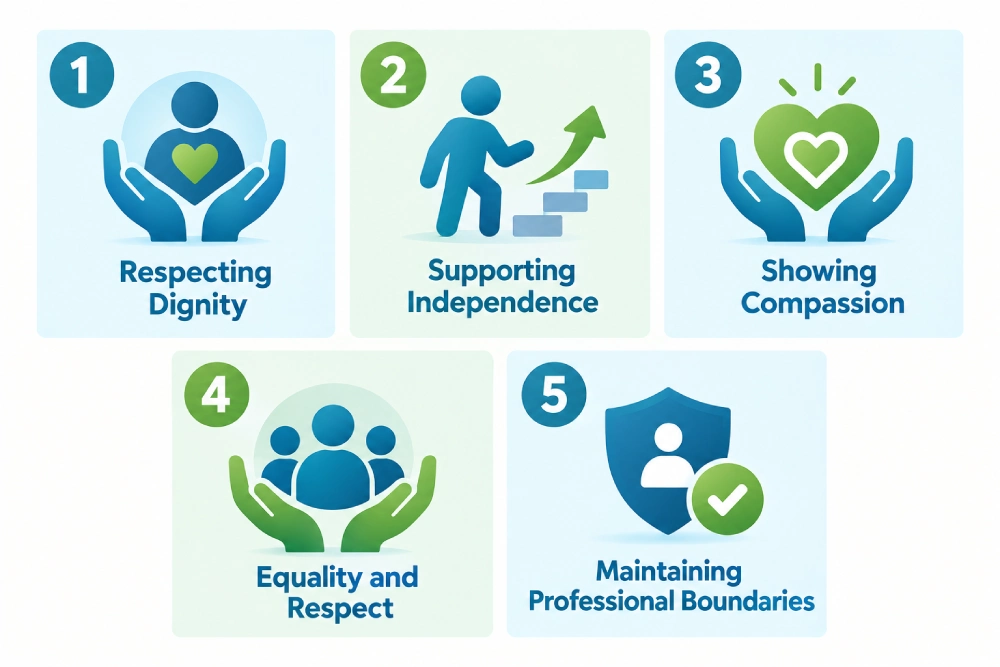
1. Respecting Dignity
Personal care can be sensitive. Therefore, HCAs should protect privacy and dignity during activities such as washing, dressing and toileting.
Simple actions matter. Close the door, explain what you are doing and give the patient as much privacy as possible. The CQC guidance on dignity and respect also highlights the importance of treating people with dignity and respect.
2. Supporting Independence
HCAs should help patients do what they can for themselves.
For example, if a patient can dress independently but needs help with buttons, the HCA should support them rather than doing everything for them. This helps promote independence and gives patients greater control over their care.
3. Showing Compassion
Patients may feel worried, confused or frightened. For this reason, an HCA can make a real difference by listening, speaking kindly and explaining what is happening.
Small acts of compassion can help patients feel safe, valued and respected.
4. Equality and Respect
Every patient deserves fair treatment. HCAs should not discriminate because of a person’s age, disability, race, religion, sex or another protected characteristic.
Instead, they should respect individual needs, preferences and communication styles. This helps create a more inclusive and person-centred care experience.
5. Maintaining Professional Boundaries
HCAs often build strong relationships with patients. However, these relationships must remain professional.
HCAs should avoid inappropriate personal relationships, sharing unnecessary personal information or using personal social media to communicate with patients. As a result, clear professional boundaries help protect both the patient and the HCA.
Real-Life HCA Scenarios
Legal and ethical responsibilities become clearer when we see how they apply to everyday situations.
Scenario 1: A Patient Refuses Care
A patient refuses help with personal care.
What should the HCA do?
The HCA should not force the patient. Instead, they should listen to the person’s concerns, explain the care and respect their decision. If there are concerns about capacity or safety, they should seek appropriate support.
Responsibilities involved: consent, autonomy, dignity and duty of care.
Scenario 2: An HCA Faces an Unfamiliar Task
A colleague asks an HCA to perform a task that they have not trained for or been assessed to perform.
What should the HCA do?
The HCA should only perform the task after receiving the necessary learning and assessment. Instead, they should explain the situation and seek guidance or supervision from an appropriate senior colleague. This helps ensure the task is carried out safely and correctly.
Responsibilities involved: competence, accountability and patient safety.
Scenario 3: A Safeguarding Concern
An HCA notices unexplained bruises on a patient who appears frightened around a particular person.
What should the HCA do?
The HCA should take the concern seriously and report it through the correct safeguarding procedure. In addition, they should record relevant information clearly and avoid investigating the matter themselves. If necessary, they should seek further guidance from the appropriate safeguarding lead or senior staff member.
Responsibilities involved: safeguarding, reporting and duty of care.
Why Do Legal and Ethical Responsibilities Matter?
These responsibilities give HCAs a clear framework for making appropriate decisions at work. They also help staff understand when to act, when to report a concern and when to seek support.
Following them can lead to: