Palliative care is specialised medical care that relieves symptoms, pain, and stress caused by serious illness. It also provides emotional well-being and helps people maintain their quality of life.
Palliative care helps people with serious or life-limiting illnesses. It aims to improve ease, dignity and quality of life. It can ease pain and other physical symptoms and address emotional, social and practical needs. Families and carers may also receive guidance during this time. Importantly, palliative care does not mean death is near. People can receive it while having treatment for their illness. It also links with end-of-life care, which focuses on the final stage of life. Understanding both types of care helps professionals provide the right support when it matters most.
In this guide, you will learn what palliative care is, who can receive it and how it works. You will also learn about referrals, costs and the different types of care available.
Table of Contents
What Palliative Care Actually Means
Palliative care supports people with serious or life-limiting illnesses. Its main goal is to improve comfort and quality of life. The care team looks at the person as a whole, not just their illness. Therefore, care may cover physical, emotional, social and practical needs. For instance, someone may need help with pain, tiredness or breathlessness. They may also feel worried about what lies ahead. These concerns can be managed as part of the same care plan.
Alongside symptom relief, people can get help to understand their care options. This care may start soon after diagnosis or later in the illness. It can continue while the person receives other medical treatment. This approach offers assistance at different stages of illness. It also helps families and carers understand how to care for the person.
✓
Key Takeaways
Quick Facts About Palliative Care
✓
Palliative care aims to improve comfort and everyday wellbeing.
✓
It helps people with serious or life-limiting illnesses.
✓
Care may be offered at different points during an illness.
✓
People can receive it alongside other treatment.
✓
Care can take place in different care settings.
✓
Families and carers can also receive guidance.
✓
A team of health and care professionals may assist.
✓
End-of-life care may form part of palliative care for some people.
!
Important:
Receiving palliative care does not mean treatment has stopped. The care team can adjust the care provided as a person’s needs develop.
Palliative Care Support and Advice
Palliative care covers many areas of a person’s life. The type of care depends on their needs, wishes and daily life. Common palliative care examples include symptom control, emotional support, practical advice and guidance with care planning. A care team may check physical symptoms, emotional health and everyday concerns. They can then create a care plan that suits the person’s needs.
How to Manage Your Symptoms
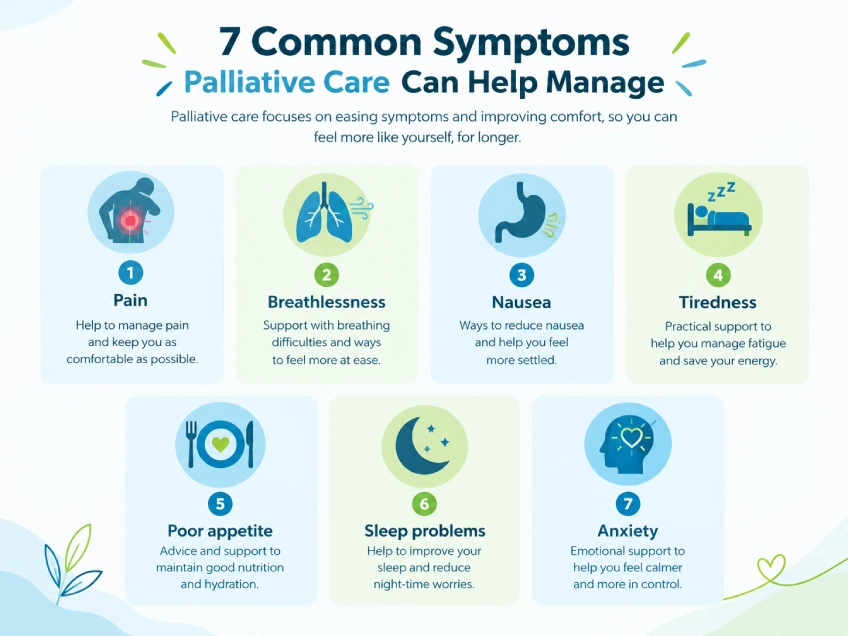
A serious illness can cause symptoms that affect daily life. Common symptoms may include:
Healthcare professionals can assess these symptoms and suggest suitable ways to manage them. They may also review medicines and offer other forms of additional assistance. Managing symptoms well can improve relief and daily life. It may also help you stay active and enjoy more of your usual routine.
Coping With Dying, Death and Grief
Serious illness can bring difficult thoughts and strong emotions. People may worry about dying, their loved ones, or what lies ahead. Palliative care teams can offer emotional reassurance during this time. They can also help people talk about their wishes, fears and concerns. After someone dies, family members may need support as they cope with their loss. Bereavement services can provide guidance and help people adjust to life after a death.
Practical Help and Guidance
Serious illness can bring practical challenges at home and work. Some people may need help with care plans, equipment or daily tasks. Care professionals can explain the services and support available. They can also help people understand their care options and make informed choices. Clear guidance can reduce stress for patients and their families. It can also make daily care easier to plan and manage.
Looking After Your Mental Wellbeing
Living with a serious illness can affect your emotional wellbeing. You may feel fear, sadness, stress or loneliness at times. Talking to a healthcare professional can offer reassurance and support. Some people may also find counselling or other services helpful. A good care team will listen to your concerns without judgement. They will also respect your wishes, feelings and personal choices.
Supporting Children and Young People
Children with serious or life-limiting illnesses may need specialist palliative care. Their care should suit their age, needs and family life. This assistance can manage symptoms and promote quality of life. It can also protect their emotional wellbeing during difficult times. Parents, siblings and other family members may need guidance too. Care professionals should explain things in simple and clear language. They should also give families honest information and answer their questions.
How Palliative Care Supports Your Wellbeing
Palliative care aims to help you live as comfortably as possible. It looks beyond the illness and considers your wider needs. Good symptom control can make daily tasks easier and reduce discomfort. Emotional reassurance may also ease fear, stress and worry. As a result, you may feel more able to manage everyday challenges. The care team can also adapt your care as your needs change.
You can share your desires and preferences about how you want to be cared for with your medical team. This makes it easier to focus on what matters most to you. It also respects your dignity and promotes your independence. In addition, families can understand what you need and want.
Easing Symptoms and Reducing Stress
Symptoms can affect sleep, movement, eating and daily tasks. They may also cause stress for patients and their families. Palliative care teams check symptoms and track changes over time. They may suggest medicines, therapies or other ways to enhance comfort. Practical assistance can also help you manage symptoms at home. This can make daily life feel more manageable.
Care teams can explain which symptoms may occur and what to expect. Clear information can help families feel more prepared. It can also help you understand when to seek extra support. As needs change, the care team can review the care provided. This approach can give patients and families greater confidence.
Choosing Treatment That Fits Your Goals
Palliative care puts your needs and wishes at the heart of care decisions. Healthcare professionals should listen to what matters most to you. For some people, staying independent may be more important than intensive treatment. Others may prefer better symptom control or more time with family. These choices can change as your needs and priorities change. Your care team can review them with you at each stage.
Care discussions can help you understand your treatment options. They may also cover your future wishes and advance care planning. This gives you time to share what you want before your needs change. It also helps your family and care team understand your choices. As a result, you can participate in care decisions with greater confidence.
Working Alongside Your Other Doctors
Palliative care does not always replace your current medical treatment. Instead, the palliative care team can work with your other healthcare professionals. Your care may involve a GP, consultant, community nurse or other specialists. Each professional can provide support based on your needs. They can also work together to keep your care clear and well planned.
Good communication helps teams share important information and avoid confusion. It also makes it easier to respond when your needs change. You can manage symptoms while continuing other treatment. This approach keeps your comfort and broader needs at the centre of your care.
Who Is Palliative Care Suitable For?
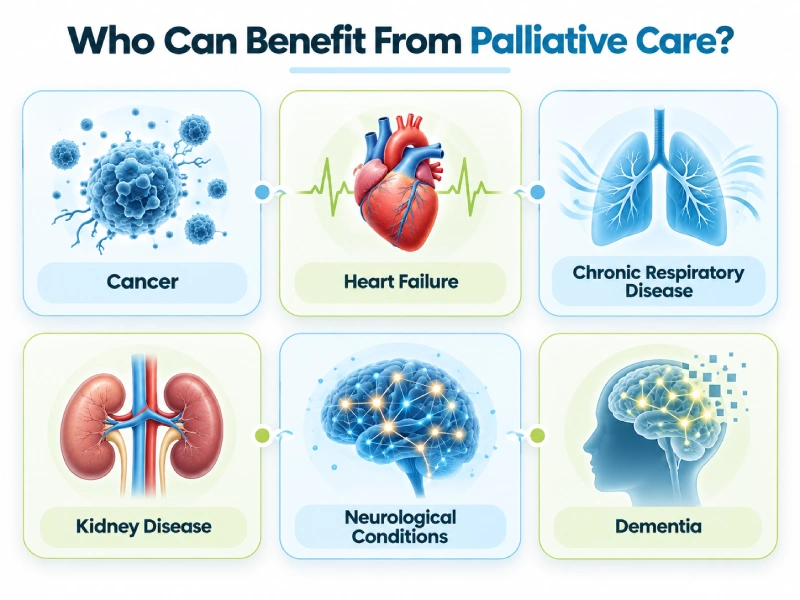
Palliative care can assist people living with many serious illnesses. It is not only for people with cancer. Specialist care may also benefit people with conditions such as:
Having one of these conditions does not always mean you need specialist palliative care. Healthcare professionals consider your symptoms, needs, and daily life. They also consider your wishes, care goals and personal circumstances. This helps them decide what type of assistance may be most suitable for you.
When Is the Right Time to Start Palliative Care?
There is no set time to start palliative care. Each person has different needs, symptoms and care goals. Some people receive care soon after a serious diagnosis. Others may need it when their symptoms become harder to manage. Importantly, palliative care does not only apply to the final days of life.
Starting care early can improve symptom control and address emotional needs. It can also help people plan their future care and discuss their wishes. Families may have more time to understand the person’s needs and choices. Palliative care can also link with end-of-life care, which focuses on the final stage of life. Knowing the difference can help families make informed care decisions.
Where Can I Receive Palliative Care?
Palliative care can take place in several settings. The best option depends on your needs, wishes and care plan. Your care may also move between settings as your needs change.
⌂
Setting 01
At Home
Some people prefer to receive care at home. Community teams can help manage symptoms and daily care needs.
Home support may include:
advice for family members, equipment and services that make day-to-day care easier.
+
Setting 02
In Hospital
Hospitals can provide specialist palliative care for people with complex needs, focusing on comfort, symptom control and emotional wellbeing.
Specialist teams can:
assess symptoms, suggest suitable care and work with doctors and nurses to keep care coordinated.
✦
Setting 03
Specialist Hospice Care
Hospices provide specialist care for people with serious or life-limiting illnesses, helping to ease symptoms while providing reassurance and emotional support.
Services may include:
inpatient care, day services and community-based support.
▦
Setting 04
Care Home Setting
People living in a care home can receive palliative care in the same setting, with staff working alongside healthcare professionals.
Additional support:
care home staff can work with GPs, community professionals and specialist services when needed.
Who Is Involved in Providing Palliative Care?
Palliative care often involves a team of health and care professionals. Each person brings different skills and experience to the care plan. The team may include:
Doctors
Nurses
Pharmacists
Social Workers
Counsellors
Physiotherapists
Care Workers
Occupational Therapists
Spiritual & Pastoral Care
Healthcare Assistants
Providing
Palliative Care
Not everyone needs help from every professional. Instead, the team adjusts support to suit each person’s needs and wishes. Good communication is also important throughout the process. It helps the team share information, notice changes and respond to new concerns. This joined-up approach can make care more effective and easier to manage.
Do You Have to Pay for Palliative Care?
Palliative care fees can differ depending on the type of service and care setting. Many NHS services are available at no direct charge. Hospices may receive funding from the NHS, charities and other sources. Some also rely on donations to support their services. Social care can have different funding rules so that costs may vary by person and service. If you are unsure about fees, speak to your GP or care team. They can explain what local support is available and whether any charges may apply.
How to Get a Palliative Care Referral in the UK
You can talk to your GP or healthcare team if you need palliative care. They can assess your needs and explain which services may suit you. Your hospital doctor or community nurse may also arrange a referral. NHS guidance notes that referrals depend on your clinical needs and local services.
Local referral routes can differ across the UK. Some services may also accept referrals from other healthcare professionals. For example, community palliative care teams may receive referrals from GPs, hospitals or care services. If you feel you need extra care, raise your concerns early. This gives you more time to understand your care options and plan your ongoing needs.
Is There Support for Family and Friends Too?
Yes, palliative care can include family members and carers. Caring for ing someone with a serious illness can be physically and emotionally demanding. Families may need emotional guidance, practical advice, and clear information. Care professionals can explain symptoms and changes in the person’s condition. They can also discuss care options and local services. After a death, families may need help with grief and loss. Bereavement services can offer practical and emotional guidance during this difficult time.
Does Palliative Care Mean End-of-Life Care?
Palliative care does not always mean that someone is near death. People can receive it while they continue treatment for a serious illness. Does palliative care mean death? Not necessarily, as some people may need this care for months or even years. End-of-life care has a more specific focus and serves people during the final stage of life. The two types of care can overlap as a person’s needs change. For this reason, healthcare professionals should understand both areas clearly. This helps them provide the right care at each stage.
Palliative Care vs Hospice Care: What’s the Difference?
Palliative care and hospice care both aim to keep people comfortable, but they serve people differently.
Palliative Care
Support during serious illness
VS
Hospice Care
Comfort-focused end-of-life care
When it starts
Palliative
Can begin at any stage of a serious or life-limiting illness.
→
Hospice
Usually begins when a person is approaching the end of life.
Main focus
Palliative
Relieves pain and other symptoms while supporting quality of life.
→
Hospice
Focuses primarily on comfort, dignity and emotional support.
Care setting
Palliative
Can be provided at home, in hospital, care homes or specialist settings.
→
Hospice
May be provided at home, in a hospice or in another suitable care setting.
Who it supports
Palliative
Supports people with serious illness and their families or carers.
→
Hospice
Supports people nearing the end of life and those close to them.
Duration & scope
Palliative
May continue alongside treatment for months or years, depending on need.
→
Hospice
Generally focuses on care during the final stage of life.
The key difference
Palliative care can begin at any stage of serious illness, while hospice care is focused specifically on comfort and support near the end of life.
Why Some People Struggle to Get Palliative Care
Some people may not receive palliative care when they need it. Several factors can make access more difficult. Many people may not know what palliative care involves. Others may think it only applies during the final days of life. Healthcare services can also face high demand and limited resources. Access may vary between local areas and services. Late referrals can create another barrier. People may then have less time to discuss their wishes and plan their care. Better awareness and early conversations can help reduce these barriers. They can also help patients and families make informed choices.
Final Thoughts
So, what is palliative care? It focuses on comfort, dignity and quality of life. It can also guide families and carers during difficult times. People may receive this care alongside other medical treatment. Palliative care does not always mean end-of-life care. However, both focus on comfort and person-centred practice. For care professionals, knowing the difference helps them provide suitable care.
The right training can build knowledge and confidence in sensitive care settings. An End of Life Care course from Healthcare Academy London can deepen your understanding of dignity, communication and emotional needs. It can also strengthen your knowledge of person-centred care. If end-of-life care is part of your role, suitable training can develop your skills. This can help you provide compassionate and confident care.
It means the person receives care that focuses on comfort and quality of life. Support may include help with symptoms, emotions and daily needs. It does not mean that other treatments have stopped.
Not always. Palliative care can begin at any stage of a serious illness. End-of-life care focuses on the final stage of life. However, both types of care can overlap.
There is no set answer to this question. People can start palliative care at different stages of an illness. Some may receive support for a short time, while others may receive it for months or years.
No, hospice care is one type of specialist support. Palliative care can take place in hospitals, homes, hospices and other settings. It can also continue alongside other treatments.
Palliative care is not a treatment that you recover from. It supports comfort and quality of life during serious illness. Some people may feel better or become more stable with this support. Others may need ongoing care as their illness changes.
There is no fixed set of five stages for palliative care. Support changes as a person’s needs change. It may include an initial assessment, symptom control and emotional support. Care planning and regular reviews may also form part of the process. The exact care plan depends on each person’s needs.
No, palliative care can support people with many serious illnesses. These may include heart, lung, kidney and neurological conditions. It may also help some people living with dementia.
The decision may involve the person and their healthcare team. This could include a GP, hospital doctor or palliative care specialist. The person’s needs, wishes and care goals should guide the decision.
Yes, palliative care can begin well before the final stage of life. Early support can help manage symptoms and give people time to plan their future care.