End-of-life care is crucial in the health care sector, but it can be emotionally challenging without adequate guidance. It focuses on comfort, dignity, and respect for patients and families. End-of-life care training helps carers become emotionally aware and confident in their work. It also prepares them to handle any difficulties that may arise with confidence. This training helps everyone feel respected and supported during the final stages of life.
With the help of this blog, you’ll learn about end-of-life care along with its principles. You’ll also learn how training makes it easier for carers to support patients and their families.
Key Takeaways
- End-of-life care focuses on comfort, dignity, and respect.
- Good training helps carers support patients confidently.
- Carers learn how to manage symptoms and observe changes.
- Effective communication can make patients and their families feel comfortable.
- Care plans should reflect each person’s wishes and needs.
- Advance care planning helps people share their future care choices.
- DNACPR and ReSPECT guide important care decisions.
- Families need clear information and kind support.
- Carers must respect professional boundaries and care for their own well-being.
- The right training helps carers provide safe and person-centred care.
What is the Concept of End-of- Life Care?
End-of-life care refers to caring for individuals in the final phase of life. It focuses more on relieving symptoms than on curing the illness. This care includes the physical, psychological, social, and spiritual aspects of a patient’s health condition and needs, while also considering the patient’s personal values and beliefs. As a result, patients feel safe, heard, and valued. Families also feel supported during a deeply emotional time.
What Are the Key Stages of the End-of-Life Care Pathway?
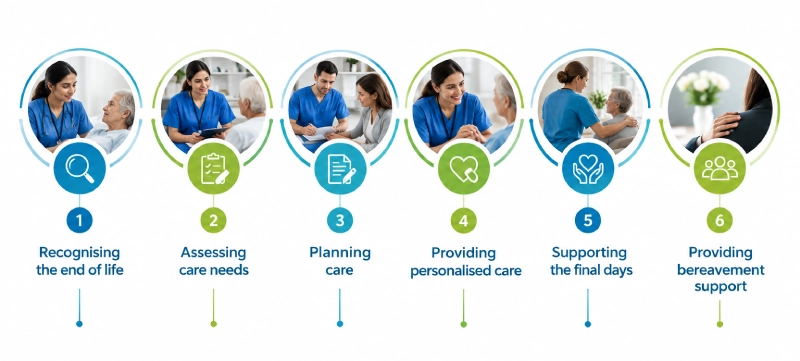
The end-of-life care pathway helps carers meet changing care needs. It supports the person from early planning to bereavement. The process can vary between care settings. However, carers can follow six key stages:
This approach helps carers provide safe and person-centred care. It also gives families a clearer idea of what may happen throughout the care process.
What Is the Difference Between Palliative Care and End-of-Life Care?
Palliative care helps people live as comfortably as possible with a serious illness. This care can start at any stage and may last for months or years. It focuses on pain relief, symptom control, and emotional support. It also helps families cope with the illness and its effects.
End-of-life care supports people in the final stage of life. It focuses on comfort, dignity, and respect for their wishes. It also offers emotional, social, and spiritual support to patients and families. In simple terms, palliative care can begin early, while end-of-life care focuses on the final stage. However, both types of care can overlap.
Why Training for End-of-Life Situations is Essential
Situations that fall under end-of-life care are very emotional and challenging. However, proper training is essential in these situations. Skills for Care highlights the importance of developing the right knowledge and skills to support people at the end of life. Knowing how to manage end-of-life care helps you respond with confidence and clarity.
- Specialist learning gives you confidence and clear guidance. As a result, you act calmly and with purpose during difficult moments.
- Training helps you manage symptoms effectively. You also enhance your communication skills. Hence, your clients experience comfort.
- Focused learning helps you to maintain dignity through the entire process. You treat clients with respect as you take care of their needs. Hence, patients feel valued and secure.
- Career growth leads to better quality of care and emotional support. You can reduce stress on all parties involved with end-of-life services.
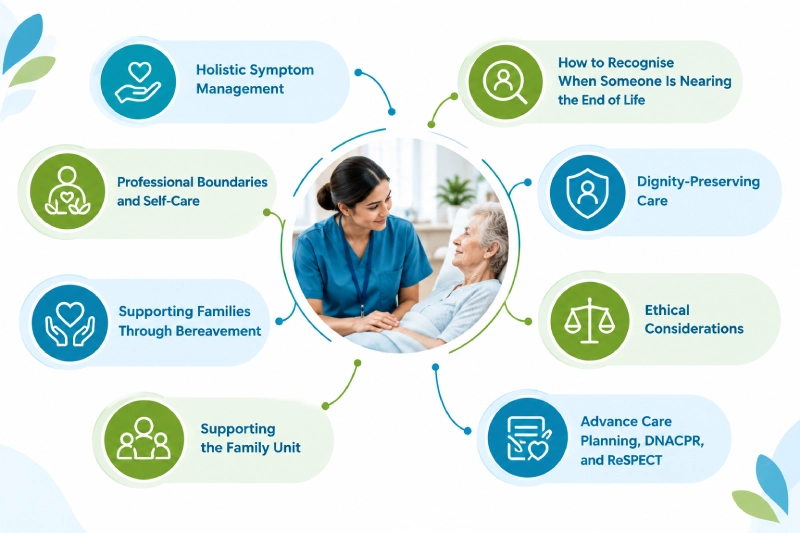
Holistic Symptom Management
Symptoms of pain and discomfort have the potential to impact an individual’s life towards the end of life. As such, you must manage these symptoms effectively. Holistic care goes beyond physical pain and also addresses anxiety, shortness of breath, and emotional distress. With proper training, you can recognise these needs and respond with confidence. NICE guidance on end-of-life care explains the importance of assessing a person’s physical, emotional, social, and spiritual needs. It also highlights the need for good care planning. This helps carers provide support that respects each person’s needs and wishes.
How to Recognise When Someone Is Nearing the End of Life
Recognising signs of approaching death helps carers give the right support. So, what are common end-of-life symptoms? A person may sleep more, feel very tired, or lose interest in food. Their breathing may change, and they may become less alert or confused. Other signs can include restlessness or changes in skin colour. However, these signs can vary, so carers should follow the care plan and report any concerns to a healthcare professional.
Dignity-Preserving Care
People need their dignity preserved at all stages of life, especially towards the end. Healthcare assistants protect dignity through simple daily actions such as maintaining privacy and providing personal care with respect. They also explain procedures clearly so patients feel informed and comfortable. Whenever possible, you support choices, even small ones, so patients feel valued. With training, you understand how these actions improve comfort and respect.
Ethical Considerations
End-of-life care involves sensitive decisions that must always reflect the person’s wishes. Proper training helps care workers understand consent and make decisions in the best interests of the individual. It also supports ethical practice when situations become complex or uncertain. As a result, they act fairly and confidently in their daily care. This approach helps protect the rights and dignity of vulnerable individuals at all times.
Advance Care Planning, DNACPR, and ReSPECT
Advance care planning helps people share their wishes for future care. It gives them a chance to discuss what matters most. These talks may cover treatment choices and preferred care. They can also help families understand the person’s wishes.
- DNACPR means Do Not Attempt Cardiopulmonary Resuscitation. It means staff should not try CPR if the person’s heart stops. However, a DNACPR decision does not stop all care. The person should still receive suitable treatment, support, and comfort.
- ReSPECT means Recommended Summary Plan for Emergency Care and Treatment. It records agreed plans for emergency care and treatment. Training helps carers understand these terms and their role. It also helps them speak clearly with families and care teams.
Supporting the Family Unit
Families sometimes find themselves in a spot where they feel scared, sad and unsure about entering end-of-life care. They need to hear words and have honest talks. Knowing how to help with end-of-life care starts with listening to the person and their family. You can also include families in care decisions at the right time. This helps family members trust the process and feel comfortable with what is happening.
Supporting Families Through Bereavement
Bereavement can bring strong emotions for families. Therefore, care staff should offer kindness and support after a person’s death. They should give family members time to grieve and respect their feelings. Carers can explain where families may find further support. However, they must stay within their professional role and avoid offering grief counselling unless qualified.
Professional Boundaries and Self-Care
Giving end-of-life care may have an immensely emotional effect on you, as a care provider. Over time, these experiences can build up and affect your emotional well-being. The training helps you set healthy professional boundaries and manage emotions effectively. This process also promotes reflection and support from colleagues. Therefore, self-care is also important for care workers to maintain emotional stability.
What Skills Do You Learn in End-of-Life Care Training?
End-of-life care training helps you build the skills needed to provide safe, compassionate care. It also helps you support patients and their families with respect. You may learn how to:
These skills can help you feel more confident in your role. They also help you work well with others and provide person-centred care.
Common Challenges Carers Face in End-of-Life Situations
End-of-life care can be hard for carers. Each person and care situation can be different. However, good training can help you handle these challenges with confidence.
- Emotional pressure: Caring for someone at the end of life can be upsetting. You may also feel grief after a patient dies.
- Difficult conversations: Talking about death can be hard. You need to speak with care, respect, and understanding.
- Changing symptoms: A person’s condition can change quickly. You must notice changes and report concerns as soon as possible.
- Family disagreements: Family members may have different views about care. Stay professional and follow the agreed care plan.
- Maintaining boundaries: You can form close bonds with patients. However, they must keep clear professional boundaries.
- Work-related stress: Regular contact with loss can affect you. Team support, self-care, and regular reflection can help.
- Uncertainty: Some care situations may not have clear answers. Ask senior staff or healthcare professionals for advice.
Good end-of-life care training can help you prepare for these challenges. It can also help you provide safe, kind, and person-centred care.
How to Choose the Right End-of-Life Care Course
Choosing the right course can help you gain useful care skills. Before you enrol, check these key points:
- Course content: Check that the course covers comfort, dignity, and clear communication.
- Course level: Is the course right for your current skills?
- Learning format: Choose a format that fits your needs, such as online or in-person learning.
- Tutor support: Make sure you can get help when you need it.
- Assessment: Does the course include a test or practical task?
- Provider reputation: Check the provider’s reviews and reputation before you enrol.
- Certificate: Find out what type of certificate you will receive.
- Career use: Will the course support your current job or future career goals?
Always check if the course meets your employer’s training needs. Also, find out if it leads to a recognised qualification or only a certificate of completion.
Final Thoughts
End-of-life care is one area that combines a sense of duty as well as responsibility. It requires immense skill, empathy, and emotional strength. Without a doubt, end-of-life care training prepares you better to support patients during this important time in their lives. You can make them feel comfortable and at ease during this hard time by showing some understanding towards them. If you want to grow further, consider the end-of-life care course with Healthcare Academy (HCA London). It helps you build confidence and deliver truly person-centred care.
Common Questions About End-of-Life Care