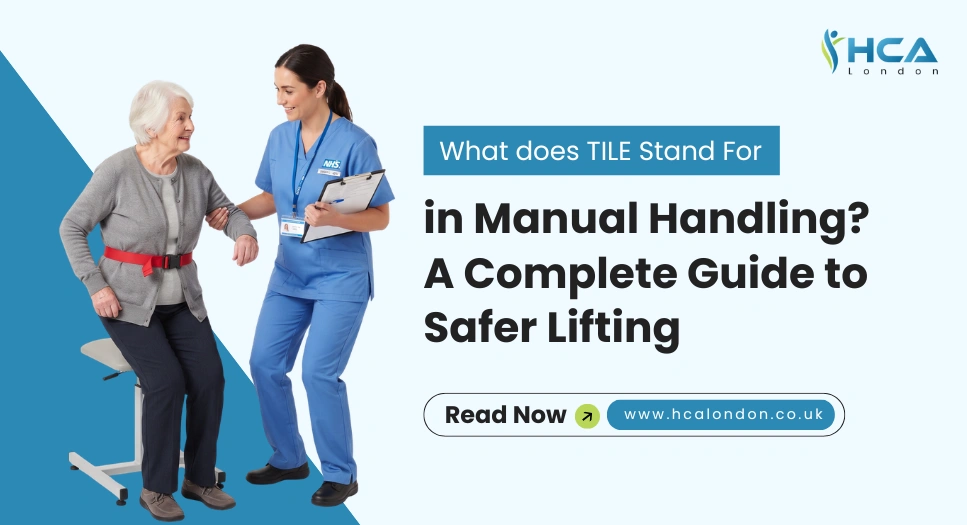
Have you ever considered the dangers that come with lifting? Many people lift, move, push, and pull objects every single day without even a second thought. However, one wrong move can lead to painful injuries and long recovery times. Fortunately, the TILE framework helps you identify these risks before an injury happens. It gives you a simple way to assess the risks of any manual handling operation beforehand. This way, you can reduce your chances of being hurt.
Keep reading to learn what TILE stands for in manual handling and why it matters. Discover how TILE helps create a safer workplace and reduces manual handling risks.
What is Manual Handling and Why Does it Matter?
Manual handling involves any task where you lift, lower, carry, push, pull, hold, or move a load using physical effort. You may carry out these tasks in healthcare, construction, retail, warehousing, manufacturing, or even an office. Although many manual handling tasks seem simple, they can still cause serious injuries when people ignore the risks.
In other words, every single manual handling job requires thorough planning. Conducting a risk assessment can help pinpoint potential hazards before commencing the job. Furthermore, a good risk assessment will help select safer work practices and reduce the risk of injury.
What Does TILE Stand for in Manual Handling?
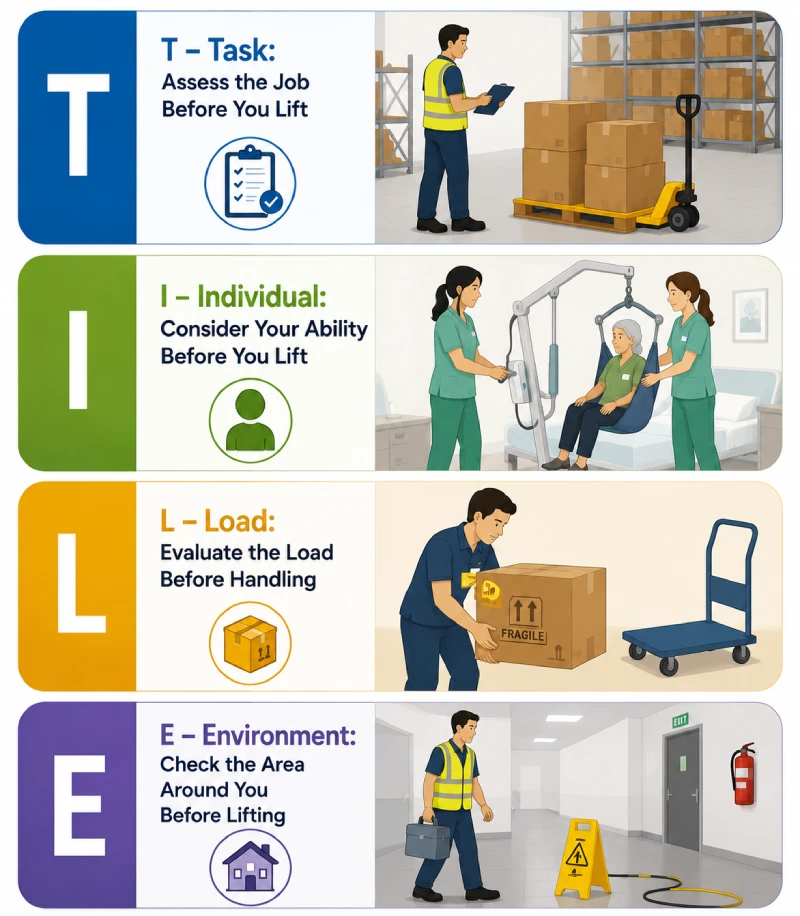
One of the simplest ways to assess these risks is to use the TILE framework. The acronym reminds you to consider four important factors before handling any load. The word TILE stands for Task, Individual, Load, and Environment. This approach helps you make better decisions and complete manual handling tasks more safely. Once you understand each part, you can make safer choices and lower the risk of injury.
T – Task: Assess the Job Before You Lift
The first step focuses on the task itself. Before lifting anything, think about what the job involves. Every manual handling task presents different challenges, so you should assess the activity before you begin. This step helps you choose the safest way to complete the task.
Now, determine how far you need to carry the load and whether you must bend, twist, reach, or lift overhead. Additionally, find out whether or not there is any repetition in the work. Lastly, assess the time required to complete the task, since the time taken can make the task more difficult.
Task Assessment Checklist
Example: A warehouse employee has to shift very heavy boxes in a warehouse area. Rather than carrying them all, they use a simple pallet truck. This TILE risk assessment example shows how assessing the task first helps reduce strain and improve safety.
I – Individual: Consider Your Ability Before You Lift
Every worker has different strengths, skills, and experience. Before handling a load, think about whether you can complete the task safely. If you feel tired, injured, or unwell, your risk of injury increases. New workers should also receive proper training before carrying out manual handling tasks.
It is also important to think about any health issues or physical limitations that may interfere with your ability to lift safely. This could be back problems, muscle strains, difficulty moving, or even being sick at the time. If something seems difficult to do, get assistance or find some lifting equipment that will allow you to do the job safely.
Individual Assessment Checklist
Example: The new care assistant has to help move a patient. Instead of doing it alone, they ask an experienced co-worker for help and use the right lifting equipment. Consequently, they manage to do the job safely and easily.
L – Load: Evaluate the Load Before Handling
This third phase focuses on the load that needs to be moved. Consider the load’s weight, size, shape, and condition before lifting it. Also, make sure you can hold the load with a secure grip. A bulky or awkward object will make the task harder to perform safely. Assess these features first to choose the safest way to move the load.
Secondly, you should have good control over the load, meaning that it should never fall out of your grip. There are various reasons for this, such as slippery loads, poorly packed materials or items, or even an unstable load. Determine whether the load obstructs your vision or moves while you move.
Load Assessment Checklist
Example: A store employee has to move a large box of merchandise. Even though the box is not very heavy, it obstructs their view. Rather than moving it on their own, they choose to use a trolley.
E – Environment: Check the Area Around You Before Lifting
The last step deals with the area around you. Proper lifting may prove hazardous in an unfavourable environment. Before lifting, examine the floor for possible slipping points, such as water, electrical cables, bumps in the road, or clutter. Such factors could cause falls and slips.
Next, make sure there is enough room to lift the object. Check that the route is clear and well lit before you begin. For outdoor tasks, consider the weather conditions because rain, ice, or windy days may present additional risks.
Environment Assessment Checklist
Example: A maintenance staff member needs to carry equipment through the site. Before doing the task, they pull up loose cables on the path and make sure the lighting is better. Thus, they avoid the possibility of tripping and carry out the task successfully.
How to Apply TILE Before Every Manual Handling Task
A TILE manual handling risk assessment helps you identify hazards before lifting or moving any load. Using the TILE framework before a manual handling task helps you identify and control risks. Follow these simple steps to improve safety.
Practical Examples of TILE in Different Workplaces
The TILE framework helps workers assess risks across different industries. If you are asking what is the TILE method of manual handling? These workplace examples show how it works in practice.
These examples show how TILE reduces risks in different workplaces. It helps workers identify hazards and choose safer methods. No matter the industry, understanding what is TILE in safety allows workers to reduce risks and complete manual handling tasks.
TILE vs TILEO vs LITE: What’s the Difference?
You may come across TILE, TILEO, and LITE when learning about manual handling. Although they look different, they all help you assess risks before moving a load. However, each framework places a slightly different focus on the assessment.
| Framework |
Stands For |
Best Use For |
| TILE |
Task, Individual, Load, Environment |
Everyday manual handling risk assessments. |
| TILEO |
Task, Individual, Load, Environment, Other Factors |
More detailed assessments that include extra risks, such as time pressure or special equipment. |
| LITE |
Load, Individual, Task, Environment |
The same four factors in a different order. Some organisations prefer this format. |
Although the order changes, the purpose stays the same. Each framework encourages workers to assess risks before lifting, carrying, pushing, or pulling a load. Therefore, always follow the system your workplace uses and complete the assessment carefully.
TILE in the UK Safety Framework
TILE by itself does not impose any legal duties. Rather, it enables employers and employees to comply with UK safety guidelines for manual handling. In the UK, employers must comply with important health and safety legislation, including:
Using TILE helps workplaces meet these legal responsibilities and create safer manual handling practices.
Final Thoughts
Knowing what TILE stands for in manual handling helps workers recognise risks before starting any task. The framework provides an easy way to assess the risk and select safer working processes. Assessing the Task, Individual, Load, and Environment helps reduce risk and prevent unnecessary accidents. Regardless of whether you work in health care, construction, retail, or an office, TILE will be beneficial for you.