Nutrition and hydration training is essential because it supports patient recovery, prevents complications, and promotes overall health and well-being. With the right knowledge, you can recognise patient’s nutritional needs and provide safer, more effective care.
Good nutrition and proper hydration are just as important as medication is important, so the recovery also depends on the right food and enough fluids. That is why nutrition and hydration training matters in patient care. It helps you identify risks early, support healing, and improve patient outcomes through everyday care.
Want to make a real difference in patient care? Read on to discover why nutrition and hydration are required for patients and how the right training helps you deliver better care.
What is Nutrition and Hydration?
Nutrition and hydration are two key components for staying healthy. Nutrients refer to getting the right nutrients from food, such as protein, carbohydrates, vitamins, minerals, and healthy fats. These nutrients provide energy, support healing, strengthen the immune system, and help the body repair itself.
Hydration means having enough fluid in your body, mainly from water and other healthy beverages. In addition, proper hydration maintains good organ function, regulates body temperature, transports nutrients, and removes waste.
The Importance of Nutrition and Hydration in Patient Care
Nutrition and hydration are essential for high-quality patient care. Beyond meeting basic needs, the right balance of food and fluids supports recovery, improves overall health, and helps prevent complications. Here are some of the reasons why nutrition and hydration matter:
1. Support Recovery and Healing
Good nutrition provides the energy and nutrients your body needs to heal. Proteins repair tissues, and vitamins and minerals boost the immune system. Therefore, patients experience a faster recovery and fewer complications.
2. Maintain Hydration and Body Functions
Water helps to carry nutrients, flush out waste, and keep the body’s temperature regulated. But dehydration can lead to fatigue, dizziness, confusion, and slower recovery. Hydration helps the patient to feel better and helps the healing process.
3. Maintain Muscle Strength and Energy
Limitations in mobility can result in a loss of muscle strength during recovery. So a balanced diet with sufficient protein helps maintain muscle mass and energy levels. Proper hydration also improves both physical performance and mental focus.
4. Reduce the Risk of Complications
Poor nutrition and dehydration can increase infection risk, slow wound healing and result in longer hospital stays. In contrast, meeting a patient’s nutritional and hydration needs helps to prevent these complications, and improves overall health outcomes.
5. Support Long-Term Health
Nutrition and hydration also help patients manage long-term conditions such as diabetes, heart disease, and high blood pressure. As a result, they can improve their overall health and reduce the risk of hospital readmission.
Why Nutrition and Hydration Training Matters for Healthcare Professionals
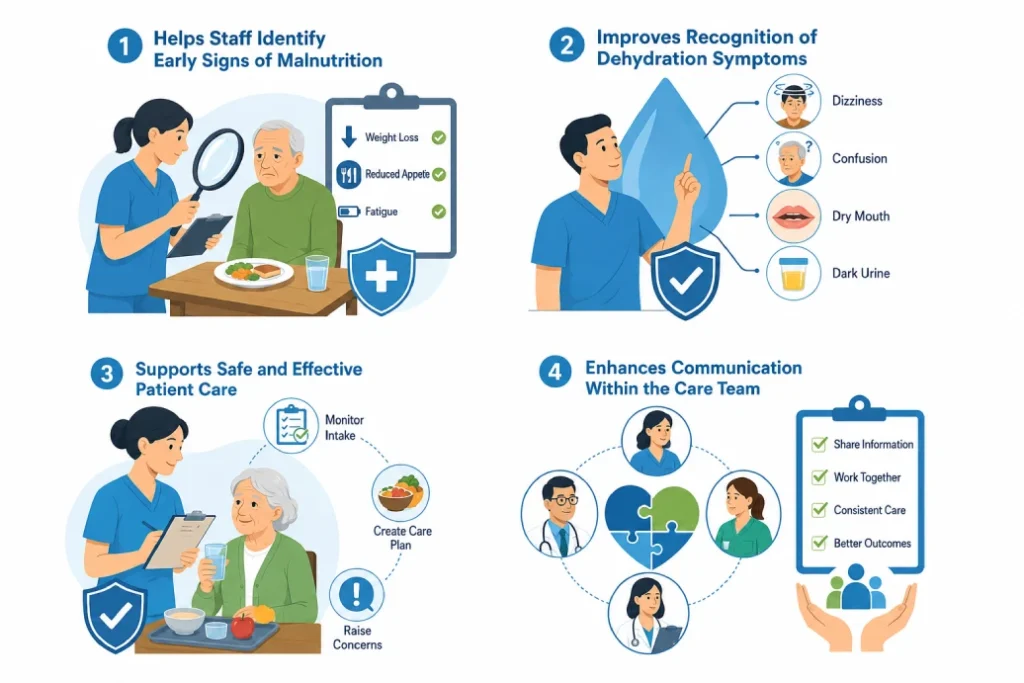
Nutrition and hydration training helps healthcare professionals deliver safer, more effective care. In fact, more than 3 million people in the UK are at risk of disease-related malnutrition, with around 93% living in the community. Therefore, this training helps you recognise risks early and respond with confidence. Let’s explore why it matters and the list of signs and symptoms of poor nutrition and hydration.
1. Helps Staff Identify Early Signs of Malnutrition
The importance of nutrition and hydration training allows the staff to identify early signs of malnutrition. Some of these symptoms include weight loss, reduced appetite, and feeling fatigued, among others. Moreover, the problem can be reported to the appropriate personnel, hence receiving adequate help. In short, this way, the patient will not suffer from any deterioration of health.
2. Improves Recognition of Dehydration Symptoms
Dehydration can affect a patient’s health very quickly. Therefore, healthcare professionals must know the warning signs. Common signs include dizziness, confusion, dry mouth, and dark urine. When staff recognise these signs early, they can take action straight away. As a result, they can reduce risks and improve patient comfort.
3. Supports Safe and Effective Patient Care
Training helps healthcare professionals provide safe care every day. Staff learn how to monitor food and fluid intake and create a nutrition and hydration care plan. They also learn when to raise concerns. Furthermore, training improves confidence and decision-making. As a result, patients receive the support they need at the right time.
4. Enhances Communication Within the Care Team
Good patient care depends on teamwork. Therefore, healthcare professionals must communicate clearly with each other. Nutrition and hydration training encourages this approach. For instance, caregivers, nurses, doctors, and dietitians often work together to meet patient needs. This teamwork helps ensure consistent and person-centred care.
Common Nutrition and Hydration Challenges in Healthcare Settings
Good nutrition and hydration care sounds simple. But in real life, it’s not always easy. Patients face different problems, and staff have a lot to manage. Let’s explain how to identify and report changes or risks relating to nutrition and hydration needs, and how training helps tackle them:
1. Poor Appetite and Reduced Food Intake
Some patients struggle to eat enough food. Illness, pain, medication, or stress can affect appetite. As a result, patients may not get the nutrients they need. Therefore, healthcare professionals must monitor food intake closely. They should also encourage patients to eat when possible.
2. Dehydration Risks Among Older Adults
Older adults are at an increased risk of dehydration. They might not feel thirsty as often, or they may forget to drink enough fluids. Sometimes mobility issues can make it hard to get to drinks. Staff should encourage regular fluid intake therefore. They should also monitor fluid intake, watch for signs of dehydration, and report any concerns immediately.
3. Dysphagia and Swallowing Difficulties
Some patients find it difficult to swallow food or drinks. Healthcare professionals know this condition as dysphagia. It can increase the risk of choking and poor nutrition. Therefore, staff must follow care plans carefully. They may need to provide texture-modified foods or thickened fluids to keep patients safe.
4. Complex Dietary Requirements
Many patients need special diets because of health conditions. For example, some may need low-sugar, low-salt, or allergy-friendly meals. Others may need foods that support specific medical needs. Healthcare professionals must understand these requirements. This knowledge helps them provide safe and appropriate care.
5. Staffing and Time Constraints
The busy nature of healthcare settings can pose challenges for staff. At times, heavy workloads can make it harder to closely monitor fluid and food intake. Yet good teamwork can help beat these challenges. Clear communication also makes sure that patients receive the support they need.
Skills Covered in Nutrition and Hydration Training
Nutrition and hydration training helps care professionals build essential skills to support patient wellbeing, including:
How to Choose the Right Nutrition and Hydration Training
Choosing the right course starts with checking the content, learning style, certification, and practical skills it provides. First, understanding why nutrition and hydration training matters in patient care can help you choose training that covers important areas like patient nutrition, hydration needs, malnutrition signs, and safe care practices. In addition, look for flexible learning options that match your career goals and support your professional growth.
Additionally, if you want to improve your understanding in this area, Healthcare Academy (HCA London) offers a flexible Fluids and Nutrition Course designed for healthcare professionals. The course helps you learn about nutrition, hydration, dietary needs, and how to support patients better. With online learning, flexible study, and certification, you can gain confidence and practical skills to support safe and effective care.