Do you always recognise how much impact your actions have in healthcare?
Every day, care workers help protect vulnerable adults from harm and abuse. In fact, effective safeguarding in healthcare ensures the safety, dignity, and human rights of adults with care and support needs. Moreover, care workers face complex situations that demand clear understanding and quick action. With the right knowledge, you can respond confidently and responsibly. When you know your duties well, safeguarding saves lives and protects well-being.
In this guide, you’ll learn the key duties involved in adult safeguarding in healthcare. You’ll also understand how safeguarding principles support safe and respectful care practice.
What is Adult Safeguarding?
Adult safeguarding aims to protect adults against any form of abuse, neglect, and harm. It ensures that people live in safety while respecting their dignity and autonomy. Some individuals require additional safeguarding due to their vulnerability. The process of safeguarding does not strip away their rights or restrict their autonomy. On the contrary, it fosters their independence and empowerment. Care workers must balance safety with respect. They protect people while supporting freedom and control.
In the UK, the Care Act 2014 promotes adult safeguarding. There is a legal obligation on the local authority to protect vulnerable adults. It provides guidance on ensuring abuse prevention and responding to concerns. The Care Act 2014 promotes well-being and safety in care practices. The professionals have to do what is best for the person.
The Core Safeguarding Principles
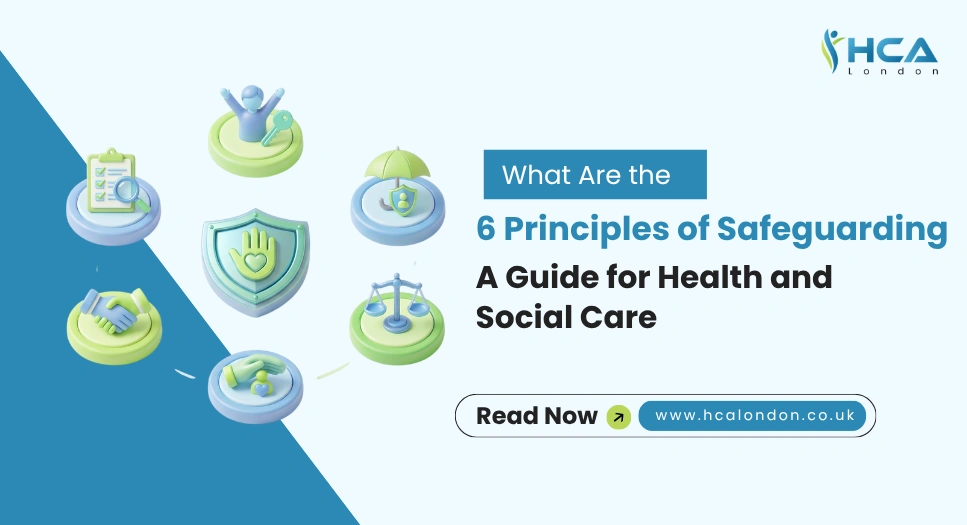
Care workers must apply key safeguarding principles in daily practice. These principles answer the question of what are the 6 principles of adult safeguarding? Moreover, they help workers make the right decisions in difficult situations.
1. Empowerment
You should ensure that the person makes their own decisions. You should listen to them and accept the personal choices of a client. Also, you should provide adequate information allowing the client to make an informed decision. These actions contribute to independence and confidence in everyday actions.
2. Prevention
Proactive measures prevent any form of damage from happening before it occurs while providing care services. One must identify risks and take preventive measures at once. Moreover, you need to identify early warnings whenever performing any daily activities. In this way, you can reduce risk and ensure safety.
3. Proportionality
A balanced response is essential in any situation requiring protection and support. Care workers should always assess the situation carefully before taking action. It is important to have an appropriate reaction to the identified risks. Moreover, you should not overreact or ignore the identified threats to clients’ safety and well-being.
4. Protection
As a care professional, you have the duty of ensuring people are safe from any potential danger. You need to act immediately where necessary in order to deal with concerns. Besides, you need to follow safeguarding practices immediately to ensure protection comes first.
5. Partnership
Strong partnerships with families and professionals improve safeguarding. When it is appropriate to do so, sharing information will make your safeguarding efforts more effective. Furthermore, it helps you deal with concerns effectively. Partnership leads to better safeguarding of vulnerable adults.
6. Accountability
Accountability for safeguarding means taking responsibility in every care situation. Adhering to policies, laws, and codes of conduct enables the safe provision of care. In addition, when you report concerns clearly and honestly, trust grows. This creates a safer and more reliable care environment.
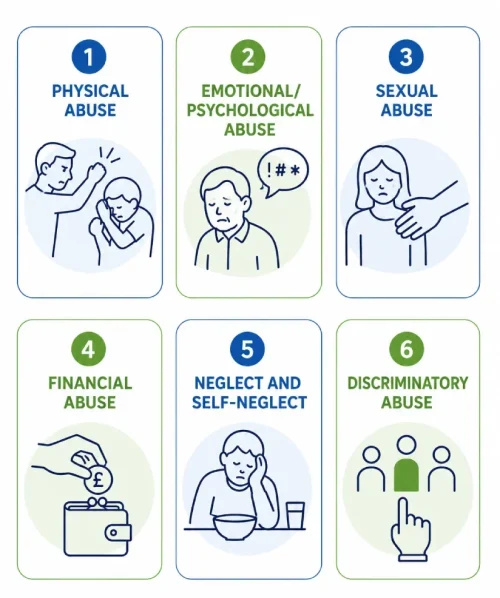
Types of Abuse in Care Settings
Abuse can occur in many forms in care environments. When it comes to adult safeguarding in the health care setting, it can impact physical, mental, emotional, or financial well-being.
1. Physical Abuse:
When one individual assaults another through physically hurting them in various ways, including hitting and pushing.
2. Emotional/Psychological Abuse:
Assaulting an individual psychologically through verbal threats and insults.
3. Sexual Abuse:
A person forces or pressures another into unwanted sexual actions. This may include touching or comments without consent.
4. Financial Abuse:
Someone takes or controls another person’s money without permission. This may include stealing or misuse of funds.
5. Neglect and Self-neglect:
A person does not receive basic care like food or hygiene. Sometimes, they also fail to care for themselves.
6. Discriminatory Abuse:
A person treats another unfairly because of identity or beliefs. This may include exclusion or disrespect.
Signs and Indicators of Abuse
Identifying signs of abuse is an important task in safeguarding. Care workers need to be aware of these at all times. These include:
- Unexplained injury or frequent accidents
- Sudden change in behaviour or disposition
- Fear, reclusive tendencies, or anxiety
- Poor hygiene or malnutrition
- Missing money or possessions
Procedures for Reporting Safeguarding Concerns
Reporting your concern helps avoid any harm to people. Care workers should always use safeguarding procedures in their workplace. These are:
- Document any relevant information carefully and thoroughly
- Report concerns to a supervisor or safeguarding lead
- Call the emergency services in case of imminent threat
All matters should always be confidential.
Key Responsibilities of Care Workers
Care assistants have many important tasks to perform. Their duties are directly linked to safeguarding roles and responsibilities in the care sector. The following information will help you fulfil your responsibilities.
Act within the Duty of Care
As carers, you need to adhere to the duty of care. This means you must always take responsibility for keeping individuals safe in your daily work. The duty of care entails protecting people from any harm or risk. Additionally, support workers need to act in people’s best interests.
Identify and Act Against Abuse
Do you know how fast a minor problem can turn into a major problem? Quick reporting and clear communication help protect individuals from harm. Care assistants need to keep a close watch for the symptoms of any form of abuse. You need to respond immediately if there is a problem. Moreover, you should never ignore any warning signs at all costs.
Compliance with Safeguarding Guidelines
There is always a set of safeguarding guidelines which are provided by each working environment. These procedures guide you on how to handle concerns properly and safely. Following the guidelines makes sure that all your practices are consistent and safe. They also help build trust between staff and the people they support.
Maintain Professional Boundaries
A clear line between professional duty and personal involvement ensures safe practice. Care assistants must have clear professional boundaries at all times. They should not develop any personal relationships with service users. They should also behave professionally at all times. This helps maintain trust and ensures safe, appropriate care.
Show Dignity and Respect
Care staff need to treat everybody with respect and dignity. It means that you must show respect and dignity toward everyone. Moreover, you should respect other people’s choices and privacy while also striving to promote independence. This approach helps individuals feel valued and confident in their daily lives.
Final Thoughts
In summary, adult safeguarding in healthcare ensures that care practices are both safe and ethical. With knowledge of abuse, you have the confidence to protect the vulnerable and report any abuse you see. Prompt action and clear reporting reduce risk and prevent harm. Respecting personal choices builds trust and protects dignity. When care workers stay informed, everyone benefits from safer care.
To develop safeguarding skills, professional training is crucial. The adult safeguarding course at Healthcare Academy (HCA London) supports confident, effective practice. The course covers real scenarios, risk recognition, and best practices. Investing in training improves the quality of care and protects those you support.
Frequently Asked Questions
1. Who is responsible for adult safeguarding?
Every healthcare worker has a safeguarding responsibility. It is not only the role of managers or senior staff.
2. Can safeguarding concerns be reported anonymously?
Yes. You can raise concerns in confidence. Whistleblowing policies protect who you are. They help you feel safe and supported when speaking up.
3. Is safeguarding training mandatory for care workers?
Most care roles require safeguarding training. Regular refresher training helps keep knowledge up to date.
4. Can an adult be at risk even if they live independently?
Yes. An adult can still be at risk. Abuse can happen at home, in public, or within the community.
5. Does safeguarding apply to temporary or agency staff?
Yes, safeguarding applies to all care workers. This includes agency, bank, and temporary staff. Everyone has the same legal responsibility.