Benefits of CPD Points
Many professionals view CPD as an administrative burden instead of an opportunity to grow. They rush through the paperwork, tick the required boxes, and file it away until their next review. But when you look at why is CPD important for care workers and what it actually does, it’s a different story.
1. Keeps your Practice Safe
Healthcare evolves constantly in this modern era. Experts update guidelines, researchers publish new evidence, and organisations refine best practices. That’s why a procedure you learned five years ago may have changed since then. However, CPD helps you stay up to date, and when your work directly affects someone’s wellbeing, staying current really matters.
2. Builds your Confidence
There is a significant difference between following a process simply because you have always done it that way and following it because you understand the reasoning behind it. The more you learn, the more confident you feel not just in clinical tasks, but in speaking up, asking questions, and advocating for your patients.
3. Career Progression
Do you also want to become a senior healthcare assistant, team leader, nursing associate, or registered nurse? Then build a habit of continuous learning. Because when opportunities arise, employers want to see more than just attendance and experience. They look for people who have actively developed their skills, expanded their knowledge, and shown a genuine commitment to growth.
What are Examples of CPD Activities?
A lot of healthcare assistants assume CPD means expensive courses or formal qualifications. It doesn’t have to. Here’s a snapshot of what qualifies:
Formal learning:
CPD healthcare courses, like a medication administration course or a moving and handling course, all count. These are the easiest to evidence because they usually come with a certificate. And for your convenience, Healthcare Academy (HCA London) offers these courses that can open several career opportunities for you.
Work-Based Learning:
You’re probably already completing CPD without even realising it. Every day, you learn through your work, and those experiences count. Shadowing experienced colleagues, reflecting on feedback after procedures, and taking part in training during team meetings all contribute to your professional development. The only thing you need to do is record them.
Self-Directed Learning:
This is where you take ownership. As healthcare professionals continue to ask, “are CPD points still required in 2026?”, the emphasis is increasingly shifting towards meaningful learning outcomes. And for this, you can go for e-learning modules, webinars, virtual study days, and independently online courses, all of which qualify as CPD.
Other Learning:
It looks broader than it sounds. But reading a relevant article, watching a clinical explainer video, keeping up with sector guidance, or writing a short reflection on a challenging shift, all of it counts as unstructured CPD. You don’t need only a formal course. Just make sure you record it.
How Many CPD Points Do You Actually Need?
Healthcare assistants aren’t on a statutory register, so there’s no single national figure that applies to everyone. Different employers set different expectations. Professional bodies and employers frequently set 35 hours of CPD each year as a target for continuous learning. Some NHS employers have their own set of requirements. If you work in a care home or community setting, it’s worth checking your employment contract or asking your line manager directly what the expectation is for your role.
How to Record and Track Your CPD
This is where a lot of people fall, not because they aren’t doing the learning, but because they’re not recording it. Here’s the simplest approach:
- Keep a CPD log. This can be a notebook, a spreadsheet, or a dedicated portfolio app. Keep a clear record of each activity by noting the date, summarising what you did, logging the time involved, and describing how the learning influenced your practice.
- If you complete a formal course, save your certificate. If you attend a webinar, screenshot the confirmation email.
- The goal is to build a portfolio that tells a clear story: here’s someone who takes their role seriously, keeps their knowledge current, and is always looking to grow.
- Some people use digital CPD tools, apps like Hive Learning or platforms provided by their employer’s training portal.
How CPD Points Support Career Growth
Moving up in healthcare requires more than experience. It requires proof of development. A CPD record provides that proof. Whether you’re going for a Band 3 role, a senior HCA position, or a Nursing Associate apprenticeship, the question employers and promotion panels ask is the same: what have you learned, and how have you grown? CPD gives you a clear, evidence-based answer. For HCAs considering the nursing route specifically, this matters early. Most trusts want to see a track record of learning before you even reach the application stage. Regular CPD activities strengthen your track record and help you stay prepared for the next career opportunity.
Build Your Career with Reliable Learning
CPD doesn’t have to be complicated. It just has to be consistent. The healthcare assistants who look back on long, fulfilling careers in this sector aren’t the ones who did everything perfectly. They’re the ones who kept learning quietly, steadily, year after year, even when nobody was watching.
If you want to be one of those people, Healthcare Academy London is a good place to start. Their CPD healthcare courses are built around the real challenges healthcare assistants face in UK healthcare settings, with practical content, flexible delivery, and learning that actually applies to the work you do every day. Take a look. Find a course that fits. And start building the record your career deserves.
FAQS
1. What are CPD points?
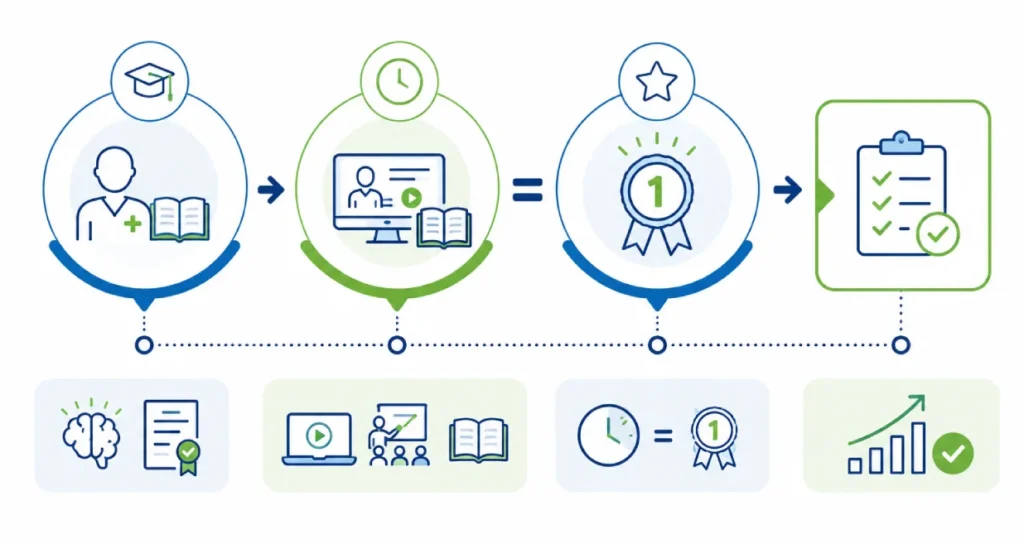
CPD points measure the learning and training you complete to keep your professional skills and knowledge up to date. In most frameworks, one CPD point equals one hour of learning.
2. How many CPD points do healthcare assistants need each year?
There is no national requirement for healthcare assistants. Many employers recommend around 35 hours of CPD annually, but expectations vary by organisation.
3. What activities count towards CPD?
Training courses, webinars, workplace learning, shadowing, reflective practice, team training, and relevant online learning can all count towards CPD.
4. How do I record my CPD?
Keep a CPD log that includes the date, activity, learning hours, and how the learning improved your practice. Save certificates and attendance records as evidence.
5. Can CPD help with career progression?
A strong CPD record can support appraisals, promotions, and applications for senior healthcare assistant roles, Nursing Associate programmes, or other career opportunities.