Healthcare assistants (HCAs) are responsible for preventing infections through hand hygiene, correct PPE use, safe cleaning, careful handling of waste and specimens, and prompt reporting of infection risks. They follow workplace IPC procedures and work within their role and competence.
This guide explains the key infection-prevention responsibilities HCAs have and the practical steps they can take to help protect patients, staff, and visitors.
Table of Contents
What Is an Infection and How Does It Spread?
An infection happens when harmful germs enter the body and multiply. These germs can include bacteria, viruses, fungi, and parasites. Infection prevention and control in healthcare settings helps reduce the spread of these germs and protect patients, staff, and visitors.
In healthcare settings, germs can spread in several ways:
Direct contact: Person-to-person contact.
Indirect contact: Contaminated surfaces or equipment.
Droplets: Spread through coughs, sneezes, or talking.
Airborne spread: Germs carried through the air.
Body fluids: Contact with infected blood or body fluids.
What Is the Chain of Infection?
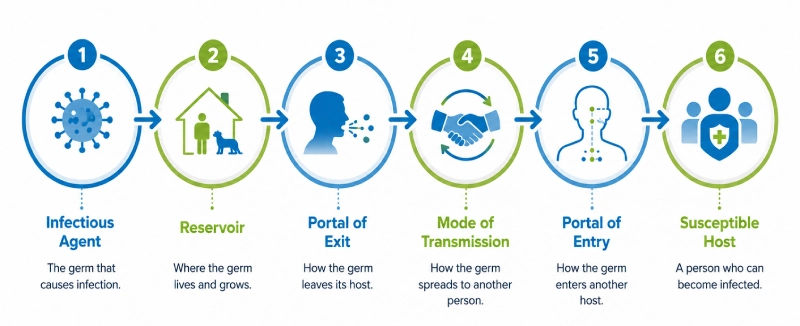
The chain of infection shows how germs spread from one person or place to another. It has six links. Breaking any one of these links can help stop the spread of infection.
The Six Links
Infectious Agent: The germ that causes an infection. It may be a bacterium, virus, fungus, or parasite.
Reservoir: The place where a germ lives and grows. This can be a person, animal, food, water, or surface.
Portal of Exit: How a pathogen escapes from its host. It may escape by coughing, sneezing, wound discharge, blood, and other body fluids.
Mode of Transmission: The way a germ spreads to another person. It can spread through contact, contaminated objects, air, or insects.
Portal of Entry: How a pathogen enters the host. Common entry portals include the nose, mouth, eyes, and wounds.
Susceptible Host: A person who can become infected. People with weak immune systems, poor health, or little immunity may face a higher risk.
Key Infection-Prevention Responsibilities of an HCA
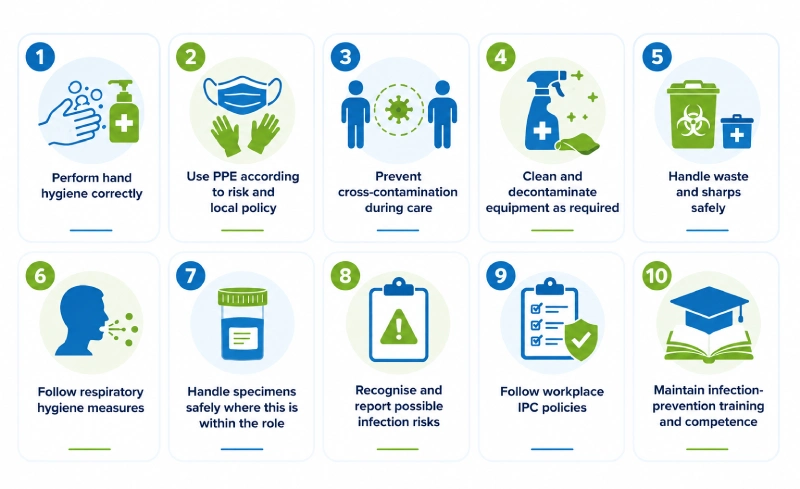
What are your responsibilities in relation to infection prevention and control? As an HCA, you help prevent infections through safe practices during daily patient care. You should work within your role, follow workplace procedures, and report concerns when needed.
Here are the key responsibilities to follow:
Perform hand hygiene correctly.
Use PPE according to risk and local policy.
Prevent cross-contamination during care.
Clean and decontaminate equipment as required.
Handle waste and sharps safely.
Follow respiratory hygiene measures.
Handle specimens safely where this is within the role.
Maintain infection-prevention training and competence.
UK Infection Prevention and Control Guidance for HCAs
Every HCA across the UK must follow infection control protocols. These protocols cover hand hygiene, PPE use, cleaning, waste management, and safe patient handling. HCAs should keep building their IPC skills and complete the required training regularly to stay confident in their role.
They should also follow theNational Infection Prevention and Control Manual for England, which sets out evidence-based standards used across NHS and care settings in England. This manual works alongside the Health and Social Care Act 2008 to help HCAs meet national infection control requirements. Most importantly, HCAs must always follow the local policies set by their own workplace, since these often reflect specific procedures for their setting.
The WHO 5 Moments for Hand Hygiene
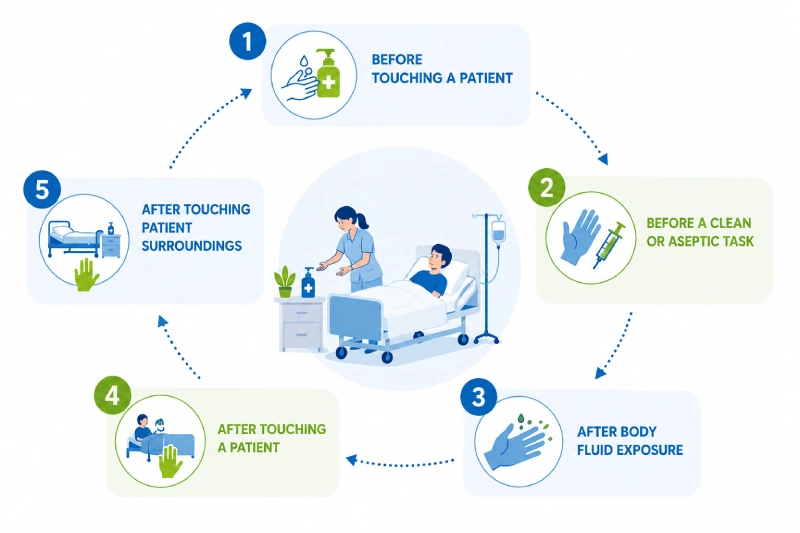
Hand hygiene is one of the most effective ways to prevent infections in healthcare. The WHO 5 Moments for Hand Hygiene provides a clear framework for knowing when hand hygiene is needed during patient care. HCAs should also follow relevant infection control guidelines that UK workplaces use alongside local IPC policies.
The five key moments are:
Before touching a patient: Perform hand hygiene before patient contact.
Before a clean or aseptic task: Perform hand hygiene before the task.
After body fluid exposure: Wash or sanitise your hands after exposure.
After touching a patient: Perform hand hygiene after patient contact.
After touching patient surroundings: Wash or sanitise your hands after touching nearby surfaces or equipment.
When to Wear Gloves and When Not To
Gloves can protect HCAs and patients from germs, but they do not replace hand hygiene. Knowing what the responsibilities of a healthcare assistant are includes using PPE safely and making the right choices during patient care. HCAs should choose gloves based on the task and the risk of contact with blood, body fluids, or contaminated items.
Wear gloves: Use them when contact with blood, body fluids, broken skin, or contaminated items is possible.
Change gloves: Use a fresh pair between patients and tasks.
Remove gloves: Take them off after the task and perform hand hygiene.
Avoid unnecessary use: Do not wear gloves when there is no exposure risk.
Never reuse gloves: Dispose of single-use gloves after use.
PPE: Donning and Doffing Guidance
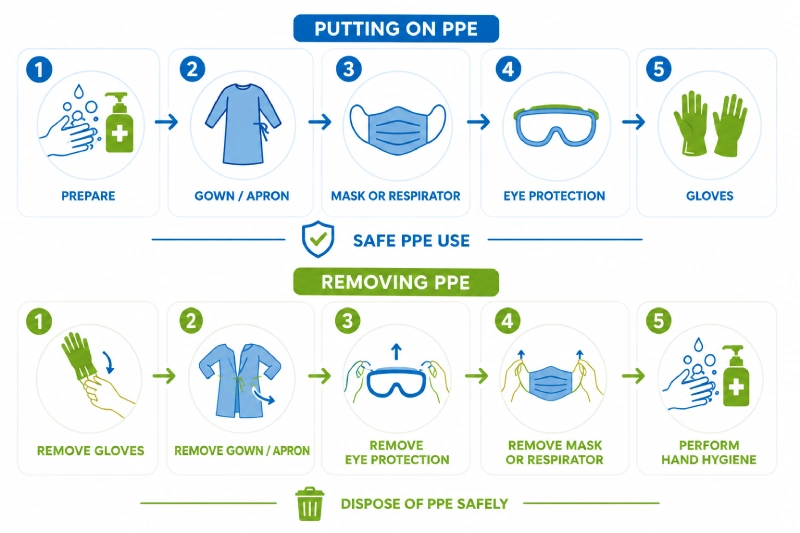
Personal protective equipment (PPE) helps protect HCAs and patients from infection. Understanding who has responsibility for the control and prevention of infections in a healthcare environment helps ensure everyone follows safe infection control practices. HCAs should choose PPE based on the task and exposure risk and follow workplace IPC guidance when putting on and removing PPE.
Putting on PPE
Prepare: Gather all necessary PPE and ensure that it fits properly.
Wear a gown or apron: Make sure it is fitted properly to the right coverage areas.
Apply a mask or respirator: Position it correctly and check the fit.
Eye protection: Use goggles or eye shields in case there is a risk of splashes.
Gloves: Use gloves in case of any risk of contact with body fluids or contaminated materials.
Removing PPE
Take off the PPE very carefully, making sure not to touch contaminated surfaces. Use the process outlined by your organisation for the proper sequence of removal. Make sure you dispose of disposable PPE properly and practice hand hygiene where required.
Respiratory Hygiene and Cough Etiquette
Good respiratory hygiene plays an important role in preventing transmission of organisms by coughing and sneezing. HCAs may advise the patient, visitors, and staff to cover the mouth during coughing or sneezing using a tissue or handkerchief. The HCA will then throw away the used tissue properly. Use an alcohol-based hand rub when hands do not look dirty. However, wash your hands using soap and water when hands look dirty and also after touching body fluids.
Cleaning and Sanitising
A clean environment will help prevent the spread of infections. HCAs need to adhere to cleaning guidelines in the work environment. It is also important for them to use proper cleaning products. This includes cleaning shared equipment after each patient interaction. Areas where contact has been made with the patients should be cleaned. The high-contact areas include the bed rails, door handles, and tables.
Cross-Contamination and How to Prevent It
Cross-contamination occurs when germs pass from one person to another, or from an object to another object or even from one piece of equipment to another. HCAs can prevent cross-contamination by practising proper hand hygiene. In addition, HCAs should change gloves between clients and different tasks if necessary. Disinfect equipment that is shared as needed. Separately keep clean supplies away from contaminated ones.
Build the Skills to Prevent Infection
Good infection control starts with the right knowledge and practical skills. Learn how to follow safer practices, prevent cross-contamination, and protect patients and colleagues with our Infection Prevention & Control Course.
Safe waste disposal helps prevent injuries and the spread of infection. HCAs must place waste in the correct containers and handle sharps with extra care.
Sort waste correctly: Use the correct waste container.
Handle sharps safely: Sharps must be discarded into a proper container.
Never recap needles: Do not bend, break, or recap used needles.
Avoid overfilling: Empty sharps containers at the fill line.
Report injuries: Report needlestick injuries or fluid exposure promptly.
Follow local guidance: Use your workplace waste procedures.
Managing Blood and Body-Fluid Spills
Spills of blood or body fluids could infect people if precautions are not taken. The first step would be to isolate the area. You should also ensure that you have all the necessary personal protective equipment that your workplace requires. After that, follow the process for cleaning up the spill using the approved products.
Handling Specimens and Equipment Safely
HCAs may handle specimens and healthcare equipment as part of their role. Use the required PPE and follow workplace procedures when handling, labelling, or transporting specimens. Avoid spills or contact with specimen containers, and use approved containers for transport. Clean reusable equipment after use and keep clean items separate from used or contaminated equipment.
Safe Handling of Linen
Used linen can carry germs and spread infection if you handle it incorrectly. Therefore, HCAs should handle it carefully and avoid shaking it. Keep used linen away from clean items and place it in the correct laundry bag or container. Wear PPE when needed and follow your workplace laundry procedures. Always perform hand hygiene after handling used linen.
Standard Precautions vs Transmission-Based Precautions
Healthcare staff use infection control precautions to reduce the spread of germs. The table below shows how standard and transmission-based precautions differ.
Standard Precautions
Transmission-Based Precautions
Apply to all patients, regardless of their infection status.
Apply when staff suspect or confirm a specific infection.
Include hand hygiene and safe use of PPE.
Add extra measures based on how the infection spreads.
Include safe handling of blood, body fluids, waste, and equipment.
May include extra PPE, patient isolation, or special room arrangements.
Help reduce the spread of germs during everyday care.
Help control infections that need extra precautions.
What to Do When You Suspect an Infection: Observe, Record, Report
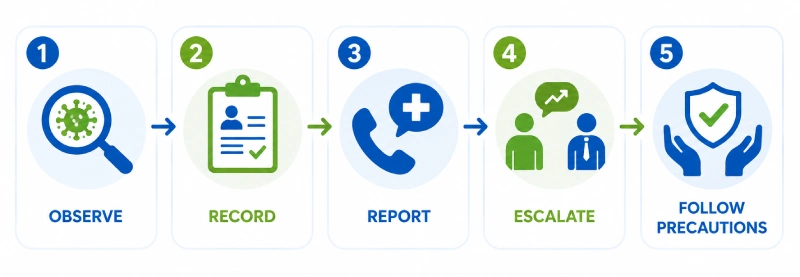
HCAs may see early signs of an infection while providing care for patients. Understanding the importance of infection control helps HCAs respond to concerns and reduce the risk of further spread. Observe, record, report, and follow local IPC policies as appropriate to your role and level of competence. The following steps can help you manage a suspected infection safely.
Observe: Look for fever, cough, vomiting, diarrhoea, unusual wounds, or sudden changes.
Record: Document relevant observations clearly and promptly.
Report: Share concerns with the appropriate healthcare professional.
Escalate: Follow local procedures if the patient’s condition worsens.
Follow precautions: Use the required IPC measures while awaiting further advice.
Knowledge and Competency Requirements for HCAs
HCAs should have the appropriate knowledge and competency in order to practice infection prevention procedures effectively.
Learn IPC procedures: Know the practices required for your role.
Build practical skills: Use hand hygiene, PPE, and waste procedures safely.
Follow workplace policies: Use your employer’s current IPC procedures.
Stay up to date: Keep informed about changes to IPC guidance.
Maintain competence: Carry out key IPC tasks safely and correctly.
Ask when unsure: Seek help from a senior colleague or IPC lead.
What Are HCAs Not Responsible For?
HCAs help prevent infections, but they must stay within their role and training. They are not responsible for:
Diagnosing infections: Report signs to a qualified professional.
Prescribing treatment: Do not choose or prescribe medicines.
Making clinical decisions: Refer concerns to the right professional.
Changing care plans: Follow instructions from qualified staff.
Doing tasks beyond their training: Ask for help when unsure.
Common IPC Mistakes HCAs Should Avoid
Small IPC mistakes can increase the risk of infection and cross-contamination. HCAs should stay alert and follow their workplace procedures during every task. The table below highlights some common mistakes and the safer practices to follow.
Common Mistake
What HCAs Should Do Instead
Skipping hand hygiene
Perform hand hygiene at the required moments, including before and after patient care.
Using gloves incorrectly
Never use gloves as a substitute for hand hygiene or reuse them between tasks.
Touching clean areas with contaminated gloves
Change contaminated gloves before handling clean items or surfaces.
Mixing clean and used items
Keep clean equipment, linen, and supplies separate from used or contaminated items.
Poor waste disposal
Place waste and sharps in the correct containers according to local procedures.
Promoting a Culture of Safety
Infection prevention is a shared responsibility. HCAs can help create a safer care environment when they follow good practice and encourage others to do the same.
Lead by example: Follow IPC procedures during daily care.
Support patients: Encourage good hygiene and cough etiquette.
Work as a team: Share relevant concerns with healthcare staff.
Report risks: Speak up about unsafe practices or infection risks.
Stay updated: Keep up with IPC guidance and role-related learning.
Enhance Your Infection-Control Skills
Strong infection control skills help HCAs protect patients, colleagues, and themselves. Understanding HCA infection prevention duties is an important part of safe healthcare practice. The Infection Prevention and Control course from Healthcare Academy London(HCA London) covers key areas such as hand hygiene, PPE, and other essential IPC practices. If you want to strengthen your infection-control knowledge in your healthcare role, developing a clear understanding of IPC practices can support safer and more effective care.
Final Thoughts
Infection preventionis not a one-time task; it is a daily habit that HCAs build into every patient interaction. Understanding your healthcare assistant infection control responsibilities means knowing that small, consistent actions such as washing hands at the right moments or reporting a concern early can make a real difference to patient safety. As your role develops, staying current with IPC guidance and building on your training will help you carry out these responsibilities with confidence.
Standard precautions apply to all patients. Transmission-based precautions add extra measures for patients with known or suspected infections that require additional controls.