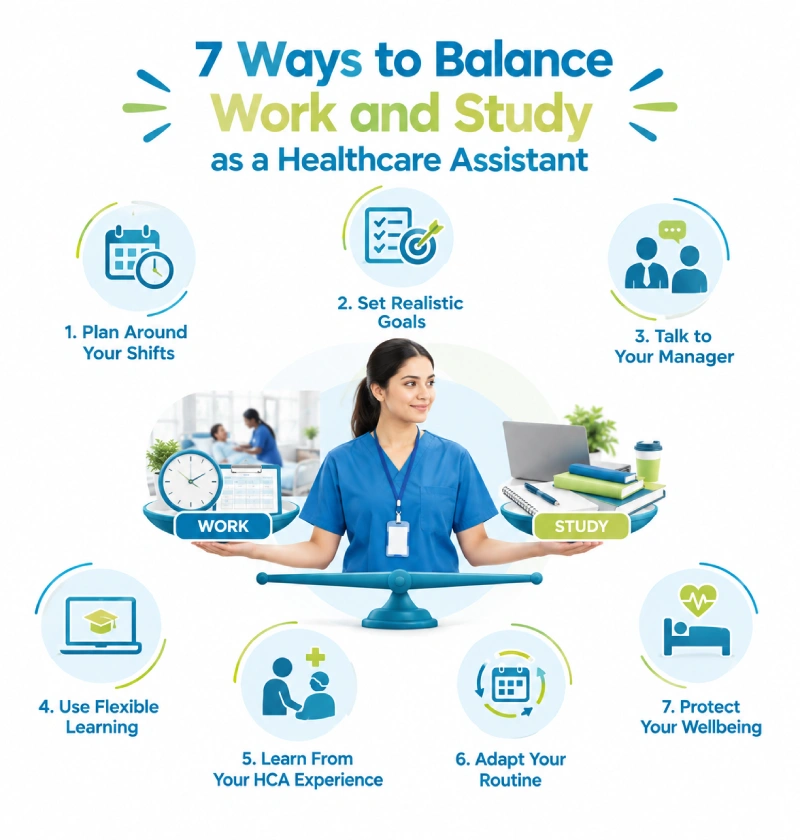
Working as a Healthcare Assistant while completing training can be demanding when shifts, coursework and personal commitments compete for your time. However, with a realistic schedule, a flexible study approach and enough rest, you can manage both while keeping your study time consistent and purposeful. Whether you work rotating shifts, nights or weekends, a structured routine can help you stay organised without neglecting your wellbeing.
This guide explains how to balance work and study as a healthcare assistant, with practical advice on managing shifts, planning study time, choosing flexible learning options and protecting your wellbeing.
Is It Realistic to Work While Training as an HCA?
Yes, working while training as a Healthcare Assistant is realistic, but the right workload depends on your shift pattern, course requirements and personal commitments. Many learners choose flexible or online healthcare assistant training to study around their working hours. Still, it is important to check the course’s study time, practical sessions, assessments and attendance requirements. The aim is not to fill every free hour with study; a sustainable routine should give you enough time to work, study, rest and recover.
Why Balancing Work and Study Can Be Hard for HCAs
Working as an HCA is not always predictable, which makes sticking to a set schedule of studying very difficult. Changes in shifts, strenuous physical work, stress, and long hours of work may all have an impact on your energy levels and ability to concentrate. If you’re wondering how to balance between work and study, the answer starts with understanding these challenges beforehand, so you can build a study schedule that works with your job rather than against it.
How Many Hours Should You Study Each Week?
A useful guideline is to spend around 2–3 hours studying independently for every hour of class or structured learning. However, for HCAs, the ideal workload depends on your course requirements, shift pattern and subject difficulty. If you are working full-time, spread your study hours across the week and adjust them around busy shifts, assessments and your need for rest.
Three Sample Weekly Schedules for HCAs
An HCA has a unique week that will not fit in any standard schedule, so here are three different weekly schedules that depend on the shifts that each one has. You can use these as references and then make changes to the hours.
If You Work Rotating Shifts
1. Plan Your Study Around Your Shift Pattern
Your study schedule should be planned according to your working schedule. In case you are on day shifts, you can choose to have shorter study periods after work. You can do the study activities that require more concentration during your days off. In case you have night shifts, you need to ensure you get enough rest first before you start studying.
2. Set Realistic Study Goals
Trying to complete too much at once can quickly make studying while working in healthcare feel overwhelming. Set a few achievable daily or weekly targets, such as completing one section of an assignment, reviewing a topic or spending an hour on revision. Break larger coursework into smaller tasks and work towards upcoming deadlines gradually rather than leaving everything until the last minute. Realistic goals make progress easier to track and help you stay consistent during busy weeks.
3. Communicate Your Training Commitments with Your Manager
Should your studies have critical evaluation periods or hands-on training, you should inform your manager beforehand. This will give you enough time to talk about your working hours and possible alterations. Make sure to conduct yourself in a businesslike manner, taking into account that the company’s staffing might prevent any changes.
4. Use Flexible and Online Learning Options
Flexible learning can help when your work hours change often. Online healthcare courses, e-learning and recorded resources let you study around your schedule. CPD training can also help you build specific skills. However, check the course requirements before enrolling. Some qualifications still include practical sessions, assessments or supervised education.
If you’re looking for self-paced options that fit around shift work, Healthcare Academy (HCA London) offers courses covering areas such as infection prevention, safeguarding and end-of-life care, worth a look when you’re ready to start.
5. Use Your HCA Experience to Reinforce Your Learning
Your work can also support your learning and help you build your healthcare assistant career. If you study infection prevention, notice how procedures are used at work. For communication topics, reflect on how you interact with patients and colleagues. When studying safeguarding, think about how the principles apply in practice. Always keep your reflections professional and never share confidential patient information in your notes or coursework.
6. Adapt Your Study Routine to Your Shift Pattern
Night and rotating shifts can make a fixed routine difficult. After a night shift, prioritise sleep instead of studying when you are tired. Use days off for assignments or longer study sessions. Save lighter tasks, such as reviewing notes, for busy workdays. This flexible approach helps you stay consistent without making every free moment about coursework.
7. Protect Your Wellbeing and Recognise When You Need a Break
Balancing work and study is easier when you make time to recover. Prioritise quality sleep, regular meals, short breaks and time away from coursework. If you feel constantly tired, struggle to focus, miss deadlines or lose motivation, your workload may be too high. Speak to your manager or tutor if you need support. Looking after your wellbeing is an important part of completing HCA training successfully.
Choosing Courses That Actually Fit Around Shift Work
When choosing healthcare assistant courses in the UK, look beyond the course content and consider how well the learning format fits your working pattern. Look for:
- Flexible online learning: Access lessons and study materials at times that suit your shifts.
- Recorded resources: Revisit lessons or learning materials when your schedule allows.
- Flexible deadlines: Check whether assignments offer enough flexibility around changing schedules.
- Tutor support: Make sure you can access guidance when you need help with coursework.
- Clear study commitments: Confirm how many hours of independent study you are expected to complete each week.
- Practical requirements: Check whether the course includes practical sessions, assessments or supervised training.
- Attendance requirements: Find out whether any sessions require you to attend at specific times or locations.
If you’re looking for courses built around this kind of flexibility, Healthcare Academy (HCA London) offers self-paced, video-based training you can work through whenever your shifts allow.
Online Learning vs Practical and Clinical Assessments: What’s the Difference?
Online learning can be a practical option, particularly if your shifts change from week to week. However, flexibility does not always mean that every part of a healthcare qualification can be completed remotely. Before choosing a course, check what the online learning covers and whether any practical or clinical requirements still apply.
With that distinction in mind, the table below highlights the main differences:
Common Mistakes HCAs Make When Balancing Work and Study
Even with good planning, some habits can make your workload feel more difficult than it needs to be. Avoiding these common mistakes can help you stay consistent with your training while protecting your time and energy.
- Studying while tired: Never push yourself to finish difficult assignments after doing long or night shifts; rest first and then study when you can focus.
- Unrealistic study objectives: Attempting to achieve too much in a short period is stressful. Set realistic goals each week.
- Disregarding your work schedule: Always look at your work schedule before making plans for study so that no unnecessary conflicts arise.
- Procrastinating with assignments: Break down the task and get started well in advance of busy times.
- Sacrificing sleep for study: Cutting into your recovery time can affect both your work performance and your ability to learn effectively.
Final Thoughts
Balancing work and study as a healthcare assistant takes planning, flexibility and realistic expectations. Build your study routine around your shifts, use flexible learning options and give yourself enough time to rest and recover. You do not need a perfect schedule; consistent progress and a sustainable routine matter most. Take time to compare course requirements, learning formats and practical commitments before choosing an option that fits your working life.
Frequently Asked Questions