A Healthcare Assistant supports patients with daily care needs, while a Nursing Associate is a regulated professional trained to take on additional clinical responsibilities. The two titles get used interchangeably on job adverts, but understanding the healthcare assistant vs nursing associate distinction matters, since mixing them up can send your career down the wrong path.
This guide breaks down what each role actually involves, how they compare on training and pay, and which path might suit you better.
★QUICK ANSWER
Healthcare Assistant vs Nursing Associate: What’s the Difference?
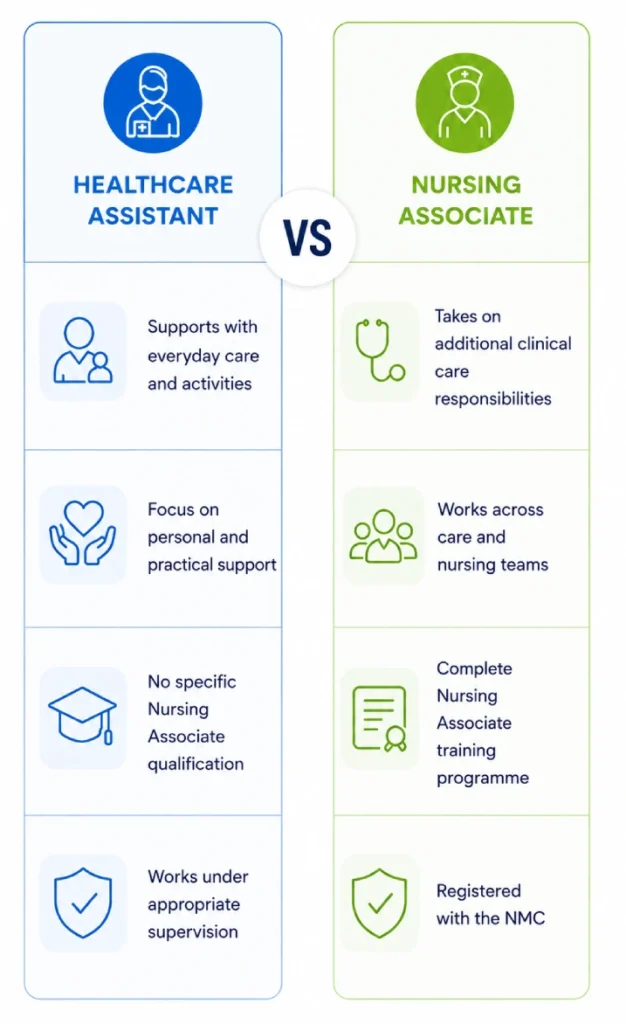
The main difference is education, registration and scope of practice. Healthcare Assistants support patients with everyday care and daily living needs, while Nursing Associates complete additional clinical training and are registered with the NMC.
💡
In simple terms:
A Nursing Associate has additional clinical training and responsibilities, working at a level between a Healthcare Assistant and a Registered Nurse.
What Is a Healthcare Assistant?
A Healthcare Assistant (HCA) is a healthcare worker who supports patients with their everyday care needs and assists other healthcare professionals in delivering safe, person-centred care.
HCAs can help with personal care, mobility, meals, hygiene, comfort and basic health observations. They work in settings such as hospitals, care homes, GP practices and community services. With experience and education, they can also progress into more advanced healthcare roles.
What Is a Nursing Associate?
A Nursing Associate is a regulated healthcare professional who provides clinical care and supports registered nurses in delivering safe and effective patient care.
Nursing Associates have more clinical responsibilities than Healthcare Assistants. They can support tasks such as monitoring patients, contributing to care plans and delivering certain aspects of treatment within their scope of practice. They work across settings such as hospitals, community care and mental health services. To become a Nursing Associate, individuals must complete an approved programme and register with the Nursing and Midwifery Council (NMC).
Is “Nursing Assistant” an Official UK Job Title?
Yes, “Nursing Assistant” is a recognised and used job title within the UK healthcare system, including theNHS. It is often used interchangeably with other healthcare support titles, such as Healthcare Assistant. However, unlike “Registered Nurse,” it is not a legally protected professional title, and job titles can vary between NHS Trusts and private healthcare providers.
Key Differences Between Healthcare Assistants and Nursing Associates
The roles of Healthcare Assistants and Nursing Associates differ in several key areas, including training, responsibilities and level of clinical involvement. When comparing Healthcare Assistant vs Nursing Associate roles, the main differences come down to qualifications, scope of practice, supervision and career progression opportunities. Understanding these distinctions can help you choose the healthcare career path that best suits your goals.
Education, Training and Registration
The training requirements for Healthcare Assistants and Nursing Associates differ due to their level of responsibility. Nursing Associate training and qualifications involve more advanced clinical preparation, while Healthcare Assistant training focuses on essential care skills. The table below highlights the key differences in qualifications, education and registration.
Area
Healthcare Assistant (HCA)
Nursing Associate
Training Requirements
Usually begins with employer training, the Care Certificate or health and social care qualifications.
Completes an approved Nursing Associate foundation degree with clinical placements.
Qualifications
Level 2 or Level 3 Health and Social Care qualifications can support career progression.
Foundation Degree in Nursing Associate Practice.
Registration
No professional registration required.
Must register with the Nursing and Midwifery Council (NMC).
Further Progression
Can progress to senior HCA roles or train as a Nursing Associate.
Can progress towards becoming a Registered Nurse through further study.
Responsibilities and Scope of Practice
Although both roles support patients, Healthcare Assistant and Nursing Associate responsibilities vary based on their further study, level of accountability and scope of practice. Nursing Associates usually take on more clinical responsibilities, while Healthcare Assistants focus more on everyday care, personal support and patient comfort.
Area
Healthcare Assistant
Nursing Associate
Main Focus
Personal care and daily support.
Clinical care and patient monitoring.
Common Tasks
Washing, dressing, meals, mobility support, and observations.
Medication support, wound care, monitoring patients, and supporting care plans.
Level of Responsibility
Works under the supervision of nurses or senior staff.
Works under registered nurses with greater clinical responsibility.
Common Misconceptions About These Two Roles
Before comparing the two roles in more detail, it is worth clearing up a few common misunderstandings:
They are not the same role: Healthcare Assistants and Nursing Associates have different training requirements, responsibilities, and scopes of practice.
A Nursing Associate is not simply a senior HCA: Nursing Associates complete approved training and must register with the NMC, giving them a different professional status and level of responsibility.
Where Do Healthcare Assistants and Nursing Associates Work?
Both roles can be found across different healthcare settings, but their working environments may vary depending on their responsibilities.
Setting
Healthcare Assistant
Nursing Associate
Hospitals
Supporting patients with daily care needs.
Supporting clinical teams and patient treatment.
Care Homes
Personal care and wellbeing support.
Less common but possible in some settings.
Community Care
Home visits and daily support.
Community healthcare services.
How Does the Nursing Associate Role Benefit Employers and Care Teams?
Nursing Associates strengthen healthcare teams by providing additional clinical support and helping registered nurses deliver effective patient care.
Supports registered nurses: Takes on appropriate clinical responsibilities.
Strengthens teams: Adds skilled support between HCAs and Registered Nurses.
Improves continuity: Helps provide consistent patient care.
Supports progression: Creates a clear pathway within the nursing profession.
Career Progression Pathways
Both Healthcare Assistants and Nursing Associates can progress through further training and experience. The Healthcare Assistant to Nursing Associate pathway helps develop clinical skills and provides a route towards more advanced healthcare roles, including Registered Nursing.
Gain experience, complete additional qualifications and develop skills in areas such as clinical support and specialist care.
Nursing Associate
Registered Nurse (through further study and NMC registration)
Develop advanced clinical skills, take on greater responsibility and support a wider range of patient care needs.
Registered Nurse
Specialist Nurse → Advanced Practice → Leadership Roles
Progress into specialist areas, management positions or advanced clinical roles within healthcare.
How Do You Progress from Nursing Assistant to Nursing Associate?
If you are working as a Nursing Assistant or Healthcare Assistant, you can progress to a Nursing Associate by gaining relevant experience and completing an approved Nursing Associate programme. This typically combines academic study with practical placements and leads to NMC registration.
Salary and NHS Pay Bands
Pay depends on experience, location, employer and level of responsibility. In the NHS, roles are usually linked to Agenda for Change pay bands.
Is the Nursing Associate Role Available Across the Whole UK?
No, the Nursing Associate role is not available across the whole UK. It is a regulated profession primarily established in England, with regulation also extended to Wales by the Nursing and Midwifery Council (NMC). Scotland and Northern Ireland do not currently have Nursing Associates as a regulated profession under the NMC.
Which Role Is Right for You?
Choosing between a Healthcare Assistant and a Nursing Associate depends on your career goals, interests and the level of responsibility you want to take on within healthcare.
A Healthcare Assistant role may suit you if you enjoy providing hands-on support, helping patients with daily care needs and building experience in a healthcare environment. It can be a good starting point for those looking to enter the sector and develop their skills through further education.
The Nursing Associate role can prove to be a good fit for individuals who seek additional clinical duties and a well-defined route to becoming a registered nurse. The Nursing Associate role caters to individuals who would like to enhance their expertise and advance their career in the healthcare field in the UK.
How Healthcare Academy London Can Support Your Career
Building a healthcare career requires the right knowledge, skills and confidence, and Healthcare Academy (HCA London) offers online healthcare courses designed to support your professional development. Our courses cover areas such as health and social care, safeguarding, and specialist care topics, giving you practical skills you can apply straight away. Explore our courses today and take the next step towards a rewarding healthcare career.
Final Thoughts
Healthcare Assistants and Nursing Associates both play an important role in supporting patients, but they differ in their education, responsibilities and career pathways. Healthcare Assistant roles can be a great starting point for entering healthcare, while Nursing Associate roles provide a structured route towards more advanced clinical responsibilities and nursing progression. Knowing what sets a healthcare assistant apart from a nursing associate can help you choose a career path that matches your skills, interests and long-term goals.
Yes, you can become a Nursing Associate without first working as an HCA. HCA experience is helpful, but it is not mandatory if you meet the programme’s entry requirements.