What Is Continuous Learning in Health and Social Care?
Continuous learning in health and social care is the ongoing process of building skills, knowledge, and professional practice throughout a career.
It goes beyond completing one training course or qualification. Care professionals learn through training, CPD courses, workplace experience, supervision, feedback, and reflective practice. They can also learn by keeping up with new guidance and changes in care. As a result, continuous learning helps professionals stay prepared for the changing needs of the people they support.
CPD vs Mandatory Training vs the Care Certificate
CPD, mandatory training, and the Care Certificate all support learning in health and social care. However, they serve different purposes. Here’s how they differ:
Current CPD and Mandatory Training Requirements
So, why is continuous professional development important in healthcare? It allows care professionals to ensure their competence and knowledge stay current in light of changing standards and requirements, as well as changing needs of people. Continuous Professional Development (CPD) is a continuous process aimed at personal professional development.
Regular training helps care professionals stay prepared for the challenges they face every day. Key areas include:
- Safeguarding training helps professionals identify signs of abuse, understand risks, and take the right Action to protect vulnerable people.
- Medication management training builds confidence in proper medication support, documentation, and following the right procedure.
- Infection control training helps staff follow the right hygiene protocols to reduce risks for themselves and the people they support.
- Learning disability and autism awareness training helps professionals understand individual needs and provide more inclusive support.
The updated Care Certificate also includes Standard 16, Awareness of Learning Disability and Autism, highlighting the importance of personalised and respectful care. Regular CPD allows care professionals to apply current guidance, reflect on their practice, and provide care based on evidence rather than relying only on routine.
How Employers Support Continuous Learning
It is possible for employers to facilitate continuous learning amongst care professionals. A conducive work environment provides employees with adequate time and materials for skill enhancement. An ideal work environment may assist employees in linking their learning to practical caring situations.
Continuous learning can be supported by employers in the following ways:
- Regular training: Provide mandatory and role-specific training to keep skills up to date.
- E-learning: Give staff access to flexible online courses they can complete around their shifts.
- Supervision and feedback: Use regular discussions to identify skill gaps and set development goals.
- CPD opportunities: Encourage staff to take part in courses, workshops, and other learning activities.
- Career support: Help employees prepare for senior roles and new responsibilities.
When employers support learning, staff feel more confident and better prepared to provide high-quality care.
How Reflective Practice Supports Continuous Learning
Reflective practice helps care professionals learn from their everyday work. It means looking back at a situation, thinking about what went well, and identifying what could be improved. For example, a care worker may reflect on how they handled a difficult conversation and consider what they could do differently next time.
This process helps professionals turn daily experiences into learning opportunities. They can also use feedback from colleagues, supervision, and training to improve their approach. Over time, reflective practice helps build confidence, strengthen skills, and support better care.
Benefits of Continuous Learning for Care Professionals
Continuous learning allows care professionals to develop their skills further. This way, it keeps them aware of developments and changes. This allows them to provide better assistance to the people they are caring for. Being up-to-date with health care trends is just one of its many advantages. Developing greater confidence in the job is yet another one.
Ready to explore how continuous learning can improve your care career? Let’s look at the key benefits:
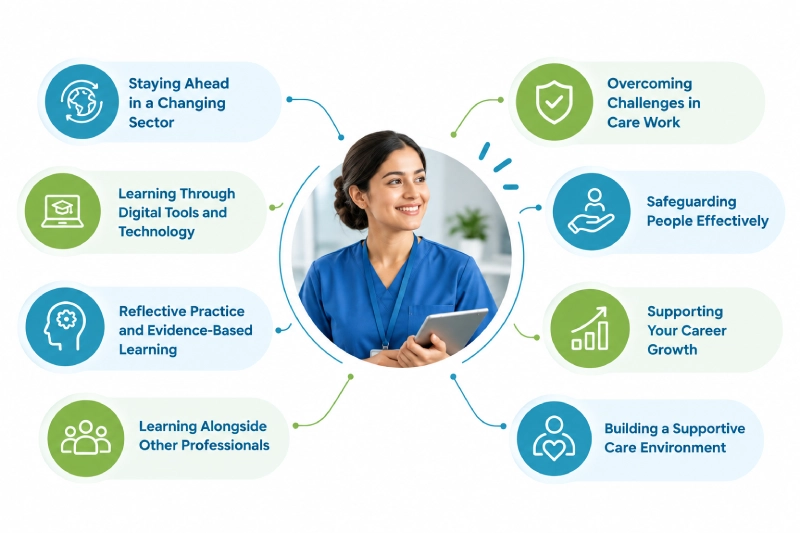
Staying Ahead in a Changing Sector
The health and social care sector is always dynamic. There are new guidelines, new practices, and new policies. There are always better means of assisting people, and all these affect the industry. So, what is one benefit of continuous learning for carers? It’s the ability to adapt with confidence, rather than feel caught off guard by change. Health and social care professionals who learn continuously are able to adapt to changes and provide appropriate support.
Learning Through Digital Tools and Technology
Digital technology has changed how care practitioners learn and work. E-learning tools, digital training programmes, and electronic care records help staff build knowledge and improve daily practice. A quick training module on dementia care before a shift, for instance, can help a care worker use better communication skills right away.
Reflective Practice and Evidence-Based Learning
Care professionals use reflective practice to learn from their daily experiences. They think about what went well and what they can do better next time. At the same time, they use evidence-based learning to make care decisions based on current research, trusted guidance, and proven methods. As a result, they provide better care in the future.
Learning Alongside Other Professionals
Care professionals work with nurses, social workers, occupational therapists, and other healthcare staff every day. They learn from each other and share ideas to improve the way they work together. As a result, they communicate better, plan care more effectively, and make handovers easier. This also helps create a safer and better experience for the people they support.
Overcoming Challenges in Care Work
Care work is always developing as the needs of individuals, healthcare delivery, and technology keep changing. Lifelong learning allows care practitioners to cope confidently and adequately in any new situation that arises. Learning about different subjects, including dementia care, mental well-being, and electronic care records,s prepares them for this.
Safeguarding People Effectively
It is among the major duties in health care to ensure the safety of individuals. Training enables caregivers to identify signs of abuse, neglect, or mistreatment and react accordingly. Training also keeps caregivers informed about the current guidelines so as to keep vulnerable individuals safe. This is a clear way to explain why continuous learning matters for care professionals: it turns awareness into real, timely Action when someone’s safety is at risk.
Supporting Your Career Growth
Continuous learning helps care professionals build confidence, develop new skills, and progress in their careers. But why is CPD important in health and social care? It keeps professionals’ knowledge up to date and prepares them for greater roles. Training and CPD can also open opportunities to become a senior care worker, care coordinator, or specialist support worker while demonstrating a strong commitment to high-quality care.
Building a Supportive Care Environment
Continuous learning creates an environment in which health care providers can learn from each other and work together as a team. The exchange of knowledge and experience in training creates an effective communication process and helps develop high-quality care services. The culture of continuous learning promotes career development and creates a more compassionate environment for everyone involved.