Healthcare assistants often spend more time with patients than any other member of the care team, giving them a unique opportunity to notice changes in behaviour, mood, and overall well-being. Even small daily interactions can help patients feel safe, respected, and understood. With the right knowledge and approach, healthcare assistants can make a meaningful difference to a patient’s experience while working closely with the wider healthcare team. This guide explains practical ways to strengthen those skills and provide effective support in everyday care settings.
Why HCAs Play a Key Role in Mental Health Support?
Healthcare assistants play a key role in mental health support because they spend more time with patients than almost anyone else on the ward. That closeness makes you the first to notice when something changes, and often the only person a patient chooses to open up to. The role includes daily emotional support, monitoring how patients are really doing, and acting as the main link to the wider care team.
This demand keeps growing every year. NHS England data shows an average of 453,930 new mental health referrals every month in 2024/25, a 15% rise in just two years. Research from English mental health Trusts confirms what many HCAs already know: that this rising demand is being met largely by the emotional support HCAs provide every shift. That makes your role more essential now than ever before.
Recognising the Signs: What to Look Out For
You are not there to diagnose. That is not your role. But observation is one of the most powerful tools you have. Patients rarely say, “I am struggling with my mental health.” They show it, often in ways that are easy to miss if you are not paying attention.
Emotional and Behavioural Signs
A patient who was chatty last week and goes quiet this week is telling you something, even without a word. Watch for:
- Withdrawal from conversation or any sort of interaction
- Unusual mood swings and agitation
- The lack of interest in usual hobbies and interests
Physical Indicators and Communication Clues
Some signs show up in the body before they show up in words. Watch for:
- Appetite issues and/or reluctance to eat
- Self-neglect and poor hygiene
- Signs of confusion and/or inability to concentrate
- Reluctance to make eye contact or unusual silence
Ways to Support a Patient with Mental Health Needs
Helping someone dealing with mental health challenges is not as difficult as it may sound. It’s not about having all the answers. It’s about doing things the right way, every single time. The small things are what create real trust.
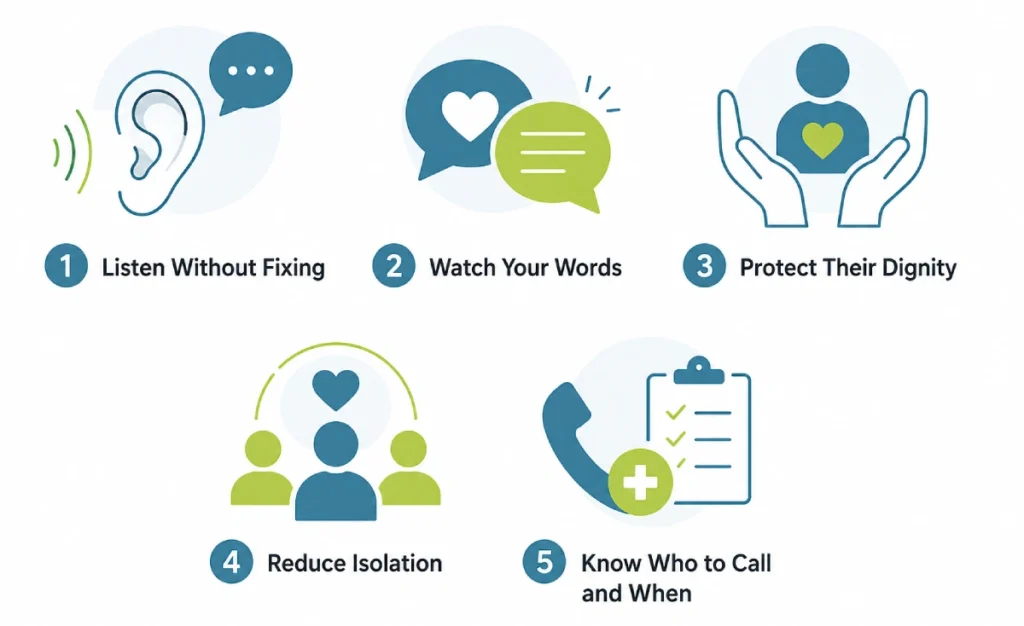
So, what are 5 ways to improve mental health support as an HCA? Here they are.
1. Listen Without Fixing
Most people do not open up because they want someone to tell them what to do. They open up because they need someone to hear them genuinely. So when a patient starts talking, stop what you are doing. Put everything aside. Do not jump in with solutions or try to fix what they are feeling. Just listen. Fully, quietly, without thinking about what you will say next. That kind of attention is rare. For someone who is struggling, it can mean everything.
2. Watch Your Words
Your words will stay with a patient for a lifetime. When a patient hears things like “she is simply being stubborn” or “he is a little unstable,” those words will stick around with them. Do not say “a patient suffering from depression.” This is part of how to support a mental health patient, choosing words that heal rather than label. Always maintain an even tone with warmth, especially on the days when you are feeling extremely exhausted.
3. Protect Their Dignity
No one wants to feel like a burden or a task to be completed. Before you act, ask. Before you enter, knock. Whenever possible, make sure your patient feels involved in their care. These are small things on your end, but they are not small to the person receiving them. Feeling respected is not a bonus in mental health care. It is part of the treatment.
4. Reduce Isolation
What are the activities for mental health that actually make a difference in a care setting? Simple ones. Ask about their sleep. Encourage a short walk. Involve family where possible. Some people may go through an entire day without having one real interaction with anyone. You may be the one who speaks to them. Do not waste that opportunity. Sometimes, just speaking with them can make all the difference in their day.
5. Know Who to Call and When
You are not expected to have all the answers. But you are expected to know where to look for help. Learn about your local resources. Know which helplines exist. Understand who, on your team, to loop in when something feels beyond your ability to handle. Getting help at the time is not a sign that you cannot handle it. It is a sign that you are doing your job properly.
Communication Skills That Build Trust
You can say all the right things and still lose a patient’s trust if your body language says otherwise. Words matter, but they are only half the conversation. The other half is how present you actually are in the room. What is the role of a mental health care assistant, if not to build that trust in the first place?
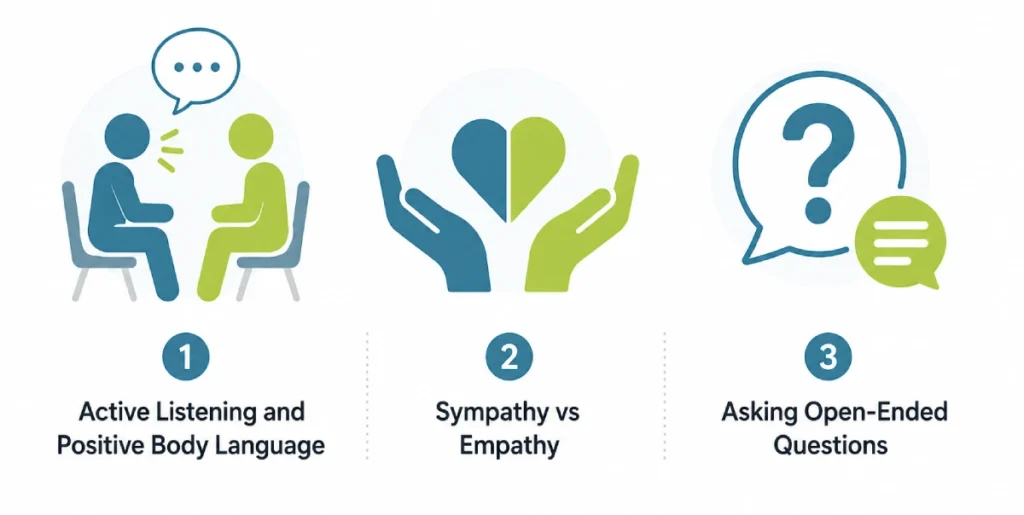
Here is how the small things add up to it.
1. Active Listening and Positive Body Language
Put down what you are holding. Face the patient. Look them in the eye. Keep your posture open, not crossed or turned away. Nod so they know you are following along. Do not glance at the clock. Do not check the door. A patient always notices when someone is truly there versus someone who is just waiting to leave.
2. Sympathy vs Empathy
The two concepts can clearly be differentiated. Sympathy means “I am sorry for you.” Meanwhile, empathy implies “I understand that this is tough on you, and I will support you.” In one case, there is distance; in the other, there is closeness. This means that when patients share their challenges, you should empathise with them.
3. Asking Open-Ended Questions
How you ask a question determines whether the patient will be honest with you or become closed off to communication. Instead of “Are you alright?”, try asking “How are you feeling today?” This little change allows your patient to talk truthfully to you. Moreover, this demonstrates that you have some time to spend beyond the initial screening despite the busy shift you have.
Professional Boundaries Every HCA Must Know
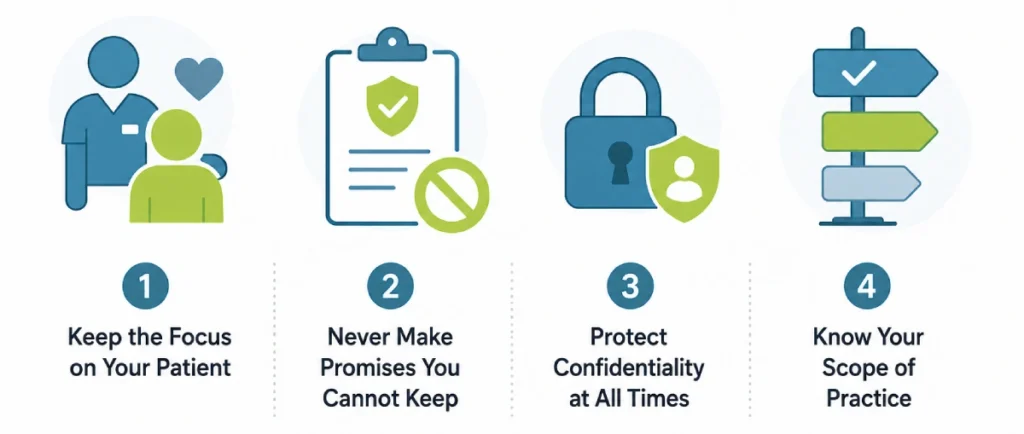
Supporting a patient with mental health needs can feel deeply personal. You care about them. You want to help. But there is a line between being a compassionate carer and becoming too emotionally involved. Crossing it does not just affect you. It affects your patient, too. Here is what you need to keep in mind:
1. Keep the Focus on Your Patient
Your role is to support your patients, not the other way around. Do not share your personal problems or struggles with patients. The relationship is professional, and keeping it that way protects both of you.
2. Never Make Promises You Cannot Keep
Promising a patient that “it will all work out well” or that “I will always be there for you” is a nice gesture at that very instant, but it builds false hope and unhealthy dependence. Tell the truth but speak with warmth and realism.
3. Protect Confidentiality at All Times
Whatever your patient confides in you, it must be kept confidential among professionals and reported properly. Never speak about the mental well-being of your patient outside of a professional setting. Don’t use any information regarding their well-being on social media, even if you don’t mention their name.
4. Know Your Scope of Practice
You are not a therapist, a counselor, or a psychiatrist. If a patient needs more than you can provide, the most professional thing you can do is say so and point them in the right direction. Recognising your limits is not a weakness. It is exactly what good care looks like.
Your Mental Health Matters Too
It’s an issue that doesn’t always get enough attention. You take in your patients’ troubles and bad days shift after shift, and there is a price to pay. Long shifts, inadequate staffing levels, and pressure are all elements that will influence how you work and feel at work. Burnout is apparent through feeling exhausted, disconnected, and uncertain why you became a nurse in the first place. So how do you improve the mental health of healthcare workers? Speak to someone if things are tough. Create barriers between work and personal life. A healthcare assistant who takes care of themselves is a more effective caregiver, a better thinker, and a better advocate for each of their patients.
Take the Next Step in Your Care Career
Mental health awareness for HCAs is a skill worth building every single day, not just reading about once. Every patient you support is navigating more than a physical condition, and the way you listen and protect their dignity often matters more than any procedure. The well-being of a healthcare worker matters just as much, because the more grounded you feel, the better you show up for the people who need you. Health Care Academy London offers online courses built for real care settings, flexible and affordable, so you can grow that awareness with real confidence. Start there, and let every shift after this one reflect it.
FAQs