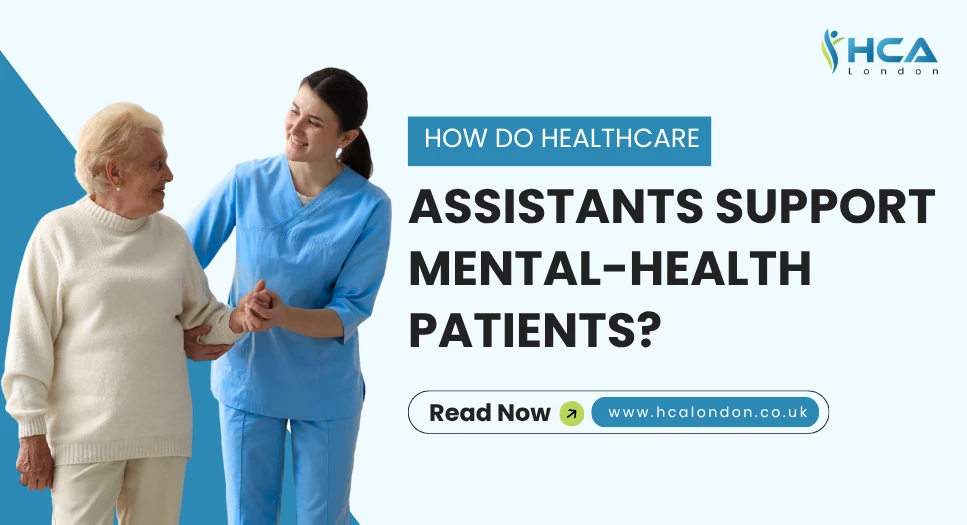
Have you ever wondered who helps patients beyond doctors and nurses? Healthcare professionals give daily support to patients. They help with everyday tasks, manage emotions, and follow treatment plans. With patience, care, and constant attention, HCAs make a real difference in recovery. Their support helps patients feel cared for, understood, and confident every day.
In this blog, you’ll discover how do healthcare assistants support mental-health patients in their daily lives. You’ll see the ways they provide support, encouragement, and care at every step of recovery.
Role of Healthcare Assistants in Supporting Mental Health Patients
Mental health support workers play a key role in helping you feel safe, understood, and supported. They assist with daily tasks, emotional needs, and recovery goals. Let’s explore how Healthcare Assistants support mental-health patients in their day-to-day care and recovery.
- Providing Daily Living Support
HCAs help patients with everyday tasks. They assist with washing, dressing, and grooming. They also help you eat and drink. HCAs encourage you to join daily routines, such as making beds or organising personal spaces. These activities boost confidence and give you a sense of purpose. Caregiver adjust their support to fit each patient’s needs. Some patients need gentle reminders, while others need hands-on help.
- Emotional and Psychological Support
Healthcare workers give emotional support by listening to you without judgment. They let you share your fears and worries, so you feel understood. They stay calm and offer reassurance when you feel upset. HCAs also guide you to try positive coping strategies, like deep breathing or quiet activities. Spending time with you helps build trust and makes you feel less alone.
- Monitoring Mental and Physical Well-being
Support workers monitor you closely, spotting shifts in sleep, appetite, or mood. They check for signs of distress, self-harm, or withdrawal so you get help fast. They also keep an eye on your physical health and report any pain or illness. Learn to observe and support patients with the Mental Health Awareness course at Healthcare Academy London. Sharing this with nurses and doctors ensures you stay safe and supported.
- Supporting Treatment and Care Plans
Do you know who helps you stay on track with your treatment? HCAs remind you about medications and encourage you to attend therapy sessions, so your care works better. They explain activities in simple words, helping you feel less anxious. HCAs also guide you through routines like sleep schedules or daily activities. Supporting these plans every day helps you recover and stay on track.
- Promoting Social Interaction and Recovery
Strong healthcare worker mental health support includes helping you stay socially active. Carers help you join group activities like art sessions, walks, or games, which reduce loneliness. They also spend one-on-one time talking with you to lift your mood and build social confidence. HCAs encourage your independence by praising your progress and effort. This support helps you regain skills and move forward in recovery.
- Maintaining a Safe and Supportive Environment
Safety comes first in mental health care to keep you safe. Healthcare Assistants create a secure space by removing risks and following safety steps. If challenges arise, they respond calmly and use gentle communication to ease the situation. Their steady and kind approach helps you feel protected. So, how to support good mental health? A safe, consistent environment plays a big role in helping you feel confident and at ease.
- Working as Part of a Multidisciplinary Team
Care Assistants work closely with nurses, doctors, and therapists to keep you well. They share daily observations during handovers, which help guide care decisions. Support workers also attend team meetings and offer insights from their daily contact with you. Their input often spots small but important changes. Working together, the team provides coordinated, effective, and holistic support.
Final Thoughts
Healthcare Assistants support mental-health patients by helping with daily routines, emotional needs, and recovery. They pay close attention and show kindness, which makes care more personal and helps you get better results. HCAs give stability, respect, and hope, creating a safe place where you feel valued and supported. Their hard work keeps mental health services running smoothly.