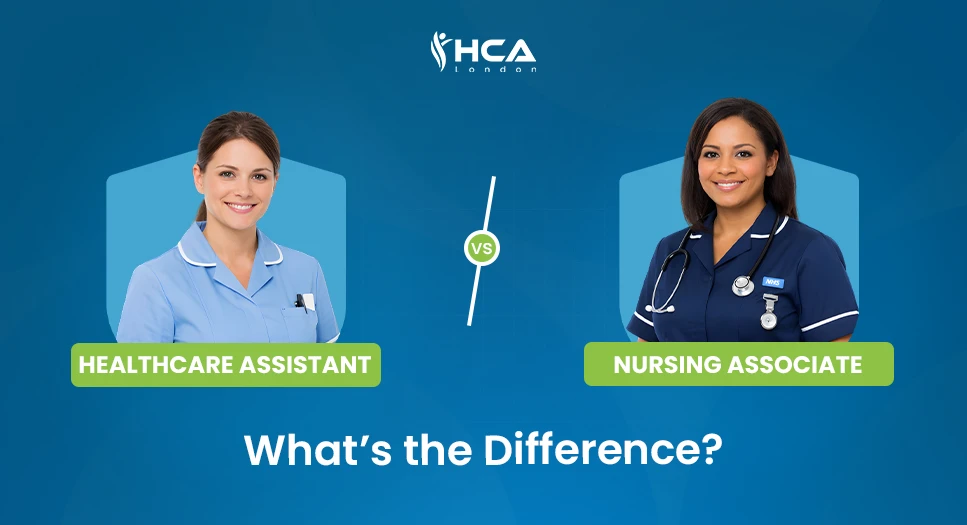
Have you ever wondered what really sets Healthcare Assistant vs Nursing Associate roles apart in healthcare? Many people use these titles interchangeably, but the roles are quite different. Knowing the distinction can help you make smarter career choices, understand who does what in a healthcare setting, and even improve patient care.
In this blog, you’ll learn the key differences between these two essential healthcare roles, from responsibilities and training to career opportunities. By the end, you’ll clearly see where each role fits in the healthcare team and which path might be right for you.
Defining the Roles: Healthcare Assistant vs Nursing Associate
1. What is a Healthcare Assistant?
A Healthcare Assistant (HCA) helps patients with everyday tasks. They assist with meals, moving safely, personal hygiene, and taking vital signs. HCAs usually work in hospitals, care homes, or clinics. Many start with on-the-job training or an NVQ in Health and Social Care. This role is perfect for those who enjoy hands-on patient care.
2. What is a Nursing Associate?
A Nursing Associate (NA) provides more clinical care than an HCA. They can give medication, monitor patient progress, and help with care planning. NAs work in hospitals, clinics, and community care, following professional standards. Training requires a Foundation Degree and registration with the Nursing and Midwifery Council (NMC). This role suits those who want more responsibility and a step toward becoming a Registered Nurse.
What is the Difference Between a Nurse and a Healthcare Assistant?
1. Scope of Practice
Healthcare Assistants focus on basic patient care. They help with daily needs, monitor vital signs, and support nurses. Nursing Associates take on more clinical tasks, like giving medication, wound care, and supporting care plans. In short, NAs have more responsibility and a wider scope in patient care.
2. Training and Qualifications
HCAs usually start with on-the-job training or an NVQ in Health and Social Care. Nursing Associates need a Foundation Degree and must register with the Nursing and Midwifery Council (NMC). The training for NAs is longer and covers more clinical skills.
3. Career Progression
HCAs can gain experience and move into specialised roles or pursue further nursing training. NAs have a clearer path to becoming a Registered Nurse. They can also take on senior clinical responsibilities within hospitals and community care.
4. Salary and Job Prospects
Healthcare Assistants typically earn between £21,000 and £53,000, depending on experience and setting. Nursing Associates earn between £22,000 and £27,000. Both roles are in high demand across hospitals, care homes, and community healthcare. NAs have clear paths for career progression, while HCAs can advance through experience or further training.
Choosing Between a Healthcare Assistant and a Nursing Associate
Deciding on a career in healthcare starts with understanding your goals and interests. If you enjoy hands-on patient care and want a flexible entry point, a Healthcare Assistant role might suit you. If you want more responsibility, regulated practice, and a path toward becoming a Registered Nurse, a Nursing Associate could be the right choice. Knowing the difference between Healthcare Assistant vs Nursing Associate can help you pick the healthcare role that suits your ambitions.
If you want to enhance your skills as a Healthcare Assistant, Healthcare Academy London offers online health care courses covering awareness, safeguarding, prevention, and specialist care courses. These CPD courses help you boost your CV, improve employability, buifld confidence, and provide better patient care.