


All courses for
£149.99
· Save 87% in just one click
Instant Access
Free Certificate
CQC-Aligned
Venepuncture and cannulation play an important role in everyday healthcare, enabling professionals to collect blood samples and provide access to a patient’s veins for appropriate treatment. A sound understanding of these procedures helps healthcare staff work safely, make informed decisions and contribute to effective patient care. Developing this knowledge is essential for professionals who perform or support venous access as part of their clinical responsibilities.
Safe practice requires more than knowing how to carry out a procedure; it also involves understanding patient safety, infection prevention and the risks associated with venepuncture and cannulation. This venepuncture and cannulation course helps learners strengthen their clinical knowledge, recognise potential complications and understand the importance of following safe working practices. Whether you are building your knowledge, refreshing existing skills or preparing for further practical training, this course offers a valuable opportunity to strengthen your understanding and support better outcomes for patients. Take the next step in developing your knowledge of safe venepuncture and cannulation.
The detailed curriculum outline of this course is provided below, covering all the modules and key topics included in the course.
£49.00 Original price was: £49.00.£13.99Current price is: £13.99.
£49.00 Original price was: £49.00.£13.99Current price is: £13.99.Add to basket
This course includes
E-Learning Course
Included
Lifetime Access
Course detail
The cannulation and venepuncture training is designed for healthcare professionals who perform, assist with or want to strengthen their understanding of venous access procedures. It is suitable for clinical staff looking to build foundational knowledge, refresh existing understanding or prepare for further practical training.
This venepuncture course is particularly relevant to:
The course also supports staff undertaking clinical induction, refresher learning or continuing professional development. Learners must follow their employer’s requirements for supervised practice and competency assessment before performing these procedures independently.
The Venepuncture and cannulation course assessment is fully online and easy to complete. You’ll complete ongoing (formative) assessments and a final (summative) assessment to test your understanding of the course content. To pass, you must achieve an 80% score on the multiple-choice questions and successfully complete all required assessments. You’ll receive your results instantly, with unlimited attempts to help you succeed. If you don’t pass on your first attempt, you can retake the exam at no extra cost with lifetime access to the course. Once you’ve successfully completed all assessments, you’ll receive your certificate.
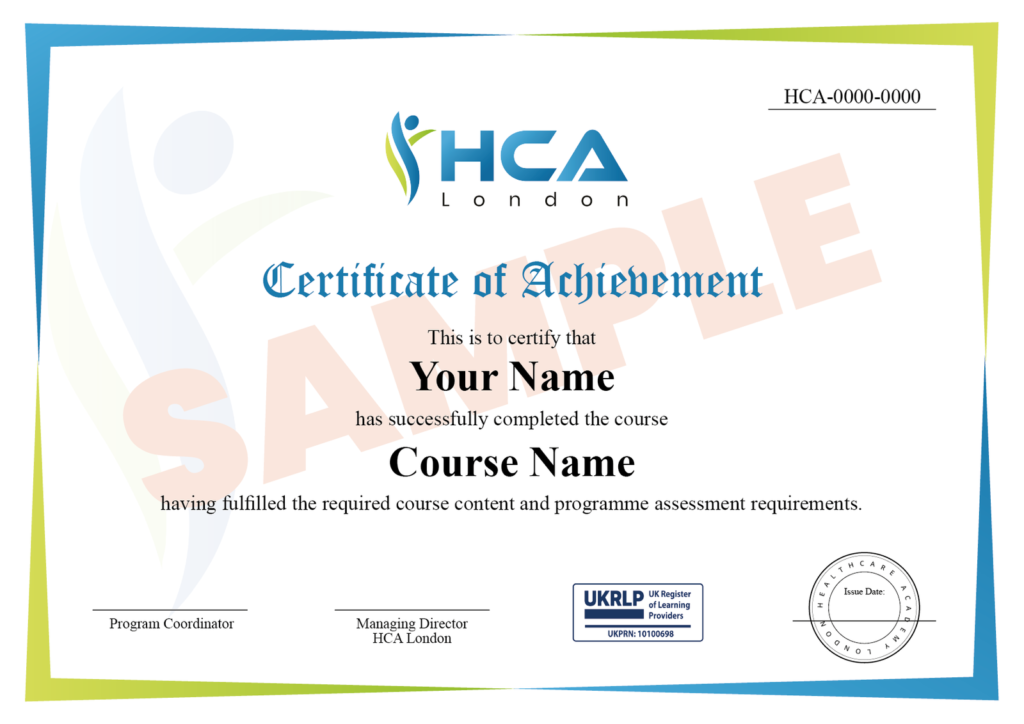
Upon successful completion of the assessment, you’ll receive a free CPD Certificate of Completion as a record of your learning and achievement. Use your certificate to strengthen your professional portfolio, demonstrate your commitment to continuous professional development and showcase the knowledge and skills gained through the course. It also provides a valuable way to evidence your dedication to improving your professional practice and progressing your career in health and social care.
Certificate
Start learning today and get your certificate instantly.
Check any real certificate ID on our verification page.
Good to know
Cannulation can involve different forms of vascular access, including peripheral intravenous (IV) cannulation, central venous catheterisation and arterial cannulation. Peripheral IV cannulation is commonly used to access a vein for fluids, medication and other appropriate treatments.
Venepuncture involves inserting a needle into a vein, usually to collect a blood sample. Cannulation involves inserting a small, flexible tube called a cannula into a vein to provide access for treatments such as fluids and medication.
The veins in the forearm are commonly preferred for peripheral IV cannulation. The median cubital, cephalic and basilic veins may also be considered depending on the patient’s condition, vein accessibility and treatment requirements. The choice should always follow clinical guidance and individual patient assessment.
The number of attempts depends on local clinical policies and professional guidance. Generally, practitioners should limit repeated attempts to reduce patient discomfort and complications. Many healthcare settings recommend a maximum of two attempts by one practitioner before seeking assistance from a more experienced colleague.
Venepuncture requires knowledge of vein anatomy, patient communication, consent, vein assessment, equipment selection, infection prevention and safe blood collection techniques. Practitioners also need attention to detail, good hand coordination and the ability to recognise potential complications.
No. Venepuncture is the procedure of accessing a vein to collect blood, while phlebotomy refers more broadly to the practice of collecting blood samples. Venepuncture is one of the main techniques used in phlebotomy.
Cannulation can be more technically challenging because it involves inserting a flexible cannula into a vein rather than simply collecting a blood sample. It requires careful vein assessment, appropriate device selection, insertion technique, securing the cannula and ongoing observation for complications.
Not necessarily. Venepuncture and cannulation are separate clinical procedures, each requiring appropriate theoretical and practical training. However, understanding vein anatomy, patient assessment, and infection prevention provides a useful foundation for both. Healthcare professionals should complete a role-appropriate cannulation training course and supervised competency assessment before performing either procedure independently.
Related training


Recognise the signs of a stroke, understand its causes, and identify the importance of quick action. Explore common symptoms, risk factors, and the steps to take when someone has a stroke. Enrol today to improve your stroke awareness.

Understand diabetes, recognise its warning signs and discover how to manage its impact on health. This Diabetes Awareness Course helps you gain essential knowledge of diabetes, its symptoms and management so you can raise awareness and support better health outcomes.

Understand Attention Deficit Hyperactivity Disorder and recognise how it affects behaviour, learning, and everyday life. Our CPD-accredited ADHD Awareness Course offers flexible, self-paced online learning to help you recognise common signs and better support people with ADHD.

Build your understanding of dementia and develop the confidence to support those living with the condition. Learn to recognise symptoms, understand changing needs and provide compassionate care that makes a difference.