
All courses for
£149.99
· Save 87% in just one click
Instant Access
Free Certificate
CQC-Aligned
Do you know how your understanding of learning disabilities can make a meaningful difference in someone’s life? People with learning disabilities may experience unique challenges in communication, understanding, everyday activities and independent living. Developing awareness of these challenges helps you look beyond individual difficulties, recognise personal needs and understand why every person deserves respect, dignity and equal opportunities. This Learning Disability Awareness Course builds your knowledge of learning disabilities and helps you develop a more informed, compassionate approach to supporting individuals in different care settings.
Whether you work in healthcare, social care or support services, understanding learning disabilities plays an important role in delivering effective, person-centred care. This training helps you strengthen your awareness, improve your approach to communication and understand how to promote individual choice, inclusion and independence. By applying what you learn, you can contribute to a supportive environment where individuals feel valued, understood and empowered to live with greater confidence and control over their daily lives. Take the next step in your professional development and build the knowledge to make a positive difference in the lives of people with our learning disabilities course.
The detailed curriculum outline of this course is provided below, covering all the modules and key topics included in the course.
£49.00 Original price was: £49.00.£13.99Current price is: £13.99.
£49.00 Original price was: £49.00.£13.99Current price is: £13.99.Add to basket
This course includes
E-Learning Course
Included
Lifetime Access
Course detail
By completing this learning disabilities training course, you will develop the ability to:
The Learning Disability Awareness Course is designed for individuals across the UK who want to strengthen their understanding of learning disabilities and improve the support they provide. It is particularly suitable for people working in health and social care, education and support services, as well as those who care for or advocate for individuals with learning disabilities.
This course is ideal for:
The learning disabilities course online assessment is fully online and easy to complete. You’ll complete ongoing (formative) assessments and a final (summative) assessment to test your understanding of the course content. To pass, you must achieve an 80% score on the multiple-choice questions and successfully complete all required assessments. You’ll receive your results instantly, with unlimited attempts to help you succeed. If you don’t pass on your first attempt, you can retake the exam at no extra cost with lifetime access to the course. Once you’ve successfully completed all assessments, you’ll receive your certificate.
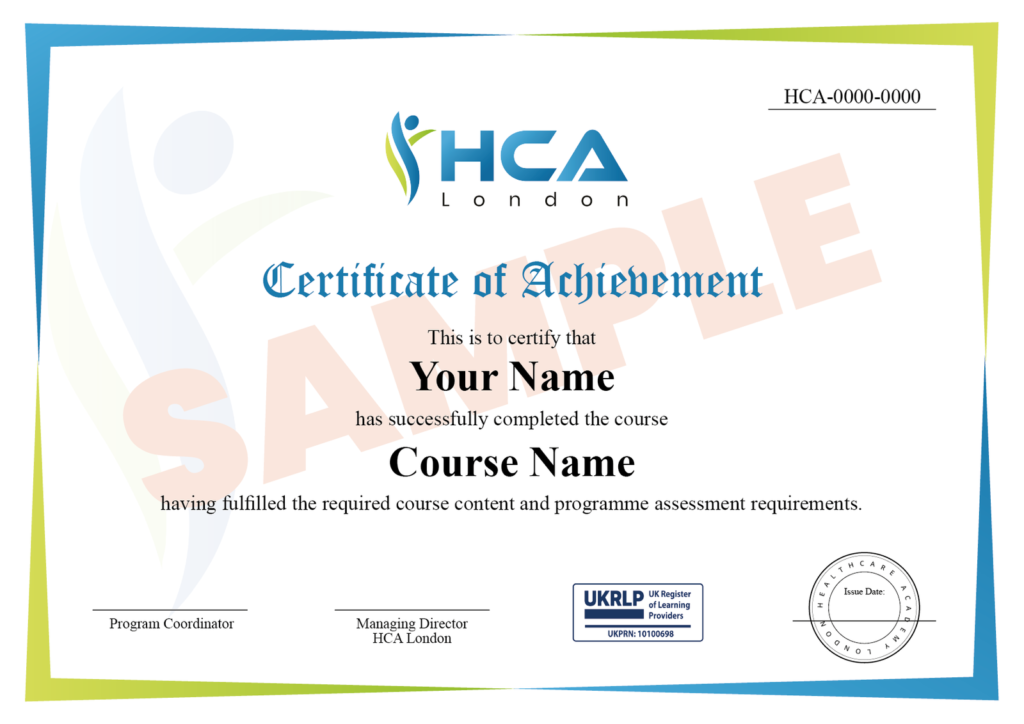
Upon successful completion of the assessment, you’ll receive a free CPD Certificate of Completion as a record of your learning and achievement. Use your learning disability certificate to strengthen your professional portfolio, demonstrate your commitment to continuous professional development and showcase the knowledge and skills gained through the course. It also provides a valuable way to evidence your dedication to improving your professional practice and progressing your career in health and social care.
Certificate
Start learning today and get your certificate instantly.
Check any real certificate ID on our verification page.
Good to know
Common specific learning difficulties include dyslexia, dyscalculia, dyspraxia, dysgraphia, ADHD, auditory processing disorder and visual processing disorder. These conditions can affect how individuals process information, communicate and develop everyday skills. Not all are classified as learning disabilities in the UK.
Autism is a developmental condition and is not automatically a learning disability. Some autistic people also have a learning disability, while others have average or above-average intellectual abilities. Each individual has different strengths, needs and support requirements.
A learning disability is a lifelong condition that affects a person’s ability to understand information, learn new skills and manage everyday activities. It can also affect communication, social interaction and independent living. The level of support required varies from person to person.
Learning disabilities can develop before birth, during childbirth or in early childhood. Possible causes include genetic conditions, complications during pregnancy or birth, infections and early brain injuries. In some cases, the exact cause remains unknown.
A learning disability generally affects intellectual functioning and everyday adaptive skills, often requiring ongoing support. A learning difficulty typically affects specific areas of learning, such as reading, writing, spelling or mathematics, without necessarily affecting overall intellectual ability.
PMLD stands for Profound and Multiple Learning Disabilities. It describes individuals who have severe learning disabilities alongside additional physical, sensory or medical needs. They often require extensive, ongoing support with communication, personal care and everyday activities.
Learning disabilities can affect communication, understanding instructions, decision-making, social interaction and daily activities. Some individuals may need additional support with personal care, education, employment and independent living. The impact varies depending on each person’s abilities and needs.
A learning disability is identified through specialist assessment, which considers intellectual abilities, developmental history and everyday adaptive skills. Depending on the individual, assessments may involve psychologists, learning disability specialists and other healthcare professionals. In the UK, a clinical psychologist or appropriately qualified specialist may contribute to the assessment and diagnosis. There is no single professional responsible for every case; the process depends on the individual’s circumstances.
Related training

Learn to spot abuse, protect vulnerable adults, and take action to keep them safe. Build your skills with a course aligned with Skills for Care guidance and CQC standards. Enrol today and make a difference in people’s lives.

Understand the importance of fluids and nutrition in care settings. Gain the skills to support healthy hydration and balanced nutrition. Register today to boost your caregiving skills and support your professional development.

Protect people and prevent fire risks with our Fire Safety Awareness Course. Identify common fire hazards, follow essential safety procedures, and know how to respond when a fire breaks out. Enrol today and take a practical step towards better fire safety at work.

Deliver compassionate care to people in the final stages of life with Healthcare Academy London’s CPD-accredited End of Life Care Course. Understand how to provide comfort, protect dignity and support individuals and their families during this sensitive time.