


All courses for
£149.99
· Save 87% in just one click
Instant Access
Free Certificate
CQC-Aligned
Handling information effectively is a fundamental responsibility in health and social care. Every day, care workers manage sensitive personal details that require accuracy, confidentiality and professional judgement. This Handling information in care settings course helps you understand the importance of responsible information management and how your everyday actions can protect individuals’ privacy, maintain trust and support safe, high-quality care.
Build your understanding of good information-handling practices and develop the confidence to manage care-related information responsibly. Explore how data protection responsibilities apply to everyday care situations and how secure information management contributes to professional standards. Whether you are starting your career or looking to strengthen your existing skills, this effective handling of information in health and social care settings course helps you develop valuable knowledge for the workplace. Start learning today, earn CPD points and take a positive step towards strengthening your professional development in health and social care.
By the end of the Effective Handling of Information in Care Settings course, you will understand how to:
The detailed curriculum outline of this course is provided below, covering all the modules and key topics included in the course.
£49.00 Original price was: £49.00.£12.99Current price is: £12.99.
£49.00 Original price was: £49.00.£12.99Current price is: £12.99.Add to basket
This course includes
E-Learning Course
Included
Lifetime Access
Course detail
After completing the Handling Information in Health and Social Care course, you will be able to:
This care certificate handling information standard 14 is ideal for anyone working in or aspiring to join the health and social care sector. Whether you are starting your care career or already have workplace experience, this course helps you strengthen your information-handling skills and develop a more responsible approach to managing sensitive data. This course is particularly suitable for:
The Handling Information course assessment is fully online and easy to complete. You’ll complete ongoing (formative) assessments and a final (summative) assessment to test your understanding of the course content. To pass, you must achieve an 80% score on the multiple-choice questions and successfully complete all required assessments. You’ll receive your results instantly, with unlimited attempts to help you succeed. If you don’t pass on your first attempt, you can retake the exam at no extra cost with lifetime access to the course. Once you’ve successfully completed all assessments, you’ll receive your certificate.
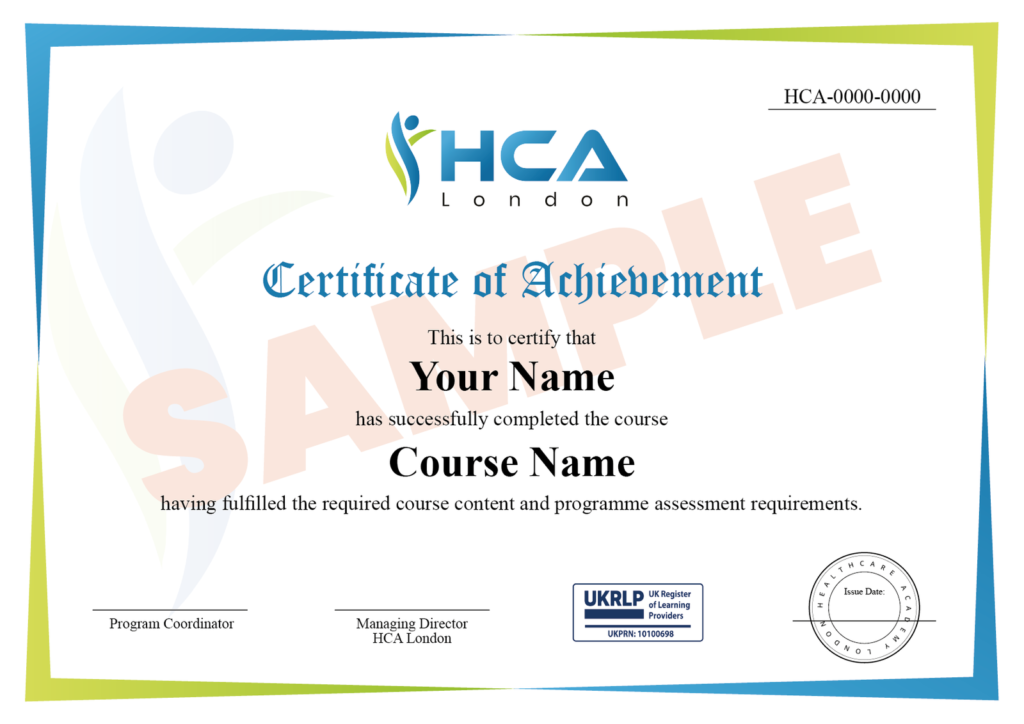
Upon successful completion of the assessment, you’ll receive a free CPD Certificate of Completion as a record of your learning and achievement. Use your certificate to strengthen your professional portfolio, demonstrate your commitment to continuous professional development and showcase the knowledge and skills gained through the course. It also provides a valuable way to evidence your dedication to improving your professional practice and progressing your career in health and social care
Certificate
Start learning today and get your certificate instantly.
Check any real certificate ID on our verification page.
Good to know
Handling information in a care setting means collecting, recording, storing, accessing and sharing personal information responsibly. It involves protecting individuals’ privacy, maintaining accurate records and ensuring sensitive details remain confidential.
Care workers must handle personal information lawfully, fairly and securely. They should follow data protection requirements, respect confidentiality, obtain appropriate consent where necessary and only access or share information when they have a valid reason.
Confidentiality protects individuals’ privacy and personal details from inappropriate access or disclosure. It also builds trust between care workers and those receiving support while promoting dignity, safety and professional responsibility.
Good information-handling practices include:
You should report the incident immediately through your organisation’s reporting procedures. Avoid further disclosure, protect any affected information, record what happened and follow your manager’s instructions. Prompt reporting helps reduce risks and protect individuals’ privacy.
Information handling in UK health and social care is mainly governed by the UK General Data Protection Regulation (UK GDPR) and the Data Protection Act 2018. The Human Rights Act 1998 and the common law duty of confidentiality also support the protection of personal information.
This course is suitable for healthcare support workers, care assistants, nursing assistants, social care workers, healthcare professionals, team leaders and administrative staff. It is also helpful for individuals aspiring to work in health and social care.
You can find guidance through your workplace policies, data protection procedures and trusted UK organisations such as the Information Commissioner’s Office (ICO), NHS and Skills for Care. These resources offer useful advice on confidentiality, data protection and responsible information management.
Related training

Promote respectful, person-centred care with our CPD-accredited Privacy and Dignity in Care Course. Learn how to protect privacy, respect personal choices and maintain confidentiality. Enrol today to support dignity in care.

Understand the importance of fluids and nutrition in care settings. Gain the skills to support healthy hydration and balanced nutrition. Register today to boost your caregiving skills and support your professional development.

Learn to spot abuse, protect vulnerable adults, and take action to keep them safe. Build your skills with a course aligned with Skills for Care guidance and CQC standards. Enrol today and make a difference in people’s lives.

Understand equality, diversity, inclusion and human rights with this CPD-accredited online course. Discover how to treat everyone fairly, respect differences, protect human rights and promote equal opportunities in health and social care.